
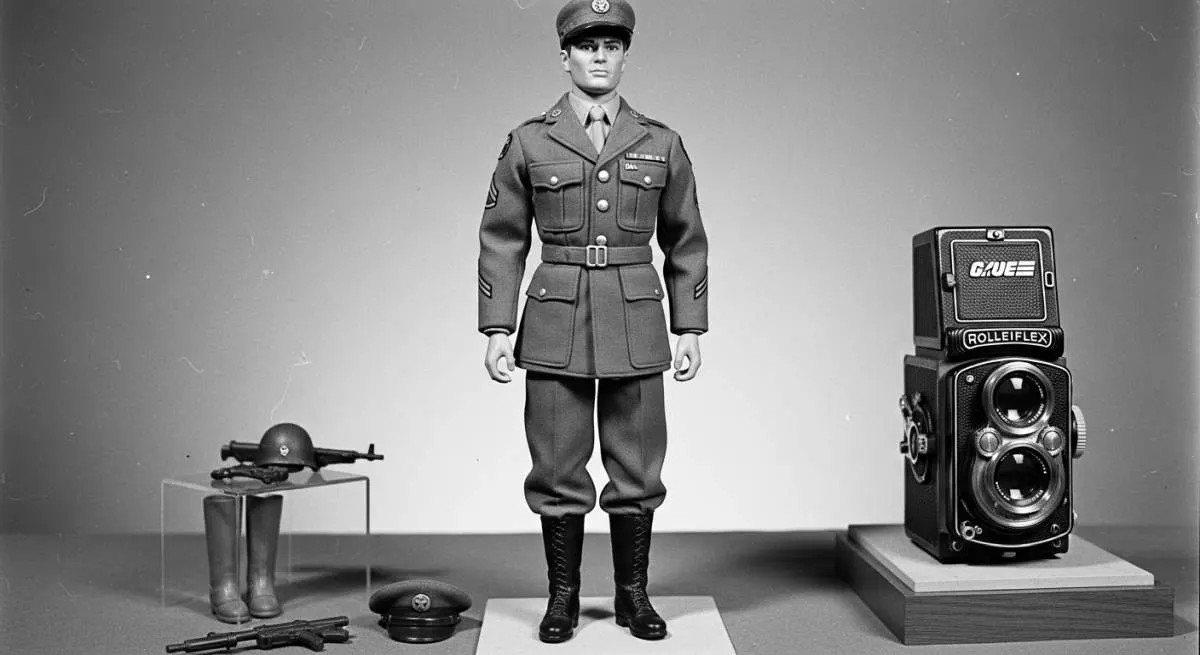
The early 1960s in America were a fascinating time, a quiet before the storm. For kids, it was a golden age of consumerism, fueled by TV ads and a booming economy. Families had more money to spend on fun, and the toy market was thriving like never before.
Toys were no longer just simple wooden blocks or tin soldiers. They were becoming more sophisticated and interactive. Into this vibrant world stepped a toy that would change everything.
This wasn't just a new plaything. It would redefine an entire category of toys and, in a quiet way, influence how an entire generation of boys dressed. That toy was G.I. Joe.
Breaking the Mold: Where It All Began
Before G.I. Joe, the idea of a poseable, lifelike figure for boys was almost unheard of. Girls had dolls, a huge and well-established market. But for boys, playtime meant cars, trains, building sets, and stiff, unmoving soldier figurines. There wasn't much room for imagination beyond what you could build or crash.
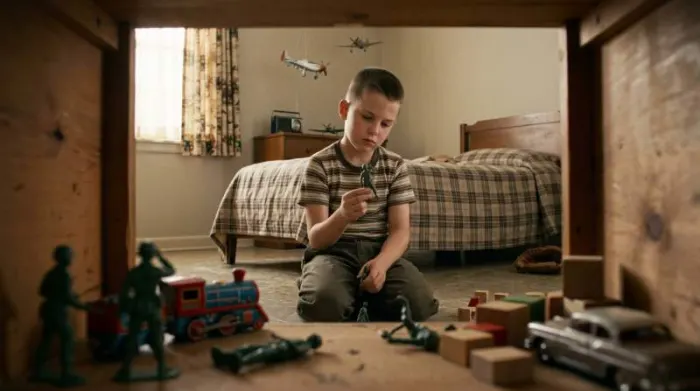
The toy industry had a firm belief: boys just wouldn't play with dolls. It was seen as unmanly, going against traditional ideas of boyhood. This was a big challenge, but it also meant there was a massive opportunity for anyone brave enough to try something new.
The Spark from Barbie's Success
The idea for G.I. Joe came straight from the success of another toy: Barbie, launched in 1959 by Mattel.
Barbie showed that a poseable, accessorized figure built around a lifestyle could capture kids' imaginations and parents' wallets like never before. She was a phenomenon.
Hasbro, a big name in toys at the time, watched Barbie's rise and saw a gap in the market. If girls could have a figure to dress up and dream with, why couldn't boys? The trick was figuring out how to make it feel right for boys, not a doll, but something that fit their world.
The Birth of an Action Figure: 1964
In 1964, Hasbro introduced G.I. Joe, and the company made a smart choice right from the start: they called it an "action figure," not a doll. That single word made all the difference. It gave boys permission to play with something poseable and detailed without feeling like they were crossing into forbidden territory. This is widely considered the first action figure ever created, and it changed the toy industry forever.
The original G.I. Joe stood 12 inches tall, had 21 moveable joints, and came dressed as a soldier. But what made him revolutionary wasn't just his size or articulation, it was the ecosystem Hasbro built around him. G.I. Joe came with accessories: rifles, helmets, uniforms for different branches of the military. You could buy more outfits and gear separately, turning a single figure into dozens of different soldiers and scenarios.
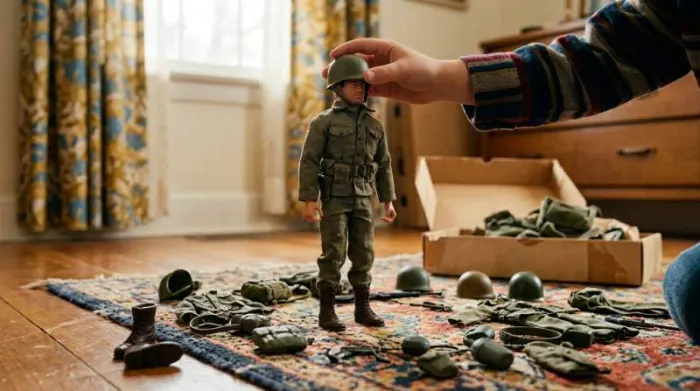
The figure was marketed directly to boys through television commercials that showed kids creating elaborate military adventures. Hasbro understood something crucial: boys didn't want to play house or fashion show. They wanted action, strategy, and the freedom to imagine themselves as soldiers, adventurers, and heroes.
Why the Timing Was Perfect
G.I. Joe arrived at exactly the right moment. America was in the grip of Cold War anxiety, and military themes were everywhere in popular culture. Television shows, movies, and comic books all celebrated soldiers and combat. Parents, many of them veterans themselves, saw G.I. Joe as a wholesome way for boys to play out military fantasies at home.
The toy also benefited from the post-war economic boom. Middle-class families had disposable income, and toys were no longer luxuries, they were expected purchases. Hasbro's marketing was relentless and effective, reaching boys through Saturday morning cartoons and comic book ads.
The Accessory Empire That Changed Everything
What truly set G.I. Joe apart from every toy that came before was the accessory system. Hasbro released dozens of outfits and gear sets: jungle fatigues, dress uniforms, scuba gear, astronaut suits, and more. A boy could buy the basic figure and then spend years collecting different uniforms and equipment, each one opening new play scenarios.
This wasn't accidental. Hasbro had learned from Barbie that the real money wasn't in the initial figure, it was in the endless stream of accessories that followed. Parents who might balk at buying a second G.I. Joe figure were happy to buy a new uniform or vehicle. The business model was brilliant, and it worked spectacularly.
By the late 1960s, G.I. Joe had become a cultural juggernaut. Hasbro was selling millions of figures and accessories every year. The toy had spawned comic books, a cartoon series, and an entire mythology around the character and his team.
How G.I. Joe Shaped Boys' Fashion and Play
Beyond the toy aisle, G.I. Joe had a subtle but real influence on how boys saw themselves and what they wore. The military aesthetic, camouflage, combat boots, utility gear, became cool. Kids who played with G.I. Joe absorbed the visual language of military style, and that influenced real-world fashion choices as they grew older.
The toy also normalized a new kind of play for boys. Before G.I. Joe, boys' toys were mostly about building, racing, or collecting. G.I. Joe introduced narrative play, creating stories, acting out scenarios, and using imagination to populate a world. This opened the door for action figures across every genre: superheroes, space explorers, cowboys, and more. Every action figure that came after owed something to G.I. Joe's success.
The Collectibility Factor
From the very beginning, G.I. Joe figures had staying power. Kids didn't just play with them once and move on. They kept them, traded them, and collected different versions. Original 1964 G.I. Joe figures in good condition are now worth hundreds or even thousands of dollars to collectors, making them one of the most valuable toys ever produced.
This collectibility wasn't planned by Hasbro, but it became part of the toy's legacy. G.I. Joe created a generation of toy collectors, people who understood that certain toys had value beyond their original price tag. That mindset would shape the entire vintage toy market for decades to come.
The Cultural Impact That Lasted
G.I. Joe didn't just change toys, it changed how the toy industry thought about boys' play. It proved that boys would engage with detailed, narrative-driven toys if they were marketed correctly. It showed that accessories and customization could drive long-term sales. And it demonstrated that a toy could become a cultural icon that transcended the toy aisle.
The figure remained in production through the 1960s and beyond, evolving with the times. When the Vietnam War became controversial, Hasbro adapted, eventually moving away from strict military themes and toward adventure scenarios. The toy survived cultural shifts because it was flexible enough to change with them.
Today, G.I. Joe is still produced, still collected, and still remembered as the toy that started it all. The original 1964 figures are treasured by collectors, and the character has been rebooted and reimagined countless times. But nothing quite captures the magic of that first moment when Hasbro proved that boys would play with action figures, and that the toy industry would never be the same.
What was the first action figure ever made
Before G.I. Joe, poseable figures for boys were taboo. Hasbro's clever marketing sidestepped that by coining the term 'action figure' and even giving Joe a 'life-like' flocked hair texture, a detail borrowed from high-end dolls but rebranded for adventure. That tiny choice opened the door for every superhero and space ranger that followed.