
What Made the 1950s Bullet Bra So Pointy
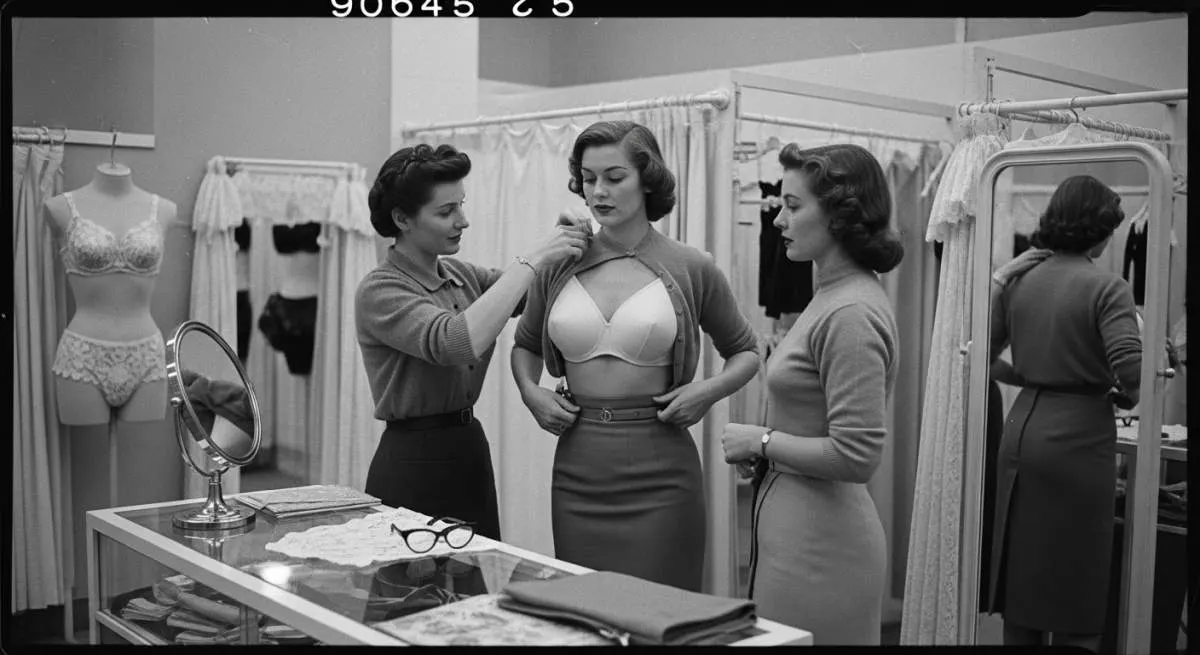
The bullet bra of the 1950s was pointy because it was engineered that way, on purpose. Designers used rigid internal structures, cone-shaped cups, and heavy-duty stitching to create an exaggerated, almost architectural silhouette that thrust the breasts forward and upward into a sharp, sculptural point. This wasn't accidental or a side effect of poor fit, it was the entire goal.
The shape emerged from Christian Dior's revolutionary 1947 New Look collection, which reimagined postwar femininity through an extreme hourglass silhouette: a tiny, cinched waist paired with a full skirt and a dramatically lifted, separated bust. To achieve that silhouette, the bullet bra became essential. Manufacturers used layers of cotton, silk, and synthetic fabrics, combined with rigid stays, wires, and sometimes even cardboard or plastic inserts, to hold the breast tissue in place and project it outward. The result was unmistakable and, to many observers at the time, shocking.
How postwar fashion created the demand for extreme shaping
After World War II, fashion underwent a dramatic shift. During the war years, women had worn practical, loose-fitting clothes suited to factory work and rationing. Silhouettes were straight and utilitarian. When Dior unveiled his New Look in Paris in 1947, it felt like a complete reversal.
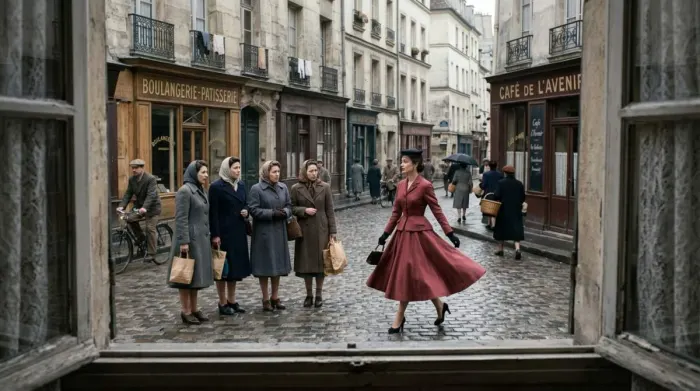
The collection featured a nipped waist, rounded hips, and a lifted, separated bust, a return to a hyper-feminine ideal that many saw as a rejection of wartime practicality. The New Look became a global sensation, and it fundamentally changed what women's undergarments needed to accomplish. The bullet bra evolved as manufacturers worked to support Dior's vision. By the early 1950s, it had become the standard foundation garment for anyone wanting to achieve the New Look silhouette, marketed as essential to modern femininity.
The engineering behind the cone
The bullet bra's distinctive cone shape came from a combination of design choices. Cup construction used multiple layers of fabric stitched into rigid channels that prevented the breast tissue from spreading or flattening. Manufacturers often used a technique called 'spiral stitching,' which created a pattern that guided fabric and reinforcement toward the nipple point.
Wires, stays, and sometimes internal cones made of buckram or plastic formed the structural skeleton. The separation between the two cups was exaggerated, often with a deep center gore (the fabric panel between the cups) that forced the breasts apart and forward. Straps were set far back on the shoulders to create lift and projection. The overall effect was less about comfort and more about creating a specific visual statement: breasts as distinct, prominent, almost weaponized forms on the female body. This is why the bullet bra became so controversial, it wasn't subtle or naturalistic. It announced itself.
Pin-up culture and the bullet bra as a symbol
The bullet bra became inseparable from 1950s pin-up culture. Actresses like Jane Russell, Marilyn Monroe, and Jayne Mansfield became famous partly because of how dramatically their breasts were shaped and presented in photographs and films. The bullet bra was the invisible architecture that made those images possible. Pin-up photography, which had roots in wartime morale-boosting imagery, became a mainstream commercial force in the 1950s.
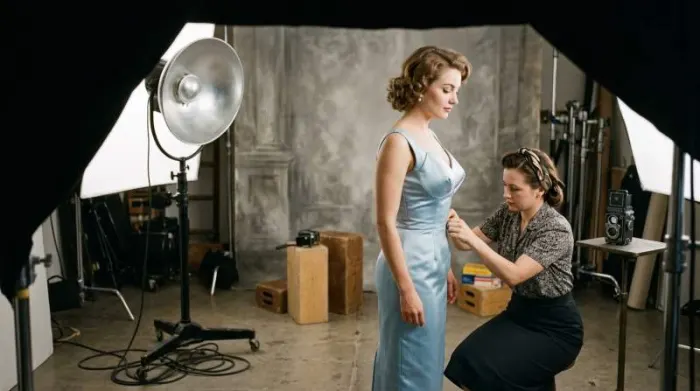
Magazines, calendars, and promotional photographs circulated widely, and the bullet bra silhouette became the visual standard for desirable femininity. For many women, wearing a bullet bra wasn't just about fashion, it was about aspiring to look like the women they saw in movies and magazines. The bra became a tool for transformation, a way to reshape the body into an idealized form.
Femininity, controversy, and style
The bullet bra sparked genuine controversy. Critics argued that the extreme shaping was uncomfortable, impractical, and promoted an unrealistic body ideal. Some feminist voices, even in the 1950s, questioned whether women should be expected to reshape their bodies so dramatically just to meet fashion standards. Medical professionals debated whether the tight, rigid construction could cause health problems. Yet the bra also represented a kind of power and agency.
After years of wartime austerity, many women embraced the bullet bra as a symbol of prosperity, femininity reclaimed, and the ability to shape one's own appearance. The controversy itself became part of the bra's cultural meaning, it was impossible to ignore, impossible to wear without making a statement. Whether that statement was 'I'm fashionable,' 'I'm sexy,' 'I'm conforming to expectations,' or 'I'm reclaiming my femininity' depended entirely on the wearer's perspective.
Styling strategies for modern wardrobes
- Under Structured Outerwear: Try wearing a modern bullet bra or a well-structured conical cup bra under fitted blouses, tailored jackets, or a classic cardigan. The outerwear becomes the perfect backdrop for that iconic silhouette, just like in the 1950s.
- Vintage Inspired Dresses: Go for the fit and flare! A bullet bra is the ideal match for 50s-style circle skirts and nipped-waist dresses. It helps you nail that authentic hourglass shape that the New Look made famous.
- As a Statement Piece: Feeling bold? Let a lace or satin bullet bra peek out as visible lingerie. Think sheer tops, unbuttoned blazers, or low-cut necklines. It's a confident, fashion-forward move that puts the bra front and center.
- Fabric Play: Bullet bras come in all sorts of textures. Satin gives you that classic pin-up vibe, modern mesh adds an edgy twist, and cotton is perfect for everyday wear. The fabric can totally change the feel, from retro chic to totally contemporary.
- Accessorize Smart: Finish the look with period-appropriate accessories for a full retro feel-think cat-eye glasses, a silk scarf, or a structured handbag. For a modern twist, mix it with minimalist jewelry or edgy boots for a striking contrast.
Styling a bullet bra today isn't about strictly following historical fashion rules. It's about giving a nod to the past and recognizing that the controversy around it was about more than just pointy shapes, it was about defining an entire female form. So, reinterpret that power in your own way. Whether you go full vintage siren or subtly incorporate the sharp silhouette, confidence is everything. Own the shape, let it elevate your style, and remember: sometimes the boldest fashion statements come from the most unexpected places.
Why the silhouette endures
Even though the bullet bra is a true 1950s icon, its legacy lives on. Women might not wear conical busts every day anymore, but the visual punch of those pointy bras from the 1950s is still incredibly strong. The dramatic silhouette, originally driven by Christian Dior's New Look to create an exaggerated hourglass, became a lasting symbol of powerful, stylized femininity. More than just a shaping garment, the bullet bra was a sculpted, almost architectural piece. It represented a specific moment in fashion history when extreme silhouettes were not just acceptable but aspirational.
Modern revivals and reinterpretations
The bullet bra's story is ultimately a story about how fashion reflects and shapes culture. In the 1950s, the extreme hourglass silhouette represented a particular vision of postwar femininity, one that emphasized curves, separation, and a kind of exaggerated sexuality. The bullet bra made that vision possible and wearable for millions of women. It also reveals the tension between conformity and individual expression that has always existed in fashion. Women wore bullet bras partly because they were fashionable, partly because they wanted to look like the women they saw in movies and magazines, and partly because the bra genuinely made them feel confident and powerful.
The controversy around the bullet bra, whether it was healthy, whether it was oppressive, whether it was empowering, continues today in different forms. Every time fashion asks women to reshape their bodies in a particular way, the bullet bra's legacy is there, a reminder that fashion is never just about clothes. It's about identity, aspiration, power, and the complex relationship between how we want to look and how society tells us we should look.