
The Search for a Single Inventor
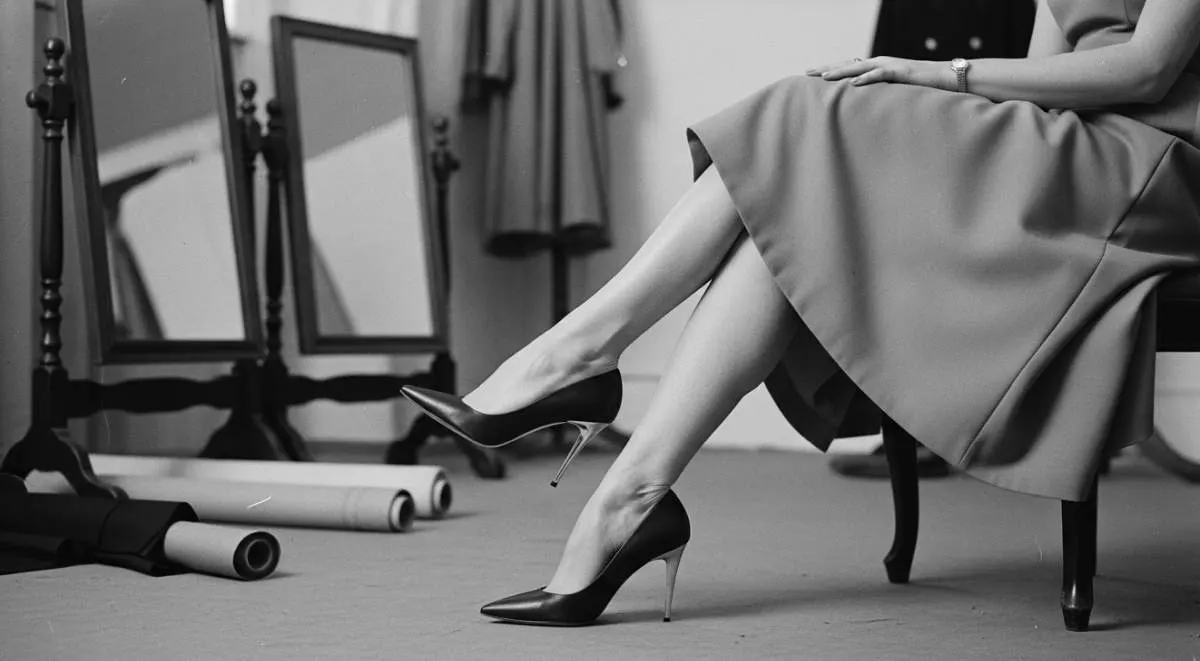
If you ask who invented the stiletto, the simple answer involves two nations. The elegant, needle-thin heel that became a fashion icon was a joint Italian and French achievement. Italian maker Mario Donati and the Dal Co' company are linked to a crucial 1953 patent for a steel-reinforced heel.
Meanwhile, French designer Roger Vivier helped make that slender silhouette famous for Christian Dior in the mid-1950s. This distinction is important because solving the structural problem and launching the fashion trend were two separate acts. Italian engineering made it possible, and French couture gave it worldwide glamour.
A Heel with Ancient Roots
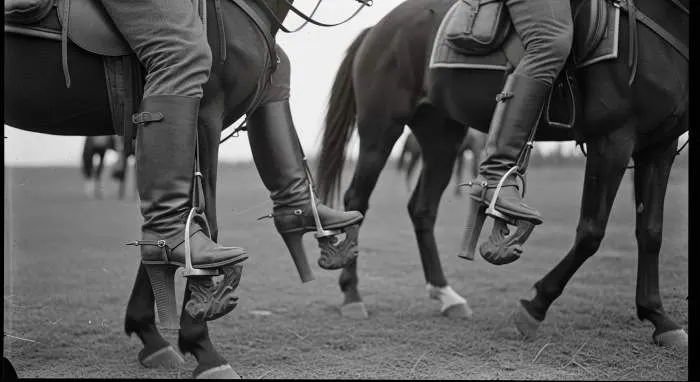
Long before it was a symbol of sex appeal, the heel served a purely practical purpose. The story begins with Persian cavalrymen in the 10th century. These mounted warriors wore heeled boots to lock their feet securely into stirrups while riding and shooting arrows.
This functional design traveled to Europe, where it was adopted by aristocrats as a marker of high status. By the 1600s, both men and women wore heels, with height directly signaling wealth and power. The stiletto, however, was a shape that wouldn't emerge for another three hundred years.
The Long Road from Utility to Glamour
Heels solidified their role as a status symbol in the courts of Europe. King Louis XIV of France famously wore red heels to flaunt his royal authority. Yet, the French Revolution temporarily flattened fashion, as anything associated with aristocracy fell violently out of favor.
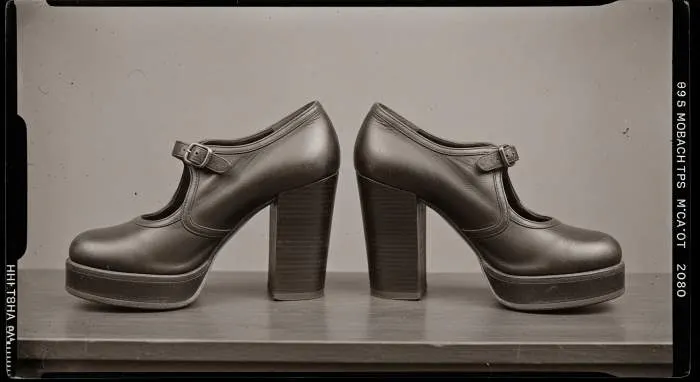
In the 19th century, heels returned as a predominantly feminine accessory, though they remained sturdy and chunky. The real transformation, the one that birthed the stiletto, came after World War II. It was a moment when new materials and a deep cultural hunger for luxury and glamour finally collided.
The Post-War Catalyst
The austere, utilitarian 1940s left women yearning for beauty and extravagance. Christian Dior's revolutionary New Look of 1947 demanded a new kind of shoe. His wasp-waisted, full-skirted silhouettes needed something delicate, feminine, and impossibly elegant to complete the vision.
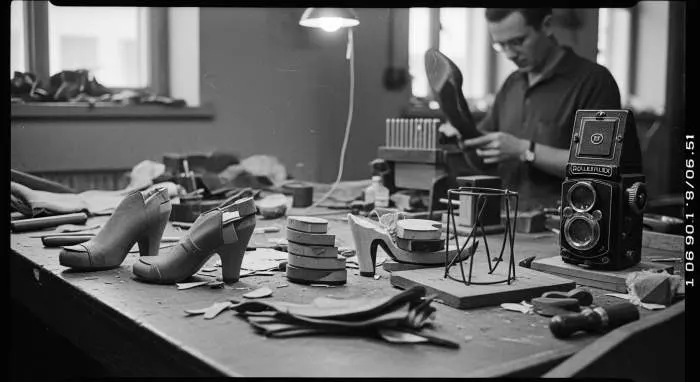
Designers faced a significant challenge: creating a heel that looked as thin as a needle but could reliably support a woman's weight. The answer to this puzzle arrived from two very different corners of the fashion world, one focused on industrial engineering, the other on high art.
The stiletto's defining characteristic is not merely its height, but its radical thinness. A traditional wooden heel relies on a broad base for stability. The stiletto, named after the slender Italian dagger, required an internal skeleton.
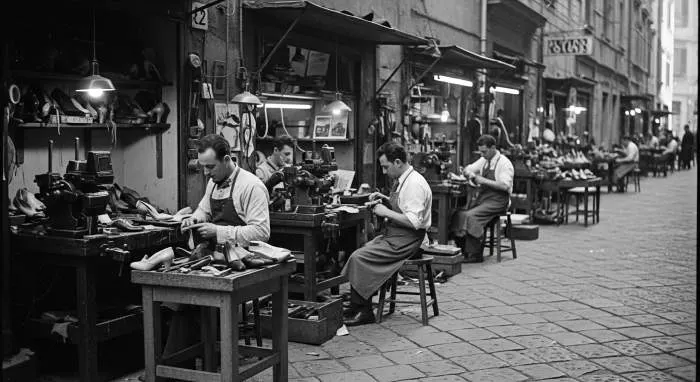
The solution was a steel rod, known as a shank, inserted through the core of the heel and into the sole. This tiny piece of hidden engineering was the miracle that allowed the heel to be as narrow as a pencil without snapping. Italian shoemakers in the town of Vigevano, near Milan, perfected this technique in the early 1950s.
Roger Vivier, the brilliant French shoe designer working for Dior, is often celebrated as the father of the stiletto. In 1954, he introduced the 'Aiguille' heel, which is French for 'needle'. It was ultra-thin, breathtakingly elegant, and the perfect finishing touch for Dior's lavish gowns.
Vivier's genius lay in presentation and prestige. He made the stiletto a star on the haute couture runway. Soon, Hollywood icons like Marilyn Monroe and Audrey Hepburn were photographed in his designs, cementing the stiletto's association with luxury, glamour, and star power.
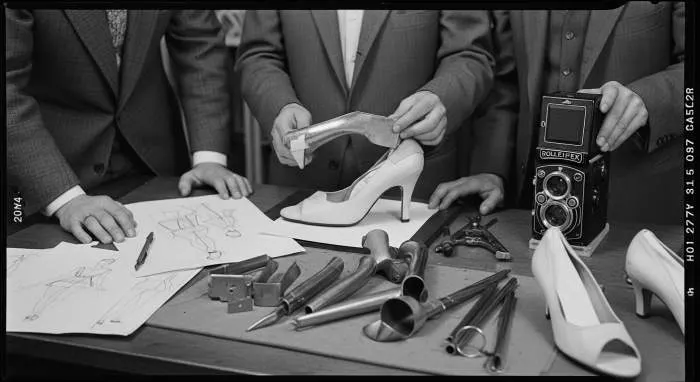
While Vivier was creating buzz in Paris, the Italians were securing the invention. In 1953, a full year before Vivier's Aiguille debut, Mario Donati of the Dal Co' shoe company in Vigevano patented a steel-reinforced heel designed for mass production.
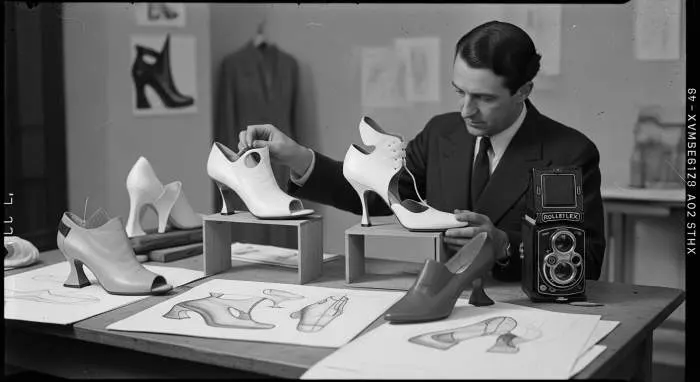
Vigevano was already a renowned hub for shoemaking, blending artisan skill with industrial innovation. Donati's patent made the stiletto structurally sound, affordable, and widely available. So, if Vivier gave the stiletto its prestige, the Italians provided the practical, reproducible blueprint. Both contributions were absolutely essential.
Pioneers and Precedents
The story has even earlier chapters. In the 1930s, avant-garde designers like Salvatore Ferragamo experimented with thin heels and metal supports. He toyed with concepts like the 'invisible' heel, but the technology and materials of the time weren't quite ready to support the vision reliably.
Ferragamo's own famous invention, the cork wedge heel, emerged from WWII leather shortages and followed a different design philosophy. The stiletto needed the specific post-war industrial boom and cultural mood to become a commercial reality. Vivier and Donati are the central figures, but they certainly stood on the shoulders of creative tinkerers.
A Fashion Landmark is Born
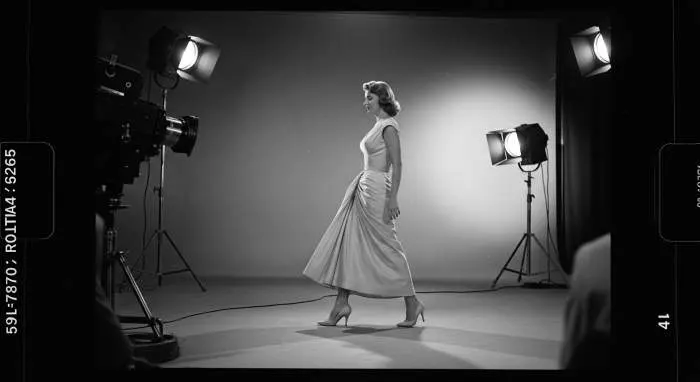
By the late 1950s, the stiletto was ubiquitous. It graced the silver screen in films like Billy Wilder's "The Apartment" and defined the look of pin-up models. It became a potent, dual symbol: of sophisticated female power and sexuality, but also of a certain modern danger.
The heel was notorious for damaging floors, and many women endured foot pain for the sake of style. Yet, its allure was utterly undeniable. The stiletto came to define an entire era of sleek, confident, and modern femininity, a visual legacy that continues to resonate in fashion today.
The stiletto's journey wasn't always smooth. In the 1970s, some feminists critiqued it as a painful tool of patriarchal oppression. Later decades saw the rise of comfort-focused trends, with sneakers and flats challenging the stiletto's everyday dominance.
But the needle heel never disappeared. Designers like Manolo Blahnik and Christian Louboutin masterfully revived and reinvented it in the 1990s and 2000s, proving its incredible staying power. Today, it remains a non-negotiable staple on red carpets and in high-fashion editorials, a testament to its timeless, if complicated, appeal.
So, who really invented the stiletto? The true answer is that no single person did. It was a transcontinental collaboration. Italian engineers solved the structural problem, and French designers solved the aesthetic one. Together, they created an object that is both a feat of micro-engineering and a wearable work of art.
The stiletto is a monument to human ingenuity, where a hidden steel rod changed how women walked, stood, and were seen by the world. Its secret history is a story of convergence, of Persian horsemen, Italian industrialists, and French artists. That rich, collaborative lineage is what makes the killer heel truly legendary.
What does stiletto mean in italian
The word 'stiletto' comes directly from the Italian 'stiletto,' meaning a small dagger with a slender, pointed blade. This weapon was favored by assassins in Renaissance Italy for its ability to slip through chainmail and strike silently. The heel borrowed not just the name but also the weapon's dangerous, piercing silhouette.