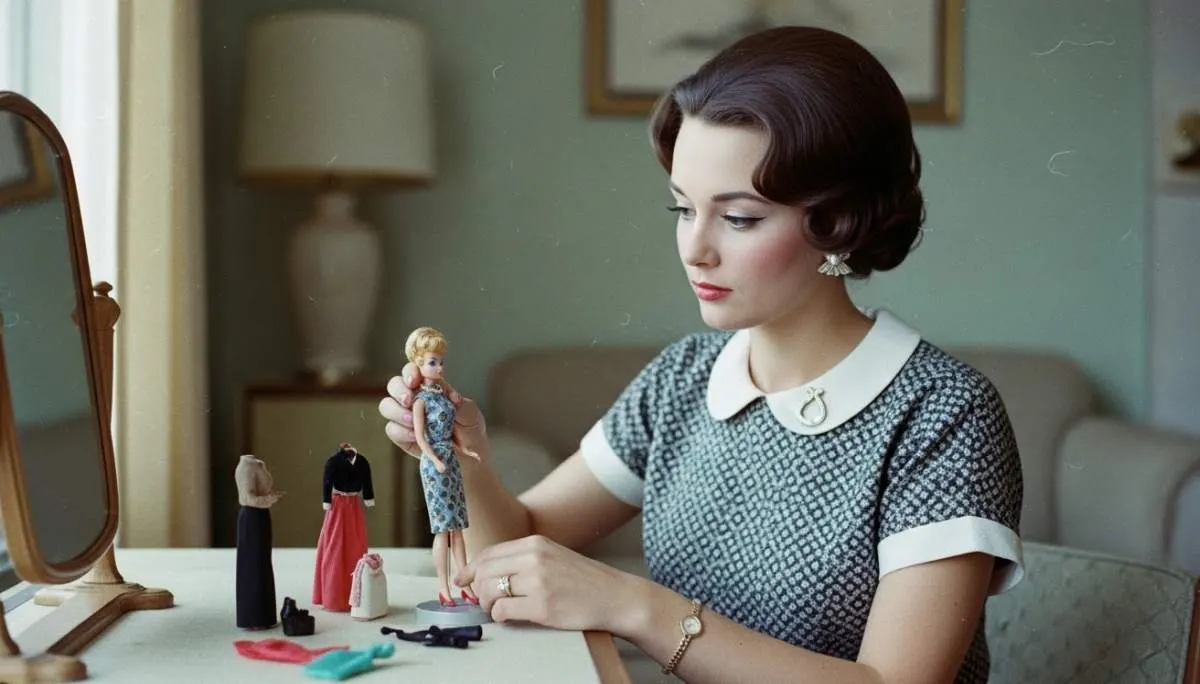
Before 1959, a little girl's toy box was a world of babies. You had Betsy Wetsy and Tiny Tears, adorable vinyl dolls that taught one lesson: motherhood. It was sweet, but it was a rehearsal for a single role.
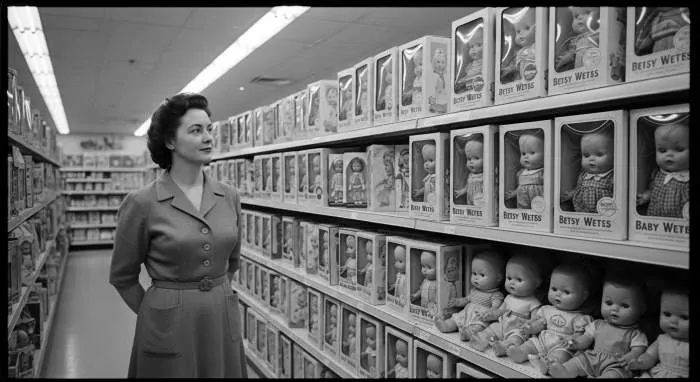
The Pre-Barbie Void: Why We Needed a Grown-Up Gal
Enter Ruth Handler, co-founder of Mattel. She watched her daughter, Barbara, play with paper dolls. Barbara wasn't rocking a cradle; she was giving the dolls jobs, dates, and fierce outfits. She was playing out her future.
Ruth realized something revolutionary: young girls didn't just want to rehearse being mothers; they wanted to rehearse being grown-ups. They wanted to imagine themselves as teenagers, college students, career women. She pitched the idea of an adult doll to the Mattel board.
They scoffed. A doll with breasts? Unheard of! Too mature, too scandalous. Thank goodness Ruth was a powerhouse. She didn’t listen. Her whole philosophy, she later said, was that through the doll, the little girl could be anything she wanted to be. Barbie always represented the fact that a woman has choices.
The Dawn of the Teenage Dream: 1959 and the Revolution
Ruth found her inspiration overseas. The spark came from a German novelty doll named Bild Lilli. Originally sold in tobacco shops as a cheeky gag gift for men, Lilli was based on a risqué comic strip character. Ruth saw past the scandal and saw the silhouette.
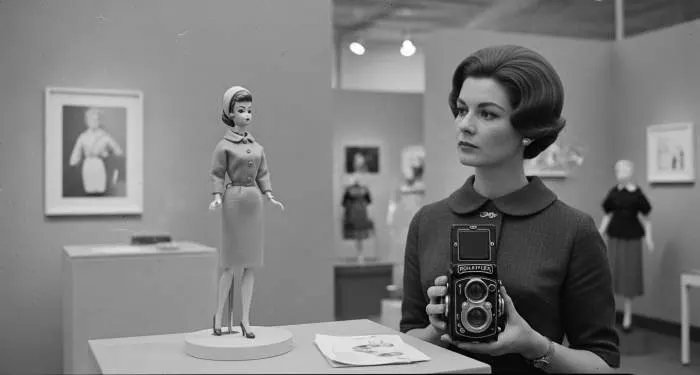
In 1959, Barbie debuted at the New York Toy Fair. Her first outfit was a simple black-and-white striped swimsuit. She wore sunnies and heels, not a bonnet. This was a seismic shift. Girls now had a doll that mirrored the shape they would become, a key to truly aspirational play.
Scandalous Silhouette: How Vintage Dress Styles Shaped Barbie's Early Fashion
She had the sophisticated sheath dress, slim and elegant for a "business meeting." She kept the classic A-line swing of the full circle skirt alive in her casual wear. And she always had an impeccably tailored cocktail dress, often with delicate gloves.
The fashion was a character kit. You weren't just buying a dress; you were buying the life it represented: a college date, a trip to Paris, a day at the office. This focus on meticulously designed outfits was Mattel’s genius, turning the doll into a lifelong habit.
Ken, Careers, and the Cool 60s
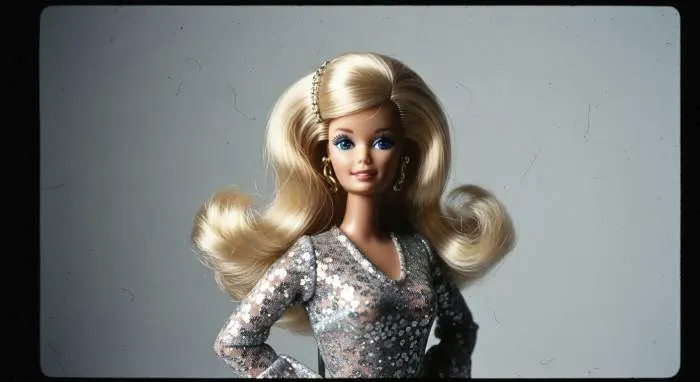
The 1960s saw Barbie lean into her career woman status, reflecting the burgeoning women's movement. She wasn't just a cheerleader. She was Astronaut Barbie in 1965, four years before Neil Armstrong walked on the moon! She was a Registered Nurse and an Executive.
These weren't just costumes; they were statements. Mattel was subtly telling millions of girls their potential was limitless. The aesthetics changed, too. Gone was the severe ponytail; hello, Mod! Barbie got bendable knees in 1965 and real eyelashes in 1967.
Her wardrobe exploded with mini-skirts, go-go boots, and psychedelic prints. She was groovy, far out, and totally in step with the Swinging Sixties. She evolved from a poised debutante into a vibrant participant of the decade.
Groovy Girls and Glamour: The 1970s Disco Vibe
If the 60s were about revolution, the 70s were about self-expression and sparkle. Barbie embraced the Me Decade with open arms. Her face mold softened into the warm, approachable "Superstar" smile introduced in 1977.
Casual Leisure and Career Comfort: The 1970s Wardrobe Shift
While 60s Barbie wore sharp suits, 70s Barbie wore leisure suits, bell bottoms, and platform shoes. Her wardrobe featured the iconic wrap dress, reflecting real fashion trends.
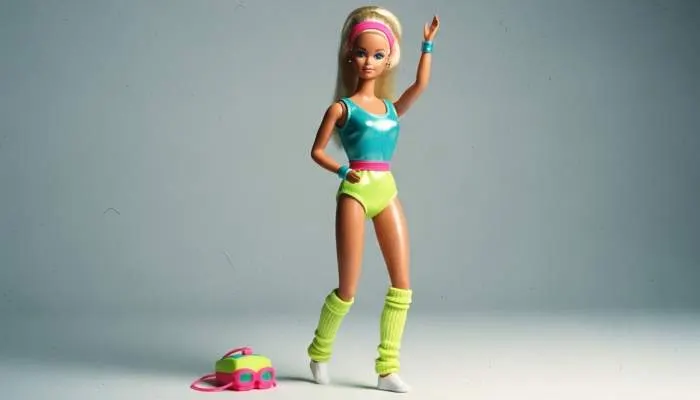
The shift was palpable: from strict social roles to personal freedom and fun. The Superstar Barbie of 1977 was a vibe. Draped in shimmering pink lamé, she was ready to hit Studio 54. Her arms were permanently bent, ready to strike a pose.
She was the ultimate disco queen. She even got her own line of record players and vinyl albums, letting kids DJ their own dance parties. This decade also introduced iconic accessories like the elaborate Dreamhouse and the pink Corvette Stingray.
Power Suits and Pink Convertibles: The Rad 1980s
Oh, the 80s. Big hair, big shoulders, and even bigger dreams. Barbie absolutely owned this decade. The focus shifted to the high-octane energy of the Reagan era. Barbie wasn't just working; she was a CEO. She wasn't just dating; she was a mogul.
The first "Day-to-Night" Barbie arrived in 1985. She came with a reversible outfit that transformed her from a power-suited executive to a glamorous evening siren. This doll perfectly encapsulated the "having it all" mentality.
The 80s were also defined by fitness culture. Suddenly, Barbie was in neon spandex and leg warmers. She was physically active, reflecting the national obsession with Jane Fonda tapes. She taught girls that ambition and glamour could go hand-in-hand with being health-conscious.
And let's not forget the rock 'n' roll! Barbie embraced the pop scene, forming her own band, Barbie and the Rockers, in 1986. She channeled Madonna and Cyndi Lauper with wild, crimped hair. This solidified her status as a cultural barometer, not just a fashion plate.
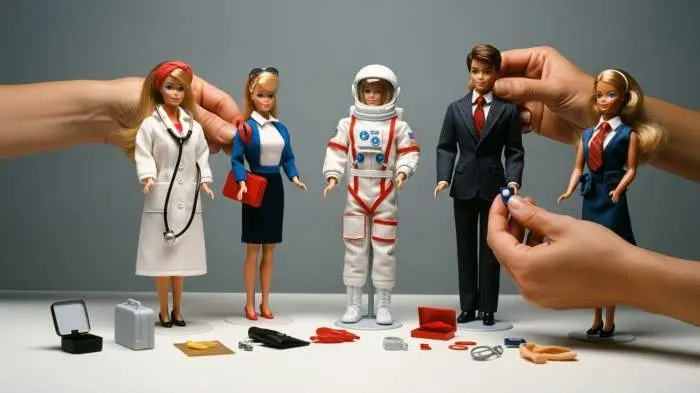
The 90s brought grunge, girl power, and a much-needed focus on diversity. Barbie, ever the chameleon, kept up. She ditched the big hair for sleek, straight locks and embraced the minimalist aesthetic of the early 90s.
Increased Diversity and Body Image Debates
While Black and Hispanic dolls had existed earlier, the 90s saw a serious push toward more authentic representation. In 1990, the first Black Gold Medalist Barbie arrived. The message was clear: Barbie was for everyone.
However, this was also the decade where debates over her physique reached a fever pitch. Studies calculated that if Barbie were human, her proportions would make it impossible to stand upright. Mattel responded slowly, eventually introducing different body types in the 2010s.
Despite the criticism, the impact was powerful. She became a Presidential candidate multiple times starting in 1992, emphasizing civic engagement. She proved she could rock a simple slip dress just as well as a rhinestone gown, adapting to the decade's vibe.
Why did Barbie endure for over sixty years? It boils down to two things Ruth Handler understood: narrative and aspiration. Barbie wasn't passive. Every accessory was a prompt for a new adventure.
Narrative Play: Inspiring Generations
When a child picked up Doctor Barbie, they weren't just holding a doll; they were holding the possibility of a future in medicine. When they put her in a spacesuit, they were holding the universe. This open-ended, aspirational play teaches goal-setting and role-playing.
It teaches girls that their identity isn't fixed; it’s something they can change, try on, and perfect. This is fundamentally different from the nurturing play encouraged by baby dolls.
Barbie as a Cultural Barometer
Barbie’s success is tied to her ability to act as a cultural sponge. She has absorbed and reflected every major social and fashion movement since 1959. She showed us the changing fashion eras through decades, from tailored elegance to neon chaos.
She was a reflection of the American dream, constantly updated. She proved that plastic could be powerful. In a world that often told girls to sit still and look pretty, Barbie told them to get a job, buy a convertible, run for president, and go to the moon.
That, dolls, is a legacy that is truly far out. So next time you see that unmistakable shade of hot pink, remember: you’re not just looking at a toy. You’re looking at a revolution. And it’s been a totally rad ride.
The very first Barbie in 1959 was made of hard vinyl, chosen for its durability. But here's a fun twist: her hair wasn't synthetic fiber. It was actually made from a soft, pliable plastic that could be styled with a tiny comb. That early plastic hair is why vintage Barbies from that first year are so rare and prized by collectors today.