
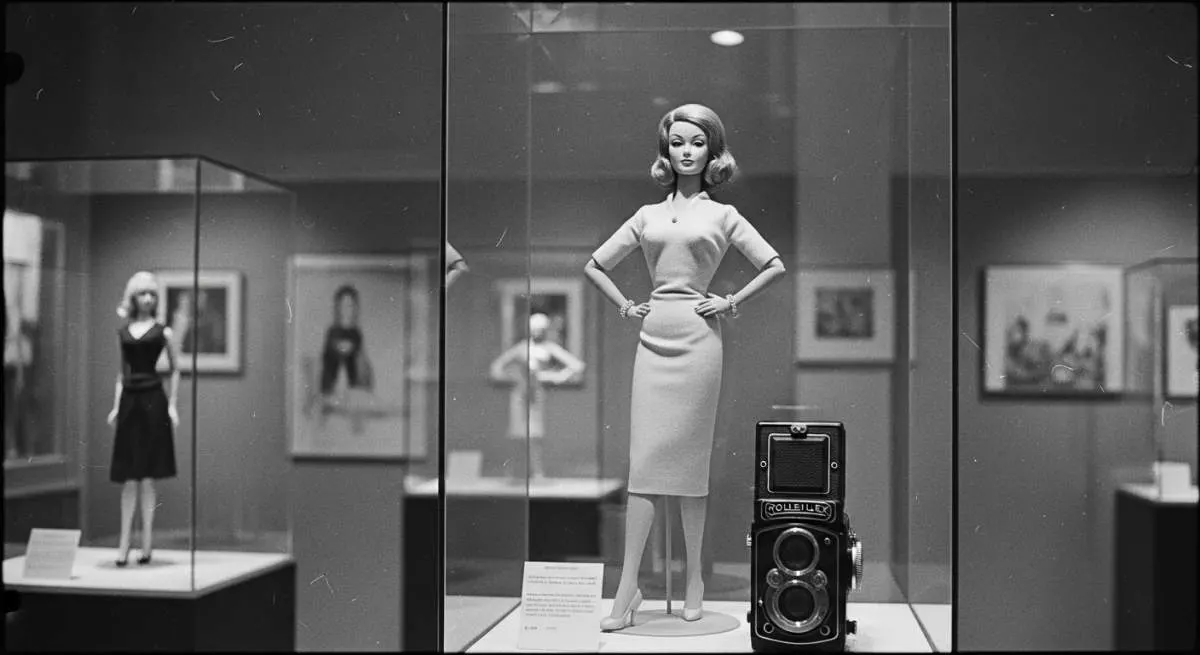
A Sea of Baby Dolls and a Mother's Vision
In the mid-1950s, the toy world for girls was a predictable landscape. Shelves were filled with baby dolls, their purpose clear: to prepare young girls for motherhood. This was the only narrative available. Ruth Handler, co-founder of Mattel, watched her daughter Barbara play with paper dolls and saw something different.
Barbara wasn't pretending to feed or diaper her paper cutouts. She was using them to act out stories of grown-up life, careers, fashion, and social adventures. Ruth recognized this as aspirational play, a way for her daughter to imagine a future self. She became convinced that girls needed a three-dimensional figure to project these dreams onto.
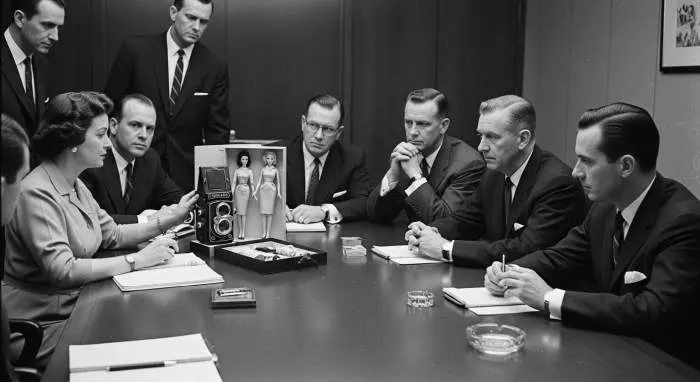
When she brought her idea for an adult-figured doll to the Mattel board, they rejected it outright. They feared a doll with a woman's shape would never sell and worried about the costs. Undeterred, Ruth knew she was right. She just needed a physical blueprint to prove her point. That blueprint would find her, unexpectedly, on a family trip to Europe.
The Swiss Shop Discovery
The year was 1956. While on vacation in Lucerne, Switzerland, Ruth Handler stepped into a shop. Some accounts say it was a toy store, others a tobacco shop, a detail that hints at the product's true nature. There, on a shelf, she saw her. A slender plastic doll with a severe blonde ponytail and a knowing smirk.
Her name was Bild Lilli. Ruth was instantly captivated. This was the three-dimensional adult figure she had envisioned. Lilli was fully articulated, a stark contrast to the static, chubby baby dolls back home. Without hesitation, Ruth bought three of them. One was for her daughter, Barbara, the future namesake. The other two were destined for the Mattel design team as a model.
The process of transformation could finally begin. But first, Ruth and her team had to understand exactly what they had acquired. Because Bild Lilli, as they would soon learn, was absolutely not intended for children's playrooms. She came with a backstory and a reputation that was decidedly risqué.
The Scandalous Origin of Bild Lilli
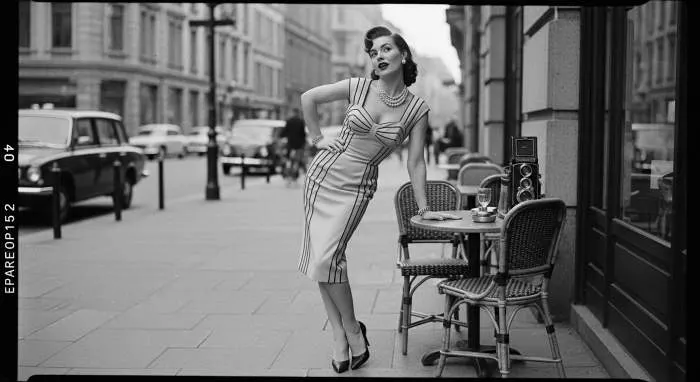
This is where Barbie's origin story gets its scandalous edge. Bild Lilli was not created by toy designers. She was a novelty item based on a character from a popular German comic strip in the newspaper Bild-Zeitung. Created by cartoonist Reinhard Beuthien in the early 1950s, Lilli was a street-smart, single pin-up girl known for chasing wealthy men and delivering witty, suggestive one-liners.
The doll, first sold in 1955 by the German company Greiner & Hausser, mirrored this adult persona. You wouldn't find her alongside teddy bears. Lilli was marketed to adult men as a gag gift or a cheeky collector's item, sold in tobacco shops, bars, and novelty stores. She was the kind of doll you might give as a bachelor party gift.
Her original wardrobe told the whole story: it featured cocktail dresses, furs, and bikinis. The doll's mold was equally audacious, with defined adult features, heavy painted eyeliner, and, most notably, feet permanently molded into a high-heel position. Thanks to those high-heeled feet, she could never wear flat shoes. The wholesome American icon had her roots in a plastic pin-up sold as a novelty for men.
The Corporate Makeover
Back in California, Ruth Handler and her team, led by designer Jack Ryan, faced a fascinating challenge. They had to keep the revolutionary adult figure concept but completely scrub away the scandalous German pin-up vibe. It was a corporate makeover of epic proportions.
The transformation involved several critical modifications. First came the face. Lilli's severe, cynical eyebrows and heavy makeup were softened into a gentler, more open and friendly expression. The hair was also changed; while Lilli had a tight, severe ponytail, the first Barbie offered a slightly softer version, often with the famous forehead curl.
The core adult mold remained, but the plastic quality was upgraded. Most importantly, the context shifted entirely. Barbie would be marketed explicitly to children. Years later, Mattel would purchase the rights to Lilli's patent and molds to settle legal disputes, officially absorbing the inspiration into corporate history.
Debut at the 1959 Toy Fair
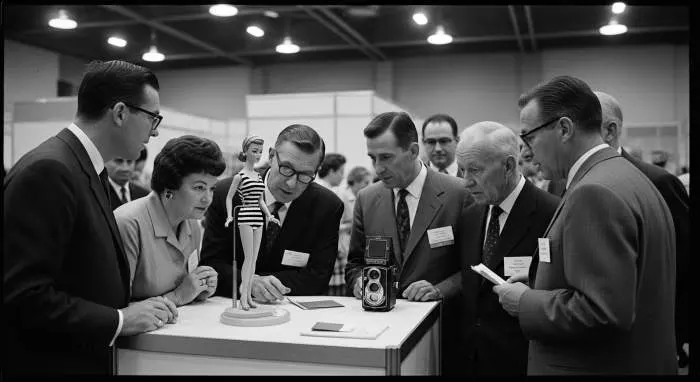
In March 1959, Barbie made her grand entrance at the American International Toy Fair in New York. Standing 11.5 inches tall in rigid vinyl, she was a shocking sight among the sea of baby dolls. The initial reception from retail buyers, who were mostly men, was deeply skeptical. They still found the concept too risqué.
The original doll was priced at just $3.00. She wore an outfit that would become legendary: the black-and-white striped strapless swimsuit, now known as the Zebra Swimsuit. It came with open-toed heels, hoop earrings, and that signature ponytail. It was a chic, high-fashion statement in miniature.
The real stroke of genius, however, wasn't the doll itself, it was the business model. Unlike Lilli, Barbie launched with an entire wardrobe sold separately. Mattel realized the profit was in the endless stream of clothing, accessories, and shoes. This strategy of selling the dream piece by piece revolutionized the toy industry.
The Legal Battle and a Quiet End
You can't reinvent a successful product without some drama. Greiner & Hausser, the German makers of Bild Lilli, noticed the uncanny resemblance. In 1961, they filed a patent infringement lawsuit against Mattel.
To secure total control, Mattel made a decisive move in 1964. They purchased all the patents, copyrights, and tooling for the Bild Lilli doll for a reported $21,600. Crucially, the deal included the original steel molds. Mattel didn't just buy the rights; they literally bought the bones Barbie was built on.
With the deal done, Greiner & Hausser ceased production of Lilli that same year. The scandalous German cousin was quietly retired, her legacy legally absorbed into the American icon. This acquisition is key to understanding the invention: Ruth Handler invented the *concept*, but the physical mold traces directly back to Lilli.
A Lasting Silhouette
Even though Lilli vanished, her silhouette never left. That original 1959 form, the tiny waist, long legs, and permanently arched feet, was Lilli's. It was a silhouette designed for drama and high fashion, not practicality, which is why Barbie has been at the center of body image debates for decades.
It wasn't until the 1970s, with the Twist 'n Turn body, that Barbie began to look less rigid. But the foundational idea, that a doll could be a muse for future dreams, was born in a German comic strip and spotted in a Swiss shop. Barbie's story is a classic tale of mid-century ingenuity.
So the next time you see a classic ponytail Barbie, remember her sophisticated, slightly scandalous German cousin. Behind the friendly smile is the smirk of a hip chick who knew how to hunt for treasure. And that is the truly rad secret history of the world's most famous doll.
You might be wondering about Ken, too
Ken arrived in 1961, named after the Handlers' son Kenneth.
The name mirrors how Barbie honored daughter Barbara.