Grab a beanbag chair and a Tab Cola, because we're traveling back to the most electric, flamboyant, and liberating decade the world has ever seen.
Disco was far more than music; it was a full cultural moment that refused to be boring. It promised that everyone, no matter who they were during the day, deserved to feel like a star once the mirror ball started spinning.
The Origins and Cultural Significance of Disco
It emerged in the early 1970s from the underground clubs of New York City's Black and Latino neighborhoods and LGBTQ+ communities. DJs in Harlem and the Bronx began mixing soul, funk, and electronic sounds into a hypnotic, four-on-the-floor beat designed to keep bodies moving for hours. This music offered an escape from economic hardship, social division, and the exhaustion of the Vietnam War era. On the dance floor, identity and class dissolved, only the music and the moment mattered.
Songs like Gloria Gaynor's "I Will Survive" and Chic's "Le Freak" became anthems of resilience and pure joy. The beat was so infectious that disco quickly spread from underground clubs to mainstream radio, television, and every corner of popular culture.
Sequins, Platforms, and the Disco Silhouette
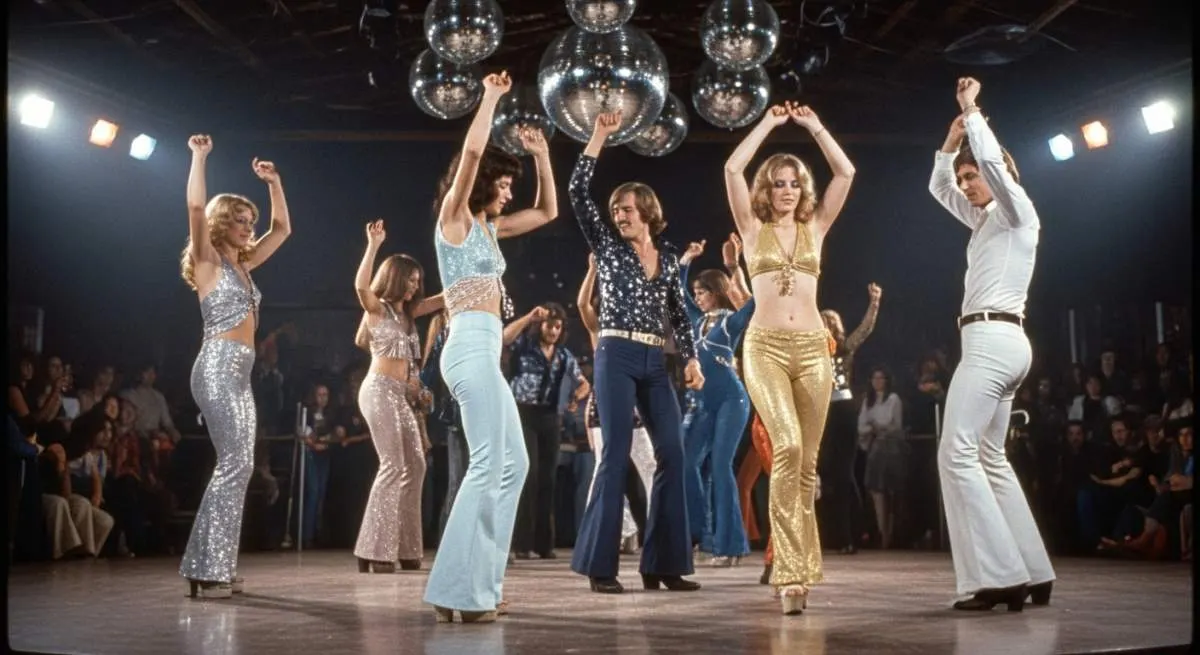
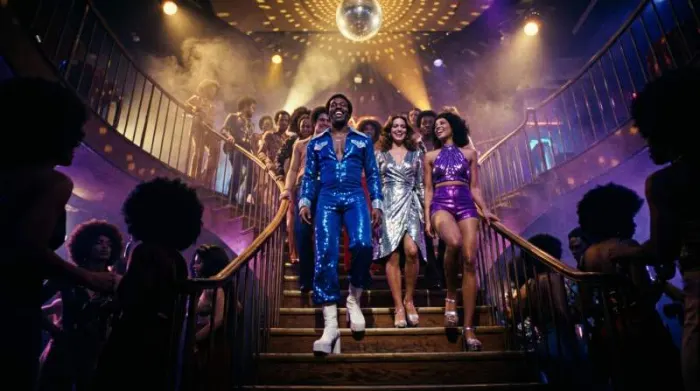
Disco fashion was all about excess, shimmer, and the freedom to be seen. Sequined halter tops, hot pants, and metallic wrap dresses dominated the dance floor. Men wore wide-collared shirts unbuttoned to the navel, bell-bottoms in velvet or polyester, and platform shoes that added a good three inches to their height. The jumpsuit became the ultimate disco uniform, especially for men, appearing in every imaginable color, gold, silver, electric blue, hot pink, and often covered in sequins or rhinestones.
The Polyester Revolution in Disco Fashion
Polyester was the undisputed fabric of disco. It was affordable, easy to care for, and caught the light like nothing else. Under strobing lights and mirror balls, polyester shimmered in ways natural fabrics simply couldn't. Manufacturers flooded the market with ready-to-wear disco outfits, making the look accessible to working-class dancers. A polyester suit cost a fraction of silk and looked just as dazzling under the lights. As an added bonus, the material didn't absorb sweat the way cotton did, which was a blessing for anyone spending hours on the floor.
Accessories That Completed the Disco Look
Accessories completed the transformation. Platform shoes with chunky heels were essential for both men and women. Chains, from thick gold links to delicate silver strands, were draped across the chest or wrapped around the waist. Afros were styled large and proud. Headbands, often metallic or studded with rhinestones, kept hair in place.
Makeup was bold and unapologetic: eyeshadow in electric blues, purples, and silvers, blended upward toward the temples. Glitter was everywhere, on the face, in the hair, dusted on the shoulders. The entire goal was to catch every possible flicker of light.
Studio 54 and the Mythology of the Disco Club
Studio 54, which opened in New York City in 1977, became the most famous disco in the world. The velvet rope at its door became legendary, creating an intoxicating aura of exclusivity. Inside was a pure fantasy: a massive dance floor, a DJ booth elevated above the crowd, and a lighting rig that made the space feel like the inside of a spaceship.
The famous man-in-the-moon sculpture with a cocaine spoon dangling from its nose became an iconic symbol of the era's unchecked excess. The fashion seen at Studio 54, a blend of high glamour and daring street style, set the standard for disco elegance everywhere.
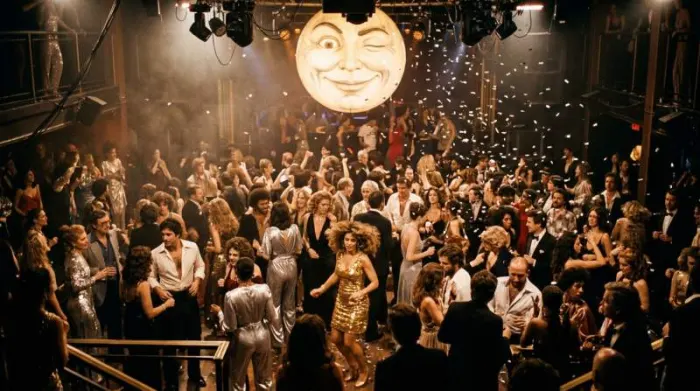
But Studio 54 was just the glittering tip of a much larger iceberg. Thousands of discos operated across America and around the world, from massive venues in every major city to intimate neighborhood clubs where the local community gathered to dance.
The DJ's Role and the Disco Beat
The heartbeat of disco was the four-on-the-floor kick drum, a bass drum hit on every beat of the measure, creating an unstoppable, hypnotic pulse. DJs were the true architects of the night, using two turntables to blend songs seamlessly, extend breaks, and build energy throughout the evening. The most famous disco producers and artists, like Donna Summer, KC and the Sunshine Band, and Nile Rodgers and Bernard Edwards of Chic, understood that disco was about the body, not the intellect. You didn't just listen to it; you felt it in your bones.
How Disco Spread Beyond the Club
By the mid-1970s, disco had conquered mainstream radio and television. "Saturday Night Fever," released in 1977, brought the scene into living rooms across America. The film's soundtrack, featuring the Bee Gees, became one of the best-selling albums of all time. Television shows like "Soul Train" and "American Bandstand" regularly featured disco performances. The music industry, which had initially dismissed the sound as a passing fad, suddenly realized it was sitting on a goldmine.
The Radical Inclusivity of the Disco Dance Floor
Perhaps disco's greatest gift was its radical inclusivity. The dance floor welcomed Black dancers, Latino dancers, gay dancers, straight dancers, the working class, and the wealthy. In a country still deeply divided by race and class, the disco was one of the few places where these boundaries could be temporarily erased. For gay men and women, it was a vital sanctuary.
Women found a new kind of liberation on the disco floor, wearing what they wanted and dancing how they wanted, free from judgment. The music itself celebrated female artists and female pleasure in ways that rock and roll largely hadn't.
The Backlash and the End of the Disco Era
By the early 1980s, disco's moment was fading. "Disco Sucks" became a rallying cry, and the music was widely dismissed as shallow and frivolous. It's important to acknowledge that some of this backlash was rooted in racism and homophobia; to its detractors, disco was too Black, too gay, too feminine for the rock establishment.
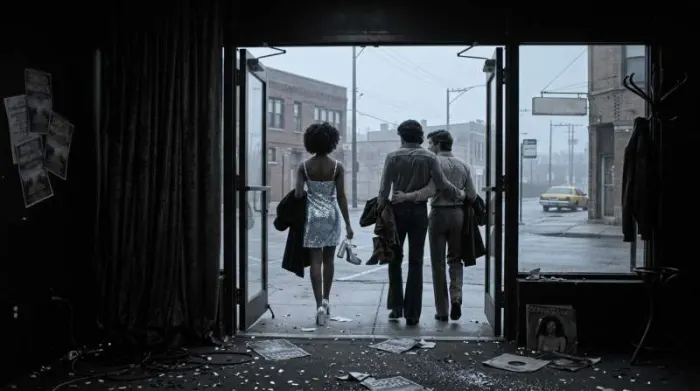
The economic recession of the early 1980s also played a role, as such pure escapism began to feel out of step with the grim realities of the times. But disco never truly died. It simply evolved, seeding the growth of house music, techno, and all forms of electronic dance music. The fashion, with its bold shoulders and metallic sheen, has returned in waves, in the 1990s, the 2000s, and again today in modern interpretations.
Why Disco Still Matters Today
Disco reminds us that popular culture can be both frivolous and profoundly meaningful. It was about survival, resistance, and the basic human need to feel alive and seen. In a world that often tells us to be smaller, quieter, and less visible, disco shouts back: shine brighter, dance harder, take up more space. The fashion of disco, the boldness, the shimmer, the utter refusal to apologize for being noticed, speaks to something timeless in all of us. We want to feel beautiful. We want to be seen. We want to belong to something bigger. Disco understood that craving perfectly.
Whether you lived through the 1970s or are discovering it all for the first time, the message remains: tonight is the night. The music still makes you want to move, the fashion still feels fabulous, and the spirit of that dance floor, where the music seems so loud it fills you up, is always waiting. It’s the same feeling that makes you want to get down tonight, just like they did back then.
The infamous 'Disco Demolition Night' at Comiskey Park in Chicago on July 12, 1979, where thousands of disco records were blown up between baseball games, marked a turning point. The event, fueled by rock radio DJ Steve Dahl, tapped into a simmering cultural backlash that mixed homophobia, racism, and anti-commercial sentiment. Yet disco's DNA lived on: its four-on-the-floor beat directly birthed house music in Chicago clubs just a few years later.