

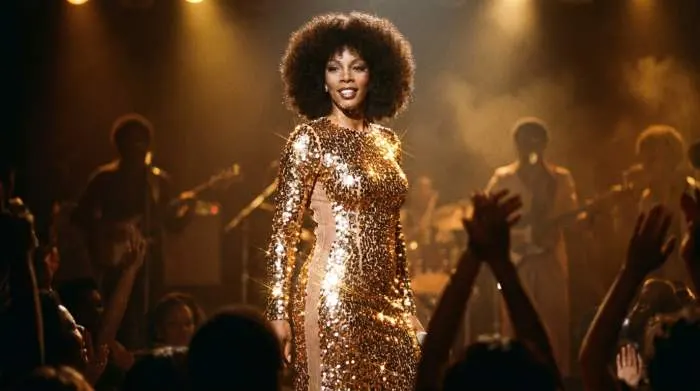
In the mid-1970s disco era, a world of velvet and satin, Donna Summer's gown created a scandalous illusion. Sheer nude mesh covered in sequins made audiences think they saw skin, but the reality was a fully covered nude bodysuit underneath. This power of suggestion, which still echoes in controversies over figure skaters' costumes today, was the gown's true genius.
I remember flipping through a scuffed magazine rack once and stumbling across the "Love to Love You" gown. It hit me then, Donna Summer's sequins were never as innocent as nostalgia makes them out to be. The mid-70s were thick with cigarette smoke and hairspray. Studio 54 hadn't opened yet, but the fever was already spreading through every dive bar with a mirrored ball. This was the 'me' generation, loud and unapologetically sexed-up. The world, fresh from war and protests, just wanted to party.
Donna Summer, a Boston girl with a honey voice and a steel gaze, held the microphone. While the popular 1970s wrap dress was all about easy access, this gown was different, a weapon of shimmering Lurex and glass beads. Every seam felt like a promise, every sequin a demand for attention. On her album cover, she wasn't asking for a dance. She was telling you what she wanted, and she wasn't shy about it.
Her song 'Love to Love You Baby' was a 17-minute whisper of lust, banned on radio but catapulted to fame. The controversy around the sequined gown on the album cover only fueled its notoriety.
The Secret of the Sequined Illusion
Under stage lights, the gown looked like a million bucks. The real secret was what it didn't show. The dress was sheer nude mesh drenched in hand-sewn sequins.
Why the Sequins Made People Angry
The gown didn't break a rule; it bent the light and challenged 1970s fashion norms. The scandal wasn't about fabric but the idea of fabric.
Parents panicked, fearing their daughters would wear nothing but glitter. The real trigger was fear of the unknown: a woman fully covered could still seem naked. The threat was the power of suggestion, not the body itself.
Then it got stranger. The dress became a symbol of excess, yet it was modest, nude mesh as second skin, sequins as armor. The most scandalous dress was technically one of the most covered.
The outrage was a collective optical illusion. Media ran headlines about 'pornographic fashion' and missed the point entirely: the gown wasn't about showing skin but making you think you saw it.
The Mechanical Trick of the Gown
From ten feet away, the fabric seemed to vanish. The sequins screamed glamour.
But the dress was a decoy. It made the audience think they saw everything, yet revealed almost nothing.
Its genius lay in a nude bodysuit underneath. The sequins were sewn in a chaotic pattern, creating a blur when Summer moved. The eye couldn't focus; it was a visual smoke screen.
The dress weaponized the suggestion of nudity. You thought you saw skin, but really, you only saw light bouncing off a thousand mirrors.
The gown's power was pure physics. Sequins sewn at different angles created shimmering static. When Summer danced, it all blurred together.
The eye can't process that much flicker, so it fills in the blanks. The audience expected a naked woman, so the dress gave them permission to imagine. It was a psychological trick that made the viewer complicit. For more on the era's reclamation of the female body, check out Bikini Kill's 'Slut'.
Not many people know this, but Kathleen Hanna wrote that song after a fan told her Donna Summer's gown inspired her to wear a sheer top to a show, proof that the disco queen's influence stretched far beyond the dance floor.
The Bob Mackie Copy That Sparked a TV War
Cher's 1975 variety show needed a ratings jolt. Bob Mackie created a bias-cut gown that mirrored Donna's sheer shock. Censors almost pulled the episode but didn't, and ratings exploded. Suddenly, every host wanted a 'Donna Summer moment.'
Cher’s Mackie gown sold at auction for $25,000 in 2010. RuPaul wore a replica on the Season 9 finale and called it “disco gospel.” Beyoncé’s "Naughty Girl" performance in 2004 paid direct homage.
Kept Alive by Club Culture and Fashion Shows
Studio 54 regulars made the gown's spirit a badge of honor. Designers like Thierry Mugler built entire collections around transparent shimmer. In the 1990s, London club kids wore DIY versions.
The dress never really died, it just changed hands. Each generation rediscovers it through a clip of Donna writhing on a white rug. That moment is frozen, but its influence still moves.
The gown even lives in search bars. Costume hunters still type 'how to sew sequins on a dress' before every themed party, chasing the same trick Summer's stylist knew: stitch each disc loose so it can turn and catch the light. Others simply search 'how to sequins on fabric,' dropping the verb the way regulars drop names, while newcomers look up 'sequins how to say' because the word looks harder to wear than it is.
Modern Revival of the Nude Illusion
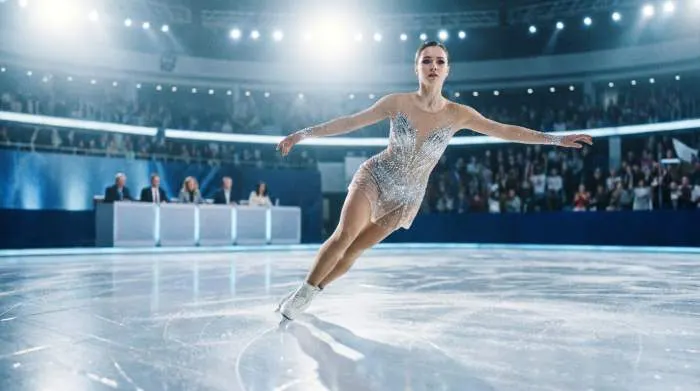
The loudest modern echo isn't on a red carpet but on ice. Figure skating has a long history with costume police. A junior competitor once lost two points for a sheer mesh panel.
Her coach argued it was embroidery, but the judges saw Donna Summer's ghost. The controversy is identical: too much skin, too much sparkle, too much intention. In 2018, a top skater wore a nude illusion dress covered in Swarovski crystals.
Under the lights it looked wet and moved like liquid. The internet split, art or porn?
She was both lauded and shamed, just like Summer in 1975. The outfit was a power move, and the outrage proved it worked.
The Skater Who Broke the Mold
Her routine was clean, but the dress became the story. Commentators called it 'distracting,' which really meant sexual. Summer's gown was called distracting too.
The truth is simple: women in control of their shimmer scare people. The coach admitted the dress was a statement, a way to reclaim the female body as athletic, not passive. Same logic as Summer, just sharper blades.
Scandal Wears a Different Sequined Mask Now
We don't ban sequins anymore. We gatekeep them digitally. Instagram flags bikini photos as sensitive.
YouTube demonetizes a hip roll. The platform is the new Ed Sullivan Show, deciding what's too hot. Summer's dress shocked because it mirrored sweat and sex.
Now a single frame of a crystal costume can get age-restricted. The logic is identical: move like a woman who enjoys her body, and the algorithm censors you.
Modern pop stars understand. They wear the sparkle anyway, courting the flag. It becomes part of the brand.
The gown's true revival isn't in fashion but in the fight. Every time a dancer fights a demonetization for a costume that moves like Summer's, the gown breathes again.
The sequins aren't the point; the shock they cause is. And that shock is alive, well, and skating a clean program.