

From Secretary to CEO: The Armoring of 80s Ambition
The 1980s power shoulder was more than a trend; it was a visual manifesto for women claiming space in corporate America. For female executives breaking through the glass ceiling, those exaggerated shoulders were a strategic move. They made a woman's frame look bigger, forcing a visual presence that matched the men across the table. This wasn't about blending in, it was about standing out and claiming authority.
Some might say women were just copying men, but that misses the point entirely. It was an adaptation, a deliberate choice to speak the visual language of power in a world that had written the rules without them. These women wore 'armor' not because they were weak, but as a shield and a weapon in a corporate world built by and for men. The message was unmistakable: competence, confidence, and an unapologetic claim to space.
Where Power Shoulders Came From
Shoulder padding wasn't invented in the 1980s. The silhouette has roots stretching back to the 1940s, when padded shoulders dominated wartime fashion, giving women a strong, angular frame during an era when they were entering the industrial workforce. But the 1980s version was different. It wasn't just fashion, it was ideology stitched into every seam.
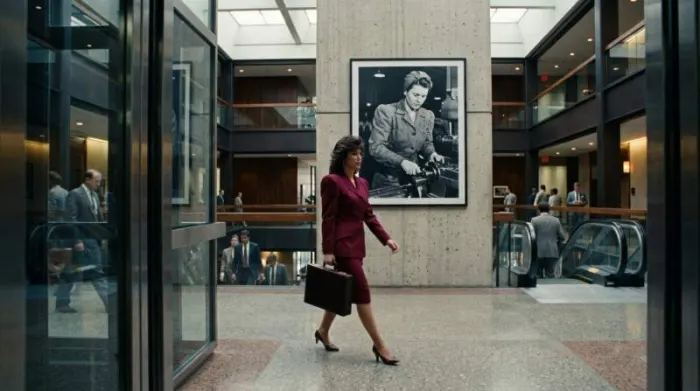
The 1970s had introduced women to the workplace in unprecedented numbers, but the dress code remained uncertain. What should an ambitious woman wear? By the early 1980s, fashion designers and business consultants offered an answer: dress for the job you want, not the job you have. That meant adopting the visual language of male power dressing, the tailored suit, the structured blazer, the commanding silhouette. Shoulder pads became the most visible symbol of this shift.
Designers like Thierry Mugler, Claude Montana, and Giorgio Armani championed the exaggerated shoulder throughout the decade, making it the defining shape of 80s fashion. These weren't subtle touches; they were architectural statements. Some jackets featured shoulders so pronounced they extended several inches beyond the natural shoulder line, creating a geometric, almost sculptural effect. The look filtered down from high fashion to department stores, making power shoulders accessible to secretaries, lawyers, bankers, and entrepreneurs alike.
The Psychology of Taking Up Space: Why Shoulder Pads Empowered Women
Body language research has long shown that the physical space a person occupies shapes how others read their confidence and authority. A wider stance, a straighter spine, and a broader silhouette all signal presence before a single word is spoken. The 1980s power suit simply packaged that instinct into a garment, letting a woman broadcast authority the moment she walked into a room.
It was a deliberate power move. Women wore shoulder pads in the 80s as a visual tactic to command authority in male-dominated boardrooms, literally taking up more space. This 'armor' projected competence and ambition, helping women stand shoulder to shoulder with their male colleagues. The psychological effect was real: a woman in a power suit with exaggerated shoulders looked larger, more imposing, and harder to ignore.
Did the clothes themselves get promotions? No. But they certainly projected an image of capability and resilience. The padding gave a psychological boost, a visual reminder to both the woman and her male colleagues that she was a force to be reckoned with. Every time a woman put on a sharp blazer with structured shoulders for a high-stakes meeting, she was making a statement about her right to be there.
The Corporate Uniform Takes Shape
By the mid-1980s, the power suit had become the unofficial uniform of ambitious women. A typical ensemble included a blazer with pronounced shoulder pads, a pencil skirt or tailored trousers, and often a silk blouse in a neutral or bold color. The silhouette was intentionally masculine in its geometry, broad, angular, commanding, but distinctly feminine in its execution. Women weren't trying to look like men; they were creating their own visual language of authority.
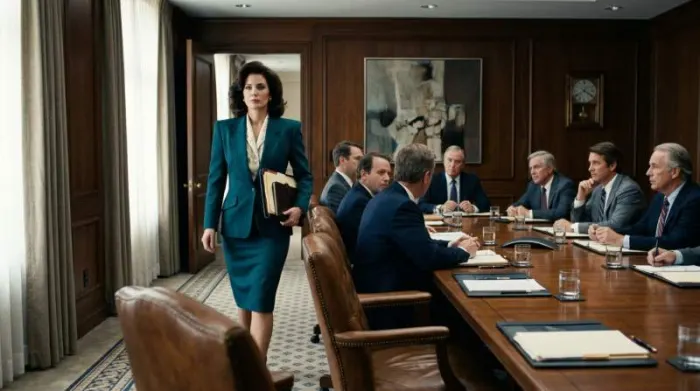
The power suit appeared everywhere: in offices, on television, in magazines. Shows like "Dynasty" and "Falcon Crest" featured female characters in increasingly elaborate power suits, making the look aspirational for viewers. Working women saw themselves reflected in these images and understood the message: this was what success looked like. Retailers capitalized on the trend, and by the late 1980s, shoulder-padded blazers were standard in every department store.
What Those Shoulders Left Behind
The history of women's boardroom attire in the 1980s became forever tied to this bold, often polarizing look. While the clothes themselves didn't guarantee equality, they signaled a shift in how women saw themselves and how they wanted to be seen. The power shoulder became a symbol of the women's movement in the workplace, visible, undeniable, and impossible to dismiss.
By the 1990s, the extreme shoulder pad began to fade. Fashion moved toward softer silhouettes, and corporate culture slowly evolved. But the legacy remained. Today, while actual shoulder pads aren't a daily uniform anymore, their influence persists. Every time a woman puts on a sharp blazer, structured coat, or subtly padded jacket for a high-stakes meeting, she channels that 80s spirit. We've moved past extreme padding, but the idea of using clothes to project strength, competence, and a no-nonsense attitude is a lesson those big shoulders taught us well.
The Modern Echo of 80s Power
Contemporary fashion has revisited the power shoulder more than once. The 2010s saw a resurgence of structured blazers and subtle shoulder padding, though designers approached it with more restraint than their 1980s counterparts. Runway collections rediscovered the architectural potential of a strong shoulder line, offering a softened, modern update rather than a literal revival of extreme padding.

Today's power dressing isn't about copying the 1980s wholesale. Instead, it's about understanding what those shoulders represented: a deliberate, confident silhouette that says, "I'm here, I'm capable, and I own this space." Modern power shoulders bring a quiet authority, a subtle nod to how 80s female executives dressed, updated for a world that values individuality and nuance. Paired with a sharp blazer, a softly padded jacket, or a tailored coat, the look frames the body without overwhelming it, turning that undeniable presence into an everyday style choice.
Beyond the Boardroom: Power Shoulders in Pop Culture
Beyond the boardroom, the 80s power shoulder also appeared on the runway and in popular music. Pop icons like Madonna and Cyndi Lauper wore exaggerated shoulders in music videos and tour costumes, bringing the look from corporate headquarters to concert stages and MTV. This crossover helped normalize the silhouette far beyond the office, making it a mainstream fashion staple. As a result, women who never set foot in a boardroom could adopt the same visual language of strength and self-assertion, using fashion to claim their own space in everyday life.
What did shoulder pads symbolize in the 1980s
Beyond the boardroom, shoulder pads also symbolized a rebellion against the soft, feminine ideals of the 1950s and 60s. They were a visual middle finger to the notion that women should be small, quiet, and unobtrusive. This bold silhouette became a badge of honor for women entering any male-dominated field, from law to journalism to politics.