
How Jean Paul Gaultier Built an Icon From Medical Tape
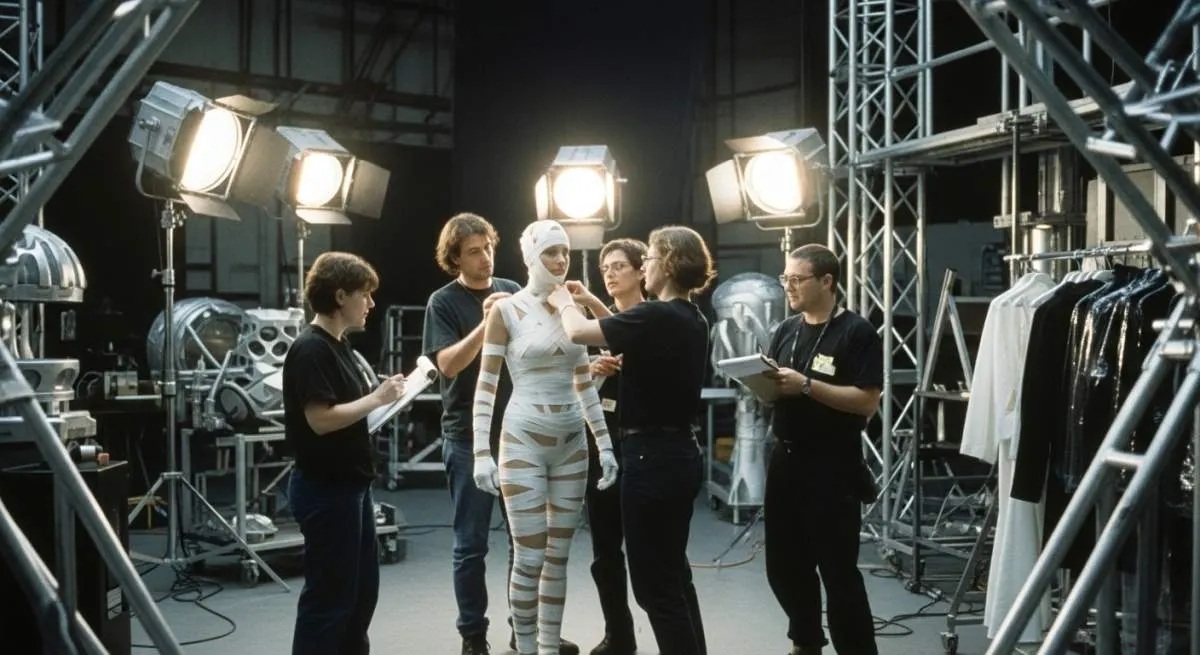
When Jean Paul Gaultier designed Leeloo's costume for Luc Besson's 1997 sci-fi film The Fifth Element, he faced a creative puzzle: how to dress an alien being who was simultaneously innocent and powerful, vulnerable and otherworldly. His answer was audacious and almost impossibly simple: white athletic tape, applied directly to actress Milla Jovovich's body in precise, geometric patterns. The result became one of cinema's most unforgettable fashion moments, a minimalist masterpiece that proved innovation doesn't require elaborate fabrics or traditional construction.
Why Medical Tape Instead of Fabric?
Gaultier's choice of athletic tape was both practical and conceptual. Fabric would have grounded the costume in earthly materials; tape suggested something temporary, applied, almost scientific. The white color evoked both clinical sterility and futuristic purity. But the real genius lay in the risk he took: one misstep, and the costume could have read as cheap, costume-y, or worse, like Leeloo was wrapped in actual bandages rather than wearing a deliberate design statement.
To avoid that bandage trap, Gaultier applied the tape with architectural precision. The strips followed clean lines across the torso, shoulders, and limbs, creating geometric negative space that suggested structure and intentionality. The placement was never random; every gap and every strip served the silhouette. This meticulous approach transformed what could have been a gimmick into haute couture.
Construction and Application
The costume required hours of careful application on set. The tape had to adhere to skin without causing discomfort or damage, and it needed to hold up under the physical demands of filming action sequences. Jovovich had to move, fight, and perform in the costume, which meant the tape placement had to be both visually striking and structurally sound. The white athletic tape used was durable enough to withstand repeated takes and movement, yet flexible enough to allow the actress to perform without restriction.
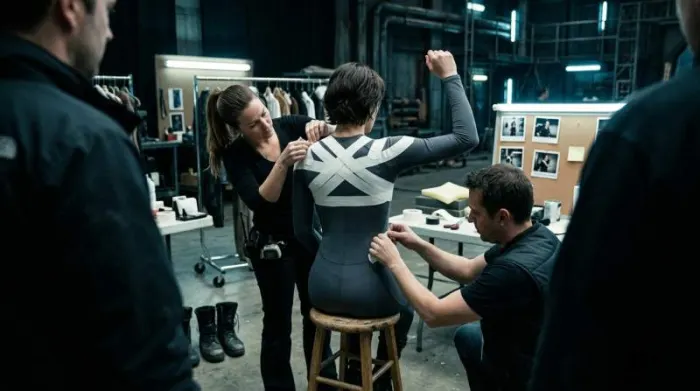
Gaultier's approach reflected his broader design philosophy: fashion should challenge conventions and provoke thought. He had already made his mark with controversial designs, including corsetry that transformed traditional garment construction. With Leeloo's costume, he applied that same principle to an entirely new medium, proving that materials typically associated with sports or medical use could become high fashion when deployed with intention and artistry.
Why Leeloo's Look Still Resonates
Decades after the film's release, Leeloo's costume remains instantly recognizable and endlessly referenced. It appears in fashion editorials, on runways, and at conventions worldwide. The design transcends the film itself; it has become shorthand for a specific aesthetic: futuristic minimalism, controlled exposure, and fearless simplicity. What makes it so durable is that it doesn't rely on trend cycles. The costume works because it's fundamentally about proportion, negative space, and the relationship between body and garment, principles that outlast any seasonal fashion moment.
The costume also captured something about late-1990s culture: a moment when science fiction was becoming more visually sophisticated, when fashion was beginning to blur the line between avant-garde and mainstream, and when film design was recognized as a legitimate art form worthy of serious attention. Gaultier's work on The Fifth Element elevated costume design in popular cinema and showed that a film's visual language could be as innovative as its narrative.
Influence on Contemporary Fashion and Cosplay
The costume has inspired countless interpretations across fashion, film, and fan culture. High-end designers have created tape-inspired pieces and geometric cut-out designs that echo Gaultier's approach. Cosplayers recreate the costume with meticulous accuracy, understanding that the tape placement is not decoration but the entire design. Fashion photographers reference the look in editorials exploring futurism, minimalism, and controlled sensuality. The costume has become a visual language that designers and creators continue to speak in.
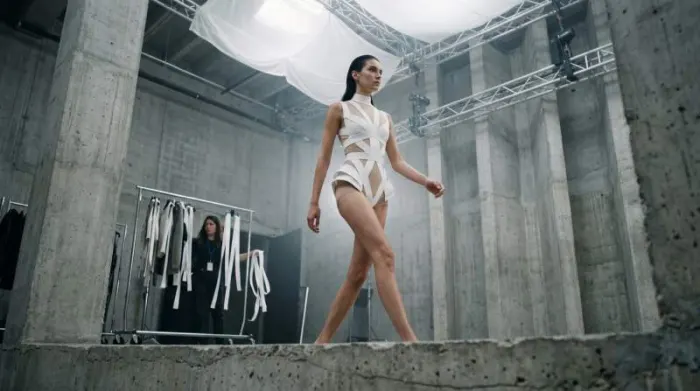
What's particularly striking is how the costume has aged. Many sci-fi fashion moments from the 1990s feel dated now, trapped in their specific era. Leeloo's tape costume, by contrast, feels timeless. It could appear in a contemporary film without feeling retro or nostalgic. That durability speaks to Gaultier's understanding of fundamental design principles: when you strip away everything except structure and proportion, you create something that transcends its moment.
Gaultier's Design Philosophy and Fearless Innovation
Jean Paul Gaultier built his career on challenging fashion conventions. He deconstructed garments, exposed seams, played with gender presentation, and refused to accept that certain materials or construction methods were off-limits. The Leeloo costume was a natural extension of this philosophy. For Gaultier, fashion was not about hiding the body or pretending garments appeared by magic; it was about revealing the architecture of design itself.
His work on The Fifth Element also demonstrated that costume design for film could be as intellectually rigorous and artistically ambitious as any haute couture collection. Gaultier treated the costume not as a practical necessity but as a character statement, a visual manifestation of Leeloo's nature. The tape became a language, communicating her otherness, her vulnerability, and her power through pure design.
How to Channel the Leeloo Vibe Today
If you're drawn to Leeloo's look and want to channel that same sense of controlled exposure and futuristic minimalism without actual medical tape, the key is understanding the principles Gaultier used: geometric precision, strategic negative space, and bold simplicity. Think of modern pieces with cut-outs, asymmetrical lines, or a monochromatic palette. A sleek bodysuit with a keyhole detail, a dress with geometric paneling, or even a simple white top paired with structured trousers can echo the vibe. The focus should be on proportion, intentional gaps, and the confidence to let negative space do the work. It's about creating a look that feels innovative and forward-thinking, just like Gaultier's original, but translated for everyday wear.
- Structured White Pieces: Start with clean, crisp white items. A tailored vest with sharp lines, a sculptural crop top, or even a white utility jumpsuit can capture that minimalist, slightly futuristic vibe.
- Strategic Cut Outs: Look for clothing with intentional, geometric cut outs. Think tops with shoulder slits, dresses with waist cut outs, or even mesh panels that reveal skin in a controlled, artful way, mimicking the 'tape' effect without the actual tape.
- Bold Accessories: Accessorize with metallic details, silver cuffs, chunky rings, or even clear PVC elements. Don't forget a statement belt to cinch and create new lines, drawing attention to your silhouette.
- Understated Footwear: Keep shoes sleek and modern. White sneakers with interesting details, futuristic ankle boots, or minimalist heels work well. The focus should stay on the clothing's structure.
- Hair and Makeup: Think clean and sharp. A sleek ponytail or a blunt bob. For makeup, maybe a sharp eyeliner wing or a graphic eyeshadow look, keeping the rest of the face minimal and radiant.
Why This Costume Endures
Leeloo's costume from The Fifth Element isn't just an outfit; it's a masterclass in how simplicity, when executed with precision and vision, can become unforgettable. Decades later, it remains instantly recognizable, still sparking conversations, and still proving that sometimes the most audacious ideas are the ones that last.
Jean Paul Gaultier didn't just design a costume for a film; he created a visual language that continues to influence fashion, film, and fan culture. The white tape became a symbol for a specific brand of sci-fi cool: futuristic yet vulnerable, minimalist yet powerful, simple yet impossibly complex in its execution. It's a reminder that true innovation in fashion isn't about expensive materials or complicated construction; it's about understanding proportion, negative space, and the courage to take risks that could fail but instead become iconic.
Why did they wrap Milla Jovovich in white tape for The Fifth
Element
Before Gaultier came on board, Luc Besson originally envisioned Leeloo's costume as a simple white bandage dress, but the designer pushed further, using medical tape to echo the film's themes of regeneration and clinical futurism. Interestingly, Milla Jovovich later revealed she had to stand for hours while makeup artists applied the tape, and the whole look was so fragile that stunt doubles wore fiberglass replicas for action scenes.