"The dress is so perfectly simple that it allows the person wearing it to be complicated." Hubert de Givenchy on dressing Audrey Hepburn.
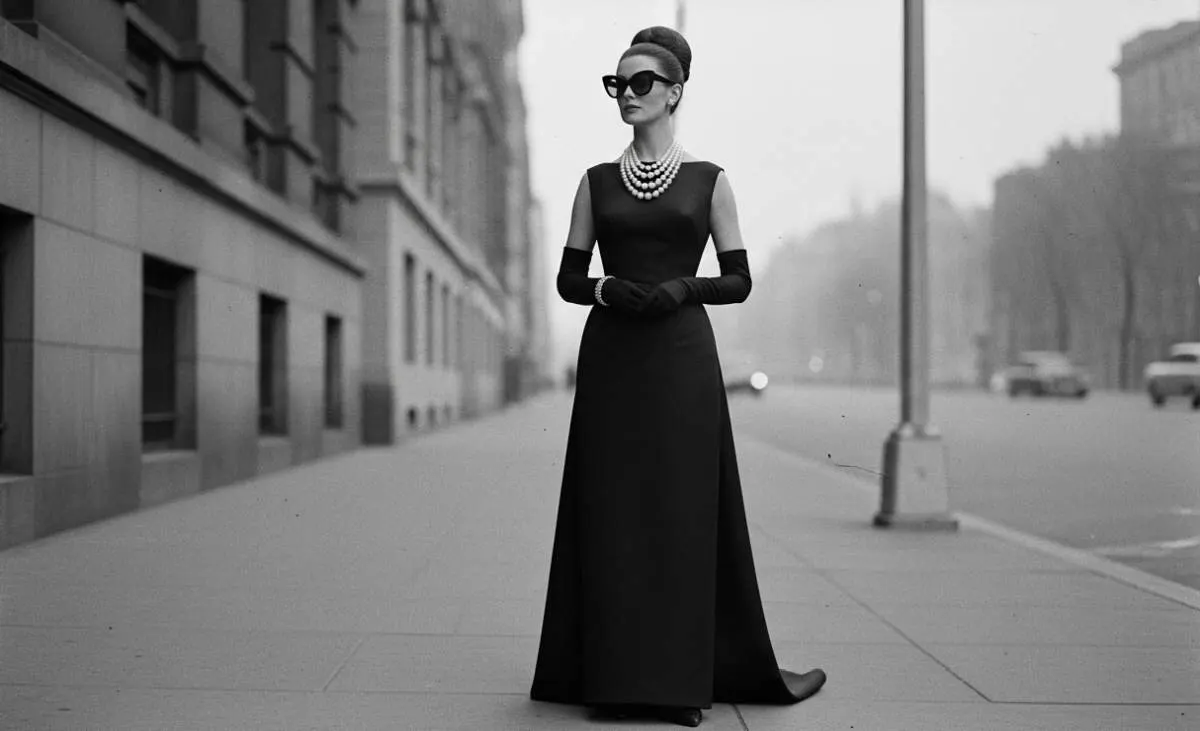
When Audrey Hepburn stepped out of a taxi on Fifth Avenue in the opening scene of Breakfast at Tiffany's, she created one of the most recognizable images in film history. Her sleek black sheath, long gloves, and five-strand pearl necklace became a shorthand for understated elegance that launched a thousand imitations. But the real story behind Hubert de Givenchy's gown is far messier than its polished image suggests, involving studio fights, three secret versions of the dress, and a designer who nearly walked away.
How Givenchy Became Audrey's Designer
Audrey Hepburn and Hubert de Givenchy first met in 1953 when the young actress visited his Paris atelier for Sabrina. Expecting Katharine Hepburn, Givenchy was initially disappointed, but the two clicked immediately. He was struck by her gamine frame and instinct for what worked on her body, and she trusted his eye completely. By the time Breakfast at Tiffany's went into production, Audrey insisted that Givenchy design her wardrobe.
Paramount Pictures balked. The studio wanted their own legendary costume designer, Edith Head, to handle the entire film. The awkward compromise was that Givenchy would design Audrey's key looks, but Edith Head would receive sole screen credit. Givenchy agreed, largely because Audrey asked him to, setting the stage for a piece of fashion history.
The Three Secret Versions of the Dress
Most people assume there was one iconic black dress. In reality, Givenchy created three separate versions for different purposes. The first was the screen dress, made from Italian satin-faced wool in a matte black finish.
It featured a fitted bodice, a straight skirt that hit just below the knee, and a dramatic back slit for movement. The neckline was a simple bateau cut, and the sleeves were bracelet length. This was the dress Audrey wore in the opening scene and during the party sequence.
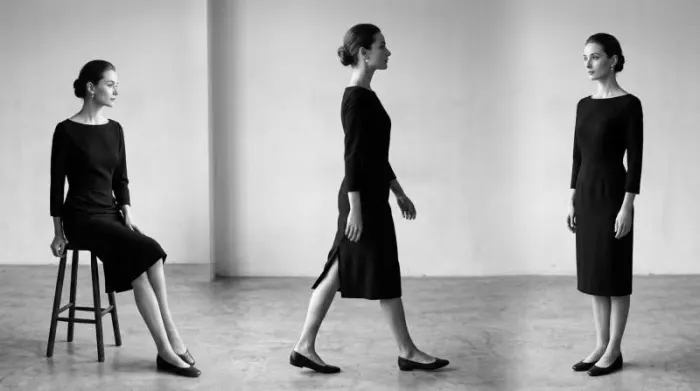
The second version was a backup, nearly identical but made from a slightly different fabric weight to account for lighting and camera angles. The third was the publicity dress, constructed from silk taffeta and used exclusively for promotional photographs and poster shoots. This version was never worn on screen, which is why it remained in such pristine condition decades later.
All three dresses were cut to Audrey's exact measurements: a 22-inch waist, narrow hips, and a long torso. Givenchy understood that the dress had to work as a frame, not a costume. It needed to be simple enough to let Audrey's face and movement do the storytelling, but striking enough to register as glamorous in black and white film stock.
What the Dress Meant in 1961
When Breakfast at Tiffany's premiered in October 1961, the dress was an immediate sensation. Women's Wear Daily called it "the most copied dress in cinema history" within a year. Department stores from New York to Los Angeles rushed out knockoff versions, often advertised as "the Holly Golightly look." Prices ranged from $12.99 for a rayon version at Gimbels to $150 for a closer silk approximation at Bergdorf Goodman.
The dress worked because it arrived at a cultural turning point. The 1950s silhouette, with its cinched waists and full skirts, was beginning to feel fussy. Givenchy's sheath offered a cleaner, more modern alternative. It suggested sophistication without trying too hard, the kind of dress a woman could wear to a cocktail party, a gallery opening, or a late dinner without looking out of place.
The styling was just as important as the cut. Audrey wore the dress with elbow-length black satin gloves, oversized sunglasses, and a towering chignon secured with a rhinestone tiara. The pearls were costume jewelry, layered in five strands of varying lengths. The whole look cost a fraction of a traditional evening gown, yet it read as infinitely more chic. That accessibility, combined with Audrey's star power, made the dress feel aspirational but not impossible.
The Givenchy LBD's Million-Dollar Sale
The enduring power of this garment was proven dramatically in 2006. One of the three original Givenchy dresses, the silk taffeta publicity version, was put up for auction at Christie's in London. Experts predicted it might fetch around £70,000, but the reality was staggering. The dress sold for £467,200, approximately $807,000 US dollars at the time, making it the most expensive dress from a film ever sold at auction. The proceeds were donated to the City of Joy Foundation, a charity benefiting India's poor, proving that even a dress designed for fictional glamour could do real-world good.
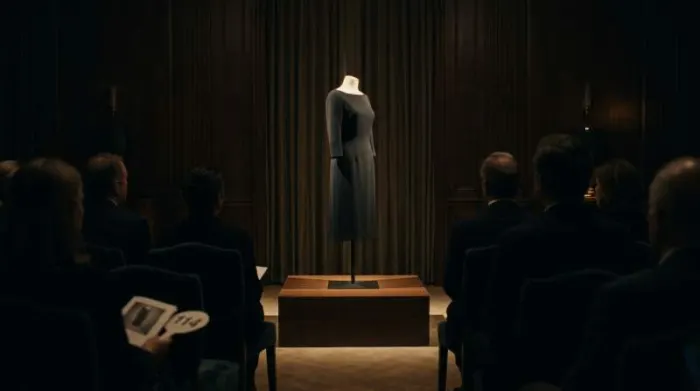
This auction cemented the dress's status not just as a piece of film history, but as an artifact of cultural significance. It's proof that the synergy between a brilliant designer and a singular muse can create something truly immortal.
Why the Dress Still Matters
The Givenchy LBD didn't invent the concept of the little black dress, Coco Chanel had introduced that idea in the 1920s, but it redefined what the garment could mean in the second half of the 20th century. Chanel's version was about practicality and rebellion against Edwardian excess. Givenchy's was about elegance as a form of self-possession. Holly Golightly wore that dress like armor, and women understood the message immediately.
The dress has been referenced, copied, and reinterpreted in every decade since. Designers from Karl Lagerfeld to Tom Ford have cited it as an influence. It appears in museum exhibitions alongside Chanel suits and Dior New Look gowns. Fashion students study its construction, and vintage collectors hunt for the original department store knockoffs. The dress has become a visual shorthand for a certain kind of aspirational femininity, one that values restraint, confidence, and a touch of mystery.
How to Capture the Holly Golightly Vibe
If you're looking to channel your inner Holly, remember that the look is less about costuming and more about attitude. The essence of the style is clean lines, impeccable grooming, and a hint of playful mystery.
The silhouette is the foundation: focus on structure. A modern version of the dress could be a midi-length sheath with a high neckline or a boat neck. Avoid overly complicated fabrics; stick to matte crepe or heavy silk. For hair, the high, voluminous chignon is a must, it instantly elongates the neck and frames the face. Audrey's look was also defined by her thick, natural, yet perfectly sculpted brows. Skip the heavy eyeliner and focus on a bold brow and a subtle, classic red lip for evening. And don't be afraid to layer your pearls; a single strand is chic, but four or five strands of differing lengths give you that necessary Holly opulence.
The ultimate lesson from the Givenchy LBD is that true glamour is effortless. It's about knowing yourself, trusting your instincts like Audrey trusting Hubert, and letting your clothing simply enhance the star you already are. It's a look that promises adventure, sophistication, and maybe, just maybe, a little bit of trouble.
The story behind the song, in case you are curious
Moon River, written by Henry Mancini with lyrics by Johnny Mercer for Hepburn to perform on her fire escape.
It won the 1962 Academy Award for Best Original Song.