
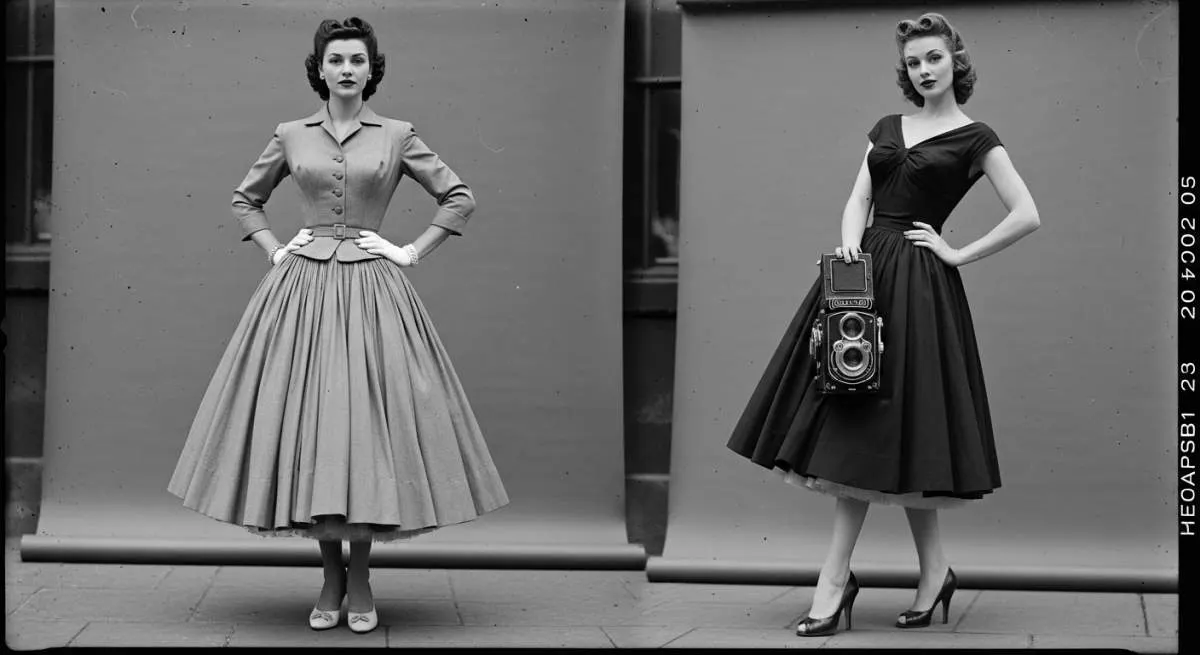
The Austerity of Wartime Fashion
Fabric was rationed, resources were tight, and clothing became a uniform of resilience. With women stepping into new roles in factories and offices. They needed durable, practical clothes that allowed free movement. Silhouettes streamlined into broad, padded shoulders and slim skirts that ended just below the knee to conserve precious material.
Hems were often shorter due to regulations, and ornamentation was minimal. This style wasn't a trend; it was a visual uniform for collective endurance, reflecting the austerity of a global struggle. Clothes were made to last, mended, and repurposed out of sheer necessity.
This post-war fashion had an inherent strength, but it left the world, especially a war-ravaged Europe, truly starved for beauty, luxury, and a sense of joy.
Christian Dior's Vision: A Return to Femininity
Christian Dior's background in art galleries gave him a unique eye for form, volume, and aesthetic impact. He saw how weary the world was after the war, and how women had, in his view, sacrificed their natural femininity in dress. His ambition went far beyond designing clothes; he wanted to reintroduce joy, elegance, and a dreamlike quality to women's wardrobes.
Dior believed that after years of deprivation, women deserved to feel beautiful and indulge in fashion's fantasy again. His vision was a direct response to the era's austerity.
The Birth of the New Look: February 12, 1947
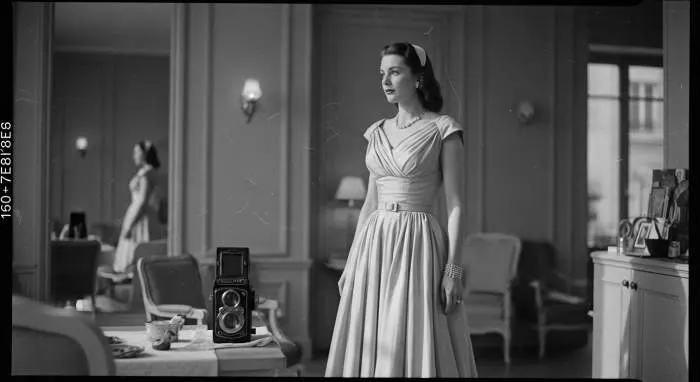
On February 12, 1947, Christian Dior unveiled his first collection, which American Harper's Bazaar editor Carmel Snow instantly dubbed the "New Look." The effect was electric. The silhouette was breathtakingly opulent: soft, rounded shoulders, a dramatically cinched waist, a high, firm bust, and voluminous skirts that often swept to mid-calf or lower. The iconic "Bar" suit, with its cream silk shantung jacket and full black wool skirt, perfectly captured this aesthetic.
"It's such a New Look!"
This was an unapologetic rejection of the lean, angular lines of the war years. It was a joyful celebration of the hourglass figure, an exaggerated femininity that echoed a more romanticized era yet felt utterly fresh. The entire collection was a masterclass in tailoring, designed to sculpt the body into an idealized form.
This moment was more than a shift; it was a seismic transformation in 1950s post-war fashion trends, one that would redefine femininity for a generation.
Shock, Seduction, and Scrutiny: The Initial Reactions
The New Look was shocking, directly challenging post-war sensibilities. First, the sheer amount of fabric was staggering after years of strict rationing. Dior's designs used yards of luxurious silks and wools.
His skirts alone could require 10 to 25 yards of fabric, an outrageous extravagance for a continent still rebuilding. This perceived wastefulness sparked a firestorm of criticism, especially in Britain where rationing persisted.
Protests broke out, with women tearing at long skirts and shouting, "We want shorter skirts!" Yet, that very extravagance also fueled its allure, symbolizing a decisive break from scarcity and a hopeful return to abundance.
Second, the silhouette itself was a radical departure from the practical, masculine-influenced shapes of the 1940s. Critics, including some feminists, argued it was regressive, forcing women back into restrictive corsetry and domestic roles. The cinched waist and elaborate underpinnings, girdles, padded bras, crinolines, seemed like a step backward.
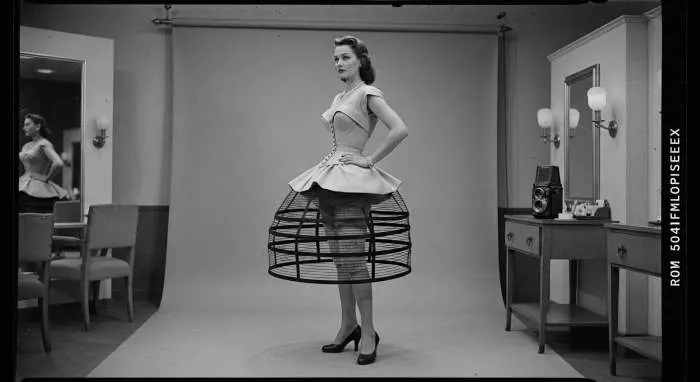
Yet the world, weary and scarred by conflict, was hungry for the beauty, luxury, and optimism the New Look offered in abundance. It was a promise of a brighter future, a symbol of post-war prosperity.
The romantic silhouette emphasized natural curves, letting women feel beautiful, delicate, and utterly feminine again, a sharp contrast to their utilitarian wartime roles. This was a moment where femininity was redefined for the modern age.
Hollywood's Embrace & Pin-Up Synergy
Hollywood quickly embraced the New Look, cementing its aspirational appeal worldwide. Stars like Elizabeth Taylor, Grace Kelly, and Audrey Hepburn, whose iconic style was built on this foundation, were photographed in variations of the silhouette. These actresses became living embodiments of the idealized woman Dior envisioned: poised, elegant, and impeccably dressed.
The sheer craftsmanship in Dior's creations was a major draw. Every seam, detail, and fold of fabric was meticulously considered, making the garments works of art. This level of haute couture appealed to a suppressed desire for quality and beauty after years of making do.
The New Look also resonated deeply with the burgeoning pin-up culture of the 1950s. Pin-up art, wildly popular during the war as a morale booster, presented an idealized, often exaggerated feminine form. Interestingly, the U.S. government actively encouraged this imagery, recognizing it kept soldiers emotionally connected to home; Betty Grable's famous over-the-shoulder swimsuit shot was reportedly the most reproduced photograph of the entire war.
The voluptuous curves, tiny waist, and full bust celebrated in pin-ups mirrored the very proportions the New Look aimed to sculpt. While pin-ups often showed playful poses, their core appeal was a vibrant, accessible femininity.
The New Look offered a high-fashion, elegant counterpart, translating that dream silhouette into luxurious garments. Figures like Marilyn Monroe, Jayne Mansfield, and Bettie Page embodied this emphasis on the exaggerated female form.
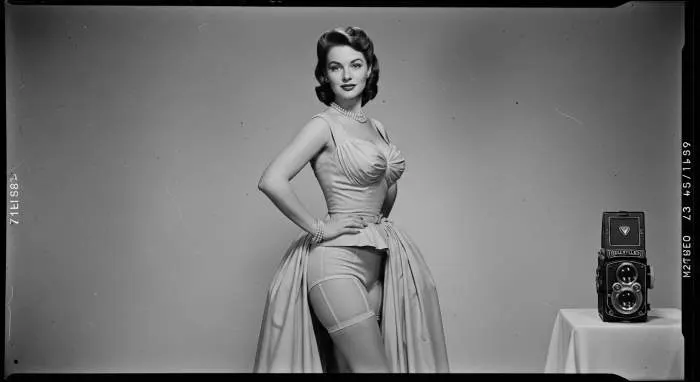
The New Look provided a sophisticated framework for the glamorous, curvilinear beauty that pin-up culture had made ubiquitous, creating a powerful synergy between popular imagery and high fashion.
The Enduring Legacy of the New Look
Beyond its initial shock, the New Look profoundly shaped 1950s fashion, defining what it meant to be modern. It wasn't a fleeting trend but a foundational aesthetic that evolved gracefully. While 1947's voluminous skirts were iconic, Dior himself kept experimenting.
He introduced the H-line, A-line, and Y-line in subsequent collections, each a subtle variation on elegant, sculpted femininity. These iterations showed the concept's versatility, keeping the fashion world captivated. The influence quickly trickled down from exclusive haute couture to ready-to-wear, transforming the entire industry.
Department stores and manufacturers rapidly produced affordable versions, making the cinched waist and full skirt accessible to a much wider audience.
The New Look ushered in an era where accessories became essential. Gloves (often elbow-length), structured handbags, elegant hats, and pearls completed the polished ensemble. Shoes evolved too, with elegant pumps and the emerging stiletto heel providing the perfect finish. Hair was meticulously styled in soft waves or neat updos, and makeup emphasized a flawless complexion, defined brows, and a classic red lip.
This holistic, meticulous approach to styling became a hallmark of 1950s fashion. Globally, the New Look unequivocally re-established Paris as the undisputed capital of fashion. After the war, American designers had gained ground with practical ready-to-wear.
But Dior's audacious vision brought the spotlight roaring back to French haute couture, reaffirming its creative authority.
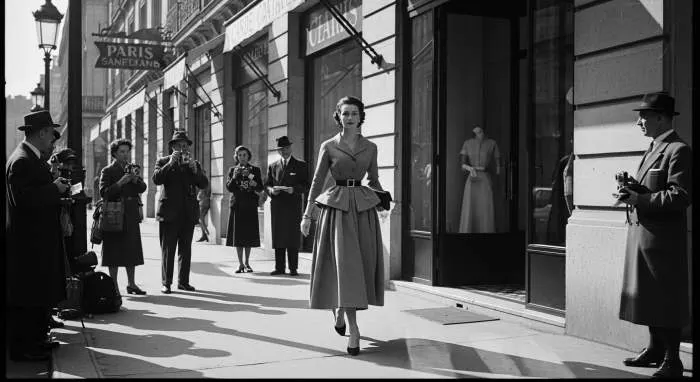
While American designers had mixed feelings initially, the influence was undeniable. The New Look became a symbol of Western prosperity and cultural dominance during the Cold War, representing luxury, freedom, and aspirational living.
The legacy of the New Look is immense. It defined the aesthetic of the 1950s and left an indelible mark on fashion history. It showed how fashion can both reflect and influence societal moods, offering a much-needed sense of hope and escape.
It taught us that clothes are more than just fabric, they're powerful statements, cherished aspirations, and profound reflections of the human spirit. Dior's New Look collection didn't just change hemlines; it offered a new dream of what it meant to be a woman in a changing world.
What fabrics were used in the Dior New Look
Dior's New Look famously used extravagant quantities of luxury fabrics like silk, taffeta, and wool, but he also sourced from a unique supplier: the French textile mills that had survived the war by weaving parachute silk. That repurposed material gave the skirts an airy volume no other fabric could match, a secret Dior kept quiet for years.