
Quick Facts
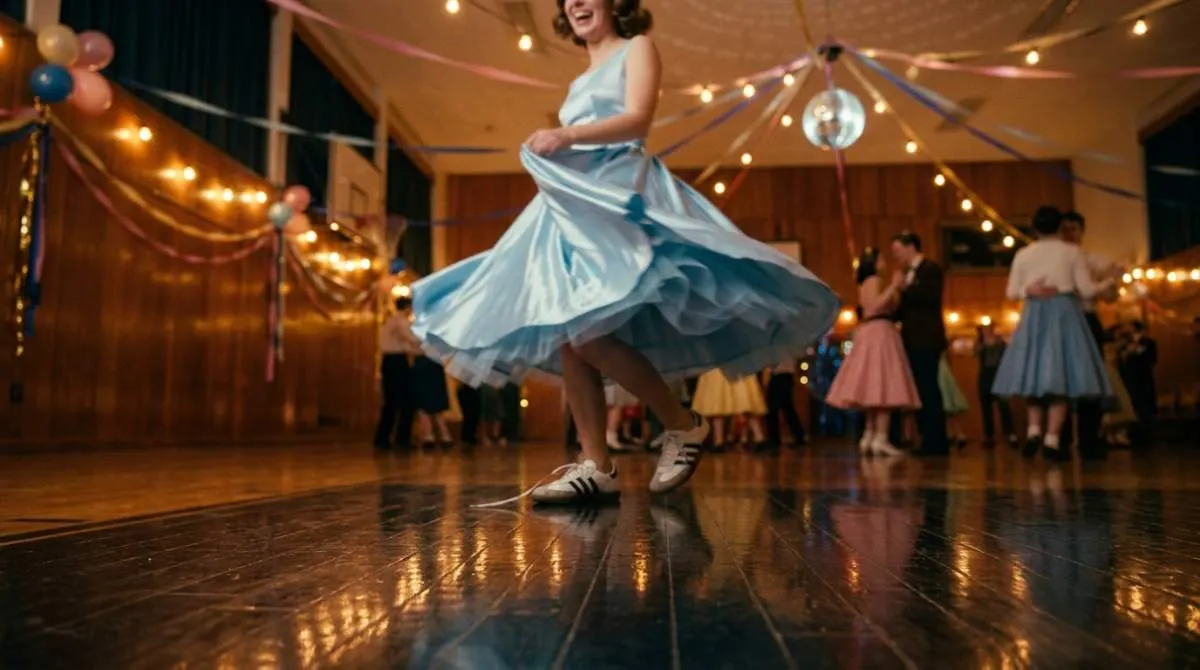
- The Era:Both 1950s prom dresses and Adidas Sambas first appeared in the 1950s.
- The Illusion:The Samba's flat sole keeps the dress's vertical line intact, no heels needed.
- The Reality:Pairing the two defied class barriers and social expectations.
- Modern Echo:The trend is back thanks to runway shows, street style, and pop stars in ball gowns with sneakers.
The 1950s Prom Dress Was a Cage of Satin and Tulle
A scuffed gym floor held more truth than a yearbook. The 1950s prom was a stage, not a party.
Girls wore armor in pastel tulle and starch. The corsage matched the dress. The heels pinched.
Women wore gloves to signal decorum, but gloves cannot grip a football. Then it got strange. The same era that demanded crinoline also birthed the Adidas Samba, a brute built for wet fields and quick pivots.
The Sound of Two Worlds Colliding
The Samba Sneaker and the 1950s Prom Dress
The Samba's Flat Sole
The Samba's gum rubber sole is almost invisible, a detail that vintage sneaker collectors and retro fashion enthusiasts prize for its authentic 1950s design. It doesn't break the dress's vertical line. A heel would fight the full skirt.
A chunky sneaker would dwarf it. The Samba sits low, hugging the ground. It lets the dress's fabric drop and flare naturally.
The drama of crinoline arrives without the agony of pumps. The design trick: a sneaker that plays dead.
The 1990s Club Kid Remix Revived the Samba and Prom Dress Combo
Class and Comfort Collide
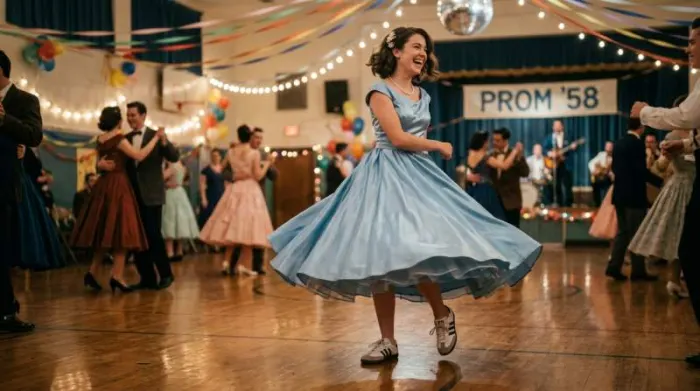
This clash broke a class barrier. The 1950s prom dress symbolized middle-class aspiration. The Samba was a working-class shoe, worn by British football hooligans and German street kids.
Putting them together snubbed the old social codes. The wearer didn't dress up to impress. They dressed up to confuse.
The Samba's three stripes became a wink. The dress's stiff bodice became a joke.
The combo worked because both items were designed to be noticed. One was designed to be perfect; the other, anything but.
The Legacy: Who Dared to Wear It After the Prom?
The 1950s prom dress symbolized rigid conformity. The Samba symbolized the street. Marrying them was a declaration of independence.
The first major echo hit the runway. Miuccia Prada sent models down the catwalk in pristine tea dresses and clunky athletic shoes. The fashion world gasped.
Then it copied. Suddenly, every cool girl knew the trick. The real legacy lived in the details.
It was a secret handshake for the creatively inclined. Indie sleaze bloggers on Flickr paired thrift-store formals with Sambas. Coachella street style turned it into a yearly tradition.
Japanese street magazines like FRUiTS featured the exact clash. Vintage sneaker styling became a badge of honor for the non-conformist. The look never really vanished.
It went underground. It re-emerges every time a pop star wears a ball gown with sneakers. Each generation rediscovers the same simple truth.
Comfort and elegance aren't enemies. They are the best of friends.
How the Samba and Prom Dress Came Back Together
The revival has three distinct phases, each one a tiny cultural earthquake.
Phase One: The Runway Leak Brought the Trend to High Fashion
Phase Two: The Street-Level Revolution Made the Look Practical and Everyday
Then the trend got practical. Vintage stores reported a bizarre pattern. Young women were buying the stiffest, most unwearable formal gowns.
They weren't for Halloween. They were for brunch. The Samba solved the impossible physics of a party dress.
One cannot walk a city block in vintage heels or dance in them. A Samba lets the wearer own the dress without the dress owning them.
It grounds the fantasy in reality, making the dress feel wearable and alive. It makes the grand silhouette feel modern, active, and a little bit punk. For a similar rebel approach, try the 90s grunge layering hack with a slip dress instead: a silky slip over a white tee, paired with chunky boots, was the ultimate anti-prom statement, and it still works today.
Phase Three: The Emotional Logic
Why this shoe? Why not a sleek ballet flat or a combat boot? The Samba has a specific, low-key intelligence and a history of sport and utility.
It brings a dose of street-corner swagger to a fabric that screams ballroom. The effect is a cultural wink.
The wearer dons a gown that once signaled total formality. The feet say they are ready to run for the subway. It's a harmony of opposites.
The drama is real, but the vibe is relaxed. That is the secret of the modern revival.
Why Adidas Sambas Are Popular Again
The Samba's 2020s revival owes a huge debt to the terrace fashion scene of 1980s Britain, where football fans wore them as a badge of identity. That subculture was later rediscovered by streetwear brands like Palace and Gosha Rubchinskiy, who put the shoe back on the runway. A working-class utility shoe became a global style icon.