

On August 1, 1981, at 12:01 a.m., a brand-new cable channel flickered to life with a grainy clip of a rocket launch and the words "Ladies and gentlemen, rock and roll." Then came the Buggles, singing "Video Killed the Radio Star," a song that would prove oddly prophetic. MTV changed how we consumed music, turning it from something you heard into something you watched, studied, and tried to imitate. Within a few years, the channel had rewritten the rules of stardom, turned fashion into a competitive sport, and made the visual just as important as the sound itself.
MTV's Genesis: The Visual Takeover of Music
MTV launched with a simple idea: play music videos 24 hours a day. The concept wasn't entirely new. Shows like "American Bandstand" and "Soul Train" had paired music with visuals for decades, and the BBC's "Top of the Pops" had been doing it since 1964.
But those were weekly programs, brief windows into the world of performance. MTV was constant, a dedicated channel that treated music videos as the main event, not just filler between commercials.
The early days were scrappy. The channel had a limited library, so the same clips rotated endlessly. Viewers saw Rod Stewart, Pat Benatar, and the Pretenders on heavy repeat.
The first video jockeys, or VJs, were Mark Goodman, Nina Blackwood, Alan Hunter, Martha Quinn, and J.J. Jackson. They introduced videos with a casual, conversational style that felt like hanging out with friends who had great taste in music.
Record labels quickly realized that a video could break an artist faster than months of radio play. By 1983, labels were commissioning elaborate productions, hiring directors from film and advertising to craft mini-narratives. Michael Jackson's "Thriller," directed by John Landis and released in December 1983, cost an estimated $500,000 and ran nearly 14 minutes.
It wasn't just a music video; it was a short film with choreography, special effects, and a storyline. "Thriller" became a cultural event, and MTV played it relentlessly, proving that the channel could make a song inescapable.
The PMRC hearings in 1985 saw metal rebels like Dee Snider of Twisted Sister defend their lyrics in D.C., highlighting how much power MTV had accumulated: parents and politicians were worried not just about what kids heard, but what they saw.
How MTV Redefined What It Meant to Be a Star
MTV didn't merely play music; it created stars. A great voice was no longer enough; artists needed the look, the moves, the narrative. Madonna understood this instinctively.
Her 1984 performance of "Like a Virgin" at the first MTV Video Music Awards, complete with a wedding dress and provocative choreography, wasn't just a song; it was a statement. By the mid-80s, Madonna had become the blueprint: constantly reinventing her image, using each video as a new chapter in an ongoing visual story.
Duran Duran, a British band with catchy synth-pop hooks, became international superstars largely because their videos looked expensive and exotic. They filmed on yachts in the Caribbean, in jungles, on beaches. The music was good, but the visuals sold the fantasy.
Prince, David Bowie, Cyndi Lauper, and later Nirvana all used MTV to bypass traditional gatekeepers. A single video in heavy rotation could make a career overnight.
Fashion Became the Language of MTV
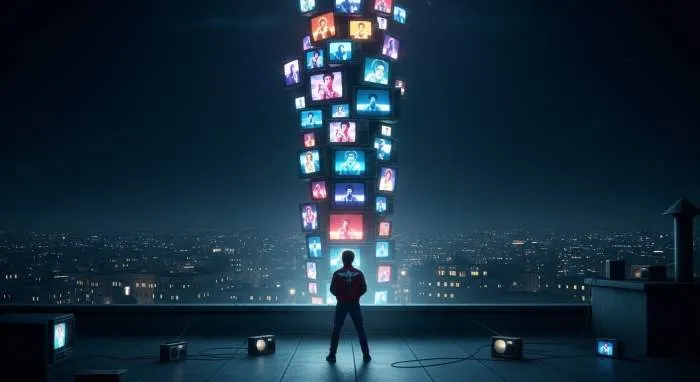
MTV turned fashion into a participatory sport. When Michael Jackson wore a single white glove and a red leather jacket in "Thriller," those items became instant icons. When Madonna layered lace, crucifixes, and fingerless gloves in "Like a Virgin," teenage girls across America copied the look. The scorpion jacket from "Drive" would later become another example of how a single garment in the right visual context could define a moment.
The channel profoundly shaped what was considered cool on a mass scale. Run-DMC made Adidas tracksuits and shell-toe sneakers a uniform for hip-hop fans. Guns N' Roses brought bandanas, leather, and a raw, dangerous edge back into rock fashion. Even the hair mattered: big, teased, sprayed, and colored in ways that defied gravity and good sense.
Who Got Left Out of MTV's Early Revolution?
MTV's early years were overwhelmingly white and rock-focused, a fact that didn't go unnoticed. Black artists, despite dominating the charts, were largely absent from the channel's rotation. David Bowie famously challenged MTV's lack of diversity in a 1983 interview with VJ Mark Goodman, asking why the channel played so few videos by Black artists. Goodman's response, that MTV was trying to appeal to a "Middle American" audience, revealed the uncomfortable truth: the channel was playing it safe, catering to what it believed advertisers wanted.
Michael Jackson's "Billie Jean" and "Beat It" broke through that barrier in 1983, but only after CBS Records president Walter Yetnikoff reportedly threatened to pull all his artists from the channel. Once Jackson's videos were in rotation, they became some of MTV's most-played clips, proving that the audience was ready for more diversity. By the mid-80s, artists like Prince, Tina Turner, and Whitney Houston were in regular rotation.
The Golden Age: VMAs, Unplugged, and Cultural Dominance
The MTV Video Music Awards, first held in 1984, became an annual spectacle where the unexpected was expected. Madonna rolling around on stage in a wedding dress, Nirvana's chaotic 1992 performance of "Lithium," Britney Spears and the python in 2001: these moments transcended music and became part of the larger cultural conversation.
"MTV Unplugged," which debuted in 1989, offered a counterpoint to the high-gloss, high-energy videos that defined the channel. The show stripped away the production, presenting artists with acoustic instruments in an intimate setting. Nirvana's 1993 "Unplugged" performance, recorded just months before Kurt Cobain's death, became one of the most celebrated live albums of the decade. Eric Clapton's 1992 "Unplugged" session won six Grammy Awards and introduced a new generation to his music.
When MTV Stopped Playing Music Videos
By the late 90s, MTV was already shifting away from its original format. Reality shows like "The Real World," which premiered in 1992, and "Jackass," which debuted in 2000, drew huge audiences. These programs were cheaper to produce than licensing music videos, and they kept viewers watching for longer stretches. By the early 2000s, music videos were increasingly relegated to early morning hours or sister channels like MTV2.
The rise of the internet accelerated the decline. YouTube, launched in 2005, gave viewers instant access to any music video they wanted, on demand. MTV responded by doubling down on reality programming, scripted shows, and celebrity culture. "Jersey Shore," "Teen Mom," and "Catfish" became the new face of the channel, and music videos became a relic of its past.
Rewriting Stardom: The Lasting Aftershocks of MTV
MTV's legacy is a complex interplay of creative brilliance and commerce. The channel opened new avenues for directors, stylists, and choreographers, making them indispensable architects of a star's persona. Directors like Spike Jonze, Michel Gondry, and Hype Williams built careers on the strength of their music video work, bringing cinematic techniques and visual innovation to three-minute clips.
It democratized fame for some, while simultaneously setting an impossibly high visual bar for others. An artist with a modest budget and a great song could still break through if the video was clever or striking enough.
Though its original dominance has waned, its fundamental visual grammar remains integral to our consumption. Every social media platform, from Instagram to TikTok, operates on the principle that MTV established: the visual is paramount. Artists today release videos on YouTube and promote them through short clips on social platforms, but the underlying logic is the same. You need to give people something to watch, something to share, something that looks as good as it sounds.
MTV taught us to watch music, a powerful lesson that reshaped the music industry and our perception of musical artists. The visual became paramount, and that shift, for better or worse, is MTV's most enduring legacy.
What was the first music video played on MTV
The very first video aired on MTV was 'Video Killed the Radio Star' by the Buggles, a fittingly ironic choice. What many don't know is that the Buggles were actually a duo of British session musicians, Trevor Horn and Geoff Downes, who later became members of the progressive rock band Yes. The song itself was a nostalgic lament for the golden age of radio, yet it became the anthem for the very medium that would eclipse it.