
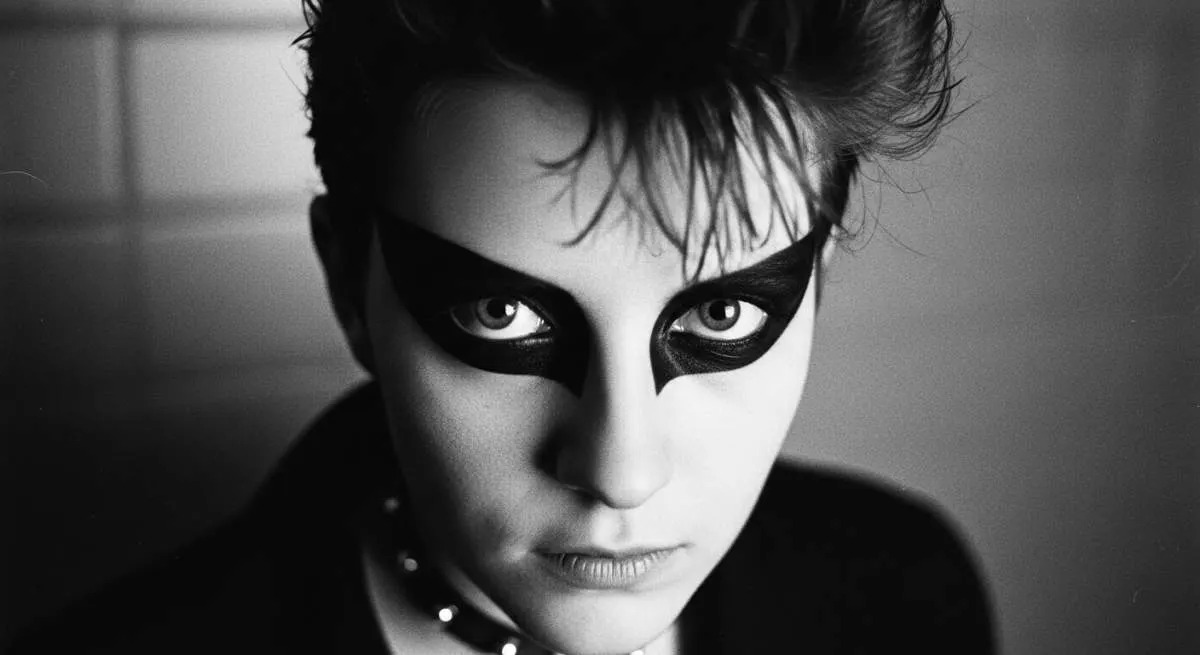
It was all about being seen, being different, and owning it completely. That spirit lives on today, making bold choices, mixing high fashion with street smarts, and letting your makeup speak for you, no band needed. Because your eye makeup isn't just about looking good; it's your armor.
How Siouxsie Sioux Defined a Generation's Look
No doubt about it, Siouxsie Sioux didn't just start a trend; she created a blueprint for visual rebellion. Her eye makeup wasn't just a statement, it was a whole manifesto, a declaration that changed how we think about makeup itself. That stark, angular look (you know, the one everyone calls the "Banshee eye") became the unmistakable signature of an entire subculture, defining an era that stretched far beyond just music fans.
We're talking about a full visual language that generations copied and reimagined, reaching way past the early punk and goth scenes. From the darkest underground clubs to high-fashion runways decades later, Siouxsie's influence is hard to miss. Big-name designers like Alexander McQueen and even mainstream beauty brands have openly dipped into that powerful well of dramatic, often severe, eye artistry she so boldly pioneered.
What Made Her Eye Look So Different From What Came Before
Think about it:before Siouxsie, dramatic eye makeup for women usually leaned into theatrical glamour or the wide-eyed, playful sweetness of the 1960s Mod style. It was about allure or innocence, a soft invitation rather than a challenge. Siouxsie flipped that script hard, with a punk rock snarl that rejected every expectation.
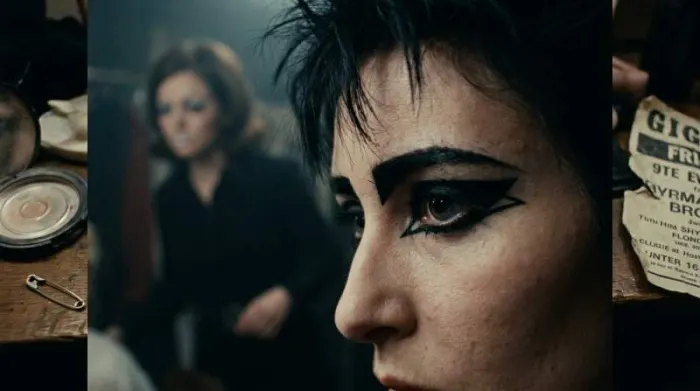
She took the idea of an accentuated eye and turned it into something aggressive, intellectual, and utterly fearless. It wasn't about looking pretty or charming; it was about looking powerful, confrontational, almost alien. This wasn't some delicate flick of eyeliner, it was raw, unapologetic war paint, a clear boundary drawn between her and the mundane world she refused to join.
The Punk Origins of the Banshee Eye
Siouxsie Sioux first appeared on stage with the Sex Pistols at the 100 Club in London in 1976, already wearing a version of the look that would become her trademark. She wasn't yet fronting her own band, Siouxsie and the Banshees, but her visual presence was already fully formed. The makeup was a direct reaction against the soft, feminine ideals of the 1970s, borrowing from the harsh lines of German Expressionist film and the stark geometry of tribal body art.
The name "Banshee eye" came from the band's name and the wailing, piercing quality of Siouxsie's gaze. She extended black kohl liner into sharp, elongated wings that reached toward her temples, creating a predatory silhouette. This wasn't a look that invited conversation, it demanded attention and announced that the wearer operated on her own terms.
How She Applied the Makeup and What Products She Used
Siouxsie used standard black kohl eyeliner, often applied with a heavy hand and then smudged or extended with a brush. She layered the liner thickly on the lower lash line and pulled it outward into a severe point, sometimes connecting it to a dramatic crease. The effect was angular, almost architectural, with no soft blending or gradient.
The products were affordable and easy to find, mostly drugstore brands like Max Factor or Rimmel, which made the look easy for fans to copy. She didn't use expensive cosmetics or professional stage makeup; the raw, imperfect quality of the application was part of its punk authenticity. This DIY approach meant that anyone with a steady hand and a tube of black liner could recreate the look at home.
Why the Look Spread Beyond Punk Into Goth and Beyond
The goth subculture, which emerged in the early 1980s from the post-punk scene, adopted Siouxsie's eye makeup as its central visual symbol. Bands like Bauhaus, The Cure, and Sisters of Mercy all drew from the same well of dramatic, dark aesthetics, but Siouxsie's eye look remained the most recognizable and the most copied. It became a badge of belonging, a way for fans to signal their allegiance to a darker, more intellectual alternative to mainstream pop culture.
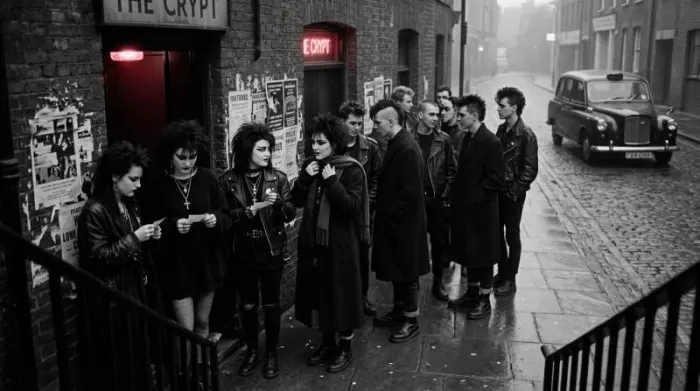
The look also spread through music videos and magazine covers, which gave it a global reach that live performances alone could never achieve. MTV launched in 1981, and Siouxsie and the Banshees videos like "Happy House" and "Cities in Dust" brought her eye makeup into millions of homes. Young people in small towns who had never seen a punk show could study her face on their TV screens and learn to replicate the look.
The Role of Fashion Magazines and Photographers
Fashion photographers like Anton Corbijn and Pierre et Gilles captured Siouxsie's face in stark, high-contrast images that emphasized the geometry of her eye makeup. These photographs appeared in magazines like The Face,i-D, and NME, which were the style bibles of the post-punk era. The images turned her makeup into an art object, something to be studied and admired, not just worn.
Mainstream fashion magazines eventually took notice, and by the late 1980s, editorial spreads began featuring models with exaggerated, Siouxsie-inspired eye looks. This crossover from subculture to high fashion was rare at the time, and it proved that her visual language had power beyond the underground. Designers like Vivienne Westwood and John Galliano incorporated the angular eye into their runway shows, cementing its place in fashion history.
How the Look Changed Across Decades and Regions
In the 1980s, the goth scene in the United Kingdom kept the look relatively pure, heavy black liner and minimal color. American goths, especially in cities like Los Angeles and New York, added more experimentation, mixing in dark red or purple shadows while keeping the sharp winged liner. By the 1990s, the look had filtered into the industrial and cyber goth scenes, where it was paired with metallic accents and more elaborate face paint.
The 2000s saw a revival of the Siouxsie eye through the emo and scene subcultures, which adopted the heavy lower lash line but often paired it with brighter hair colors and more casual clothing. This version was softer and more accessible, but the core DNA of the look stayed the same. In the 2010s and 2020s, the graphic eyeliner trend on social media platforms like Instagram and TikTok owes a clear debt to Siouxsie's original innovation.
Why the Look Endures in Modern Beauty Culture
Modern beauty influencers and makeup artists regularly cite Siouxsie as a primary inspiration for graphic liner trends. The sharp, geometric eye has become a staple of editorial makeup, appearing in campaigns for brands like Marc Jacobs, Pat McGrath, and Charlotte Tilbury. It's no longer confined to goth or alternative circles, it's a mainstream option for anyone who wants to make a bold statement.
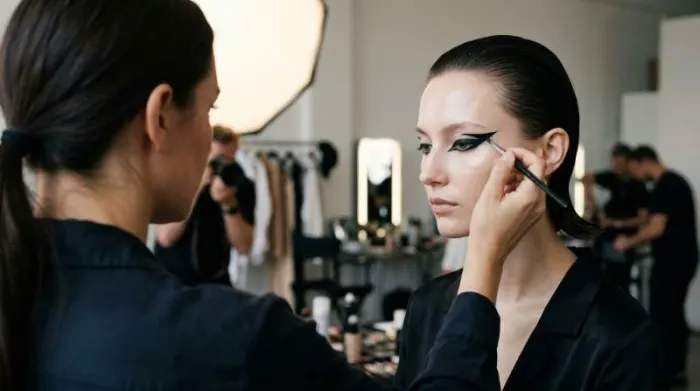
The endurance of the look comes from its simplicity and its power. It doesn't require a full face of makeup or expensive products, just a steady hand and a willingness to be seen. That accessibility, combined with the rebellious spirit behind it, ensures that each new generation can discover and reinterpret it for themselves.
The legacy is absolutely massive and still evolving. Every time you see a sharp, graphic eye, whether it's on an Instagram influencer, a mainstream pop star, or someone unapologetically carving their own path down the street, you're seeing the ghost of Siouxsie's unblinking gaze. She showed us that makeup wasn't just adornment; it was armor, an act of rebellion, a way to carve out your own identity in a world that constantly tries to put you in a neat, digestible box.
Her look remains a masterclass in visual subversion, proving that sometimes the most profound cultural shifts start with a single, perfectly aimed swipe of black kohl that screams defiance. That defiance still resonates today, because the need to stand apart and be seen on your own terms never goes out of style.
What makeup did Siouxsie Sioux use
Siouxsie's signature look was built on a secret weapon: a cheap black kohl pencil, often from Boots or Woolworths. She'd sharpen it to a fine point, then draw the wings freehand without a mirror, trusting muscle memory from years of practice. This raw, unpolished technique made each application unique, a punk fingerprint that no two fans could ever perfectly copy.