
The 1990 Italian Cultural Collision
In the summer of 1990, a pop culture war erupted in Italy. The Vatican, in an unprecedented move, publicly urged Italians to boycott Madonna's upcoming 'Blond Ambition' tour. The official reason was the show's "blasphemous" religious imagery, but the unofficial symbol of the conflict became a single, unforgettable garment: the cone bra. This wasn't just a fashion statement; it was a declaration of independence that seemed to challenge centuries of tradition [1].

The tour was a spectacle of power, sexuality, and religious iconography, and the cone bra, designed by Jean Paul Gaultier, was its most potent visual weapon. For the Vatican, it represented a dangerous fusion of the sacred and profane. For Madonna and her fans, it was a symbol of female autonomy and artistic freedom. The clash was inevitable, pitting the authority of faith against the rising tide of pop artistry.
A Symbol Forged: Beyond the Fabric
To understand the uproar, you have to look past the spandex and satin. The cone bra was never about simple provocation or showing skin. It was a piece of architectural armor, a deliberate subversion of feminine ideals. Where softness was expected, Gaultier offered sharp, unyielding points. It transformed allure into assertion, turning the female form into a powerful, almost weaponized silhouette.
Madonna wore it like a warrior queen, projecting an image of unstoppable control. The design amplified her persona, bold, unapologetic, fiercely independent. It empowered a generation of women to see fashion as a form of rebellion. I remember trying to DIY a pointy look once as a teen; it involved way too much cardboard and ended in a sad, flimsy disaster. Gaultier's craftsmanship, of course, was on another level entirely.
The Legacy: Pop Culture Echoes and Influence
The Vatican's attempt to silence the tour backfired spectacularly. Instead of dimming Madonna's star, the controversy acted as a global megaphone. The cone bra exploded across fashion magazines and music videos, becoming an instant icon. Its ripples were felt far beyond the concert stage, challenging entrenched ideas of femininity and power.
Fashion designers immediately caught the vibe. Jean Paul Gaultier continued to explore structured, avant-garde silhouettes, while others like Thierry Mugler and Vivienne Westwood played with exaggerated, sculptural forms. The line between haute couture and stage spectacle blurred permanently. The look seeped into the mainstream, too, with corsets and visible lingerie becoming streetwear staples, a quiet revolution sparked by a very loud bra.
From Catwalk to Concert Stage: Artists Who Dared
A generation of artists channeled the cone bra's spirit of fearless audacity. Lady Gaga, a devoted Madonna disciple, built a career on boundary-pushing costumes that weaponized shock value. Pop icons from Katy Perry to Beyoncé have worn bold, architectural looks that directly echo Madonna's fearless fusion of art and persona. The message was clear: a woman's body and her style could be a platform for power.
Behind the Scene · Fictional Simulation
The Red Corset, Unpicked
Giulia Marchetti, a wardrobe assistant at a Milan costume atelier, works through the night in 1990.
The backstage room was a furnace, steam curling off the pressing irons and fogging the one small mirror. I had the red pointed corset laid across my knees, its boning still warm from the steamer, and I could hear the Vatican protest swelling outside the stage door, a low chant that rattled the fire escape. My fingers were tacky with beeswax, threading a needle by the light of a bare bulb. One cone tip had come unpicked, the satin gaping open like a small wound, and the dress rehearsal was in an hour.
I found the spool of scarlet silk in my apron pocket, but the thread was a shade too bright, almost orange under that bulb. I stitched anyway, pulling the cone back into its point, and the whole corset seemed to exhale. Outside, the chanting stopped. In the sudden quiet I heard a girl crying somewhere in the corridor, and the needle slipped, leaving a tiny crimson dot on my thumb. I sucked it clean and kept sewing, the corset balanced on my knees like something breathing.
A fictional scene written for this article — not a real account.
The 1990 Blond Ambition Tour cemented this idea. On stage, the cone bra wasn't merely about sex appeal; it was a tool of agency and control. That year changed everything, proving that pop music could be a potent force for challenging the status quo. The tour's visuals, directed with cinematic precision, turned each song into a statement, with Madonna's Gaultier-designed armor at the center of the storm.
Street Style and Cultural Memory
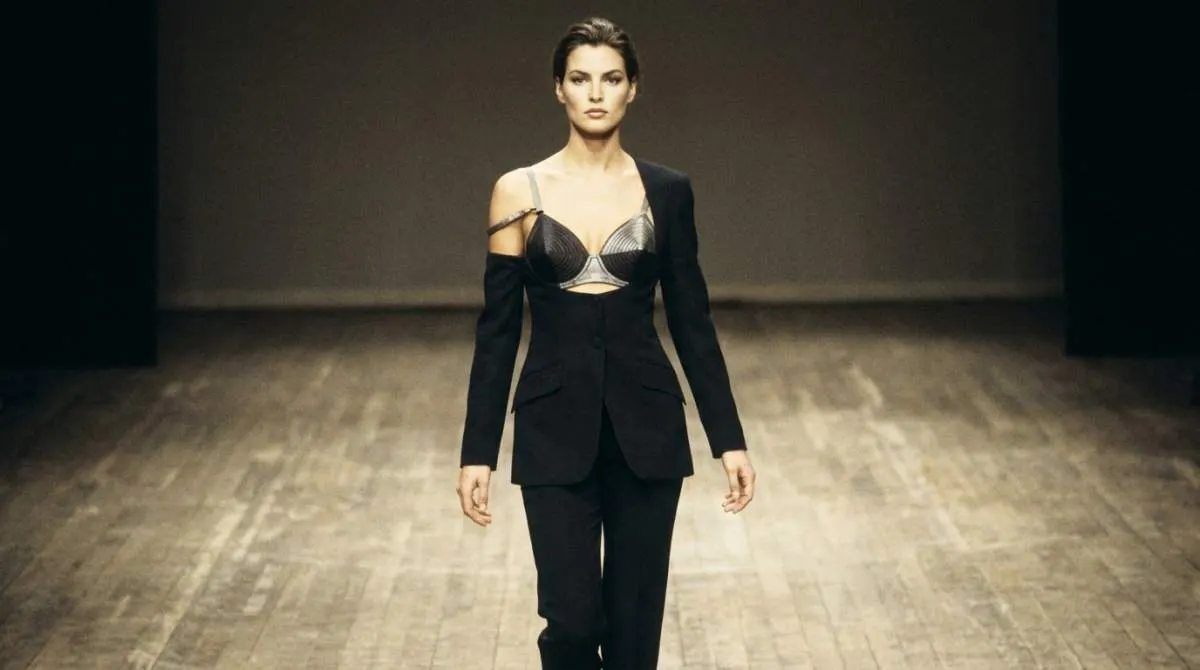
The defiance of the look trickled down to street style almost immediately. Young women began experimenting with visible straps, structured bustiers, and sharp-shouldered blazers, subtle nods to the iconic silhouette. The cone bra transcended fashion to become cultural shorthand for an era when pop dared to confront authority.
Papal Pronouncement?
- Everyone thinks Pope John Paul II personally called Madonna's show 'one of the most satanic shows in the history of humanity' and led the boycott charge.
- While the Vatican and Italian bishops loudly condemned the tour, there's no solid evidence the Pope himself made that infamous quote; the public criticism came from Vatican officials and the Italian Conference of Bishops.
Source: bancodeprofissionais.com
Even today, it packs a potent punch. It features in museum retrospectives and fashion documentaries, celebrated as more than a famous outfit. It's a crystallized moment in time, a reminder of how audacity can reshape the cultural landscape. Madonna understood the power of visual language like no one before her, and the cone bra was her most eloquent sentence.
The Modern Revival: Reinventing an Edgy Silhouette
Fashion has a long memory for rebels, and the iconic cone shape has never truly left. It simply evolved. Today's revival echoes that bold, late-80s/early-90s spirit, but it's less about recreating a concert look and more about harnessing its inherent power for personal expression. The goal is confident edge, not stadium shock.
The Deconstructed Spike: Subtle Stylings for Today
Contemporary designers have masterfully softened the hard edges. You see hints of the silhouette in tailored blazers with pronounced, architectural shoulders, in sleek tops with strategic darting that suggests a sculptural form. It's an homage, not a replica. The idea is to borrow the original audacity but translate it into a whisper of defiance suitable for everyday life.
You won't find literal pointed bras on the high street, but the philosophy is everywhere. Look for pieces with clean lines and structural intention: a crisp wool blazer, a dress with boning or architectural seams, even geometric jewelry that echoes those sharp angles. It's a playful, intelligent nod to fashion history, allowing anyone to channel a piece of the pop culture zeitgeist.
Harnessing the Silhouette's Power
Jean Paul Gaultier designed the cone bra to challenge how women's bodies were seen, transforming a private garment into public armor. Its modern echo carries that same fearless energy, it's about owning your presence, not shrinking from it. To channel that iconic spirit today, think less about costume and more about deliberate, powerful choices.
Try layering a structured bustier under an oversized blazer for a mix of toughness and delicacy. Seek out knit tops with subtle conical seaming for a fresh, modern twist. Pair a sharp-shouldered jacket with high-waisted, wide-leg trousers to balance strength with flow. The key is in the architectural details: look for dresses with boning or dramatic darting that sculpts the silhouette.
These choices carry a fearless energy. You're channeling Madonna's audacious spirit without needing a literal cone. This enduring revival proves that powerful fashion concepts never die; they simply adapt, reminding us to dress with confidence. That, ultimately, is the timeless lesson of the cone bra: a simple garment can be a revolution, and its echo can inspire long after the controversy has faded.
Why did the Vatican boycott Madonna's Blond Ambition tour
The Vatican's boycott wasn't just about the cone bra; it was triggered by a specific performance of 'Like a Virgin' where Madonna simulated masturbation on a velvet bed, which they deemed obscene. The tour also featured a mock crucifixion scene during 'Like a Prayer,' blending religious iconography with eroticism in a way that deeply offended Catholic sensibilities. This clash highlighted a broader tension between the church's traditional values and the emerging MTV-driven pop culture of the early 90s.
Sources
- [1] Blond Ambition World Tour
Bracketed numbers in the text (e.g. [1]) refer to the sources listed here.