
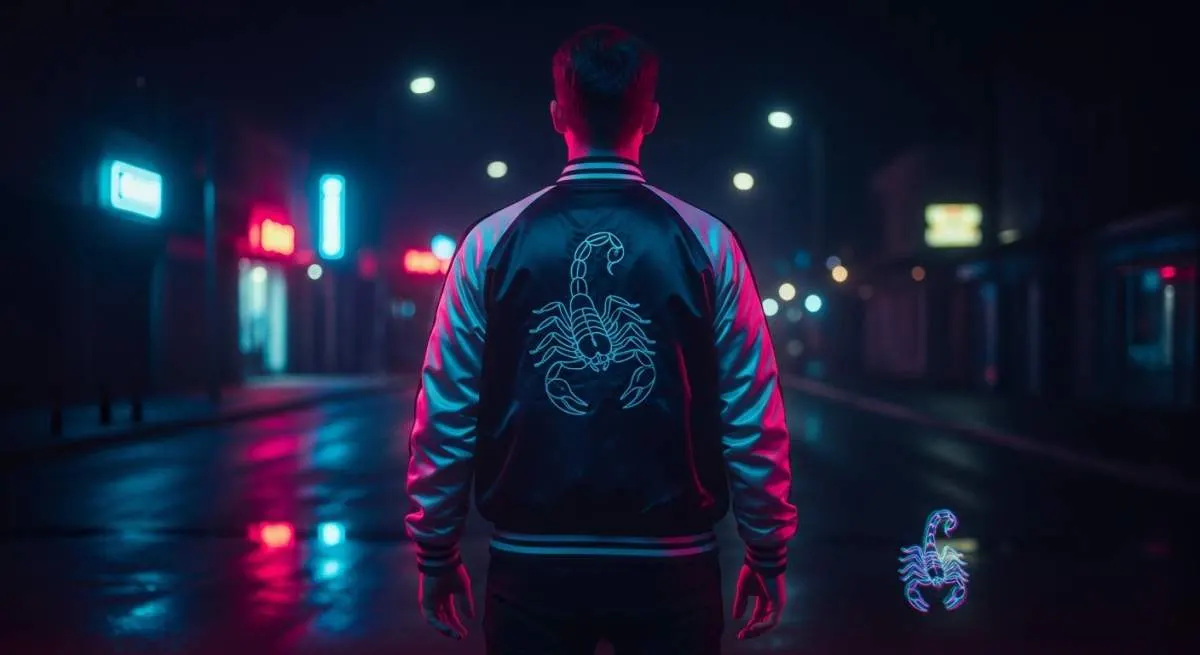
What Made the Drive Scorpion Jacket So Unforgettable
When Drive premiered in 2011, Ryan Gosling's character wore a custom satin bomber jacket with a golden scorpion embroidered across the back. The film itself was a quiet, violent meditation on Los Angeles and isolation, but that jacket became the visual anchor, the one image that stayed with viewers long after the credits rolled. Costume designer Erin Benach created it based on a vintage piece director Nicolas Winding Refn discovered at a thrift store, and together they transformed it into something that would define a decade of fashion obsession. Within months, the scorpion jacket went from a single film prop to a global phenomenon, spawning countless replicas, debates about authenticity, and a search for the "real" version that continues today [1].
The Quiet Power of a Single Image
The satin bomber jacket itself has a much older story. During World War II, American pilots wore silk and nylon jackets decorated with hand-painted artwork, nose art, and embroidered insignia. These jackets served a practical purpose-the smooth material helped pilots move freely in tight cockpit spaces-but they also became personal canvases. Crews painted mascots, squadron symbols, and images that meant something to them: eagles, sharks, pin-up girls, and yes, occasionally scorpions. After the war, servicemen brought these jackets home as souvenirs, and the style gradually filtered into civilian culture. By the 1950s and 1960s, the bomber had become a symbol of cool rebellion, worn by greasers, bikers, and anyone who wanted to signal a little danger without saying a word [2].
Why the Embroidered Menace Is So Alluring
Nicolas Winding Refn's Drive arrived at a specific cultural moment. The film was deliberately paced, visually stunning, and deeply uncomfortable-a neo-noir that rejected easy answers. Gosling's Driver character barely speaks; he communicates through presence, silence, and sudden violence. The scorpion jacket became his second language. It was retro without being costume-y, dangerous without being obvious, and cool in a way that felt earned rather than performed. The jacket didn't explain the character; it *was* the character, worn on his back like a warning label [3].
The Symbolism of the Scorpion
So what makes the scorpion so captivating? It's not just an animal, it's a symbol. A desert creature, small but deadly, the scorpion has been seen as a protector in ancient cultures, but also represents danger. Its venomous sting hints at quiet power and a hidden threat, much like the Driver himself, someone who moves in shadows and strikes with precision.
This primal weight, along with the jacket's history as a war souvenir and a badge of rebellion, gives the modern version a powerful, almost mythical status. When you see that scorpion on the back of the Drive jacket, it's not just a pattern, it's a whole silent story.
The Rise of Counterfeits and Replicas
Within a year of Drive's release, the scorpion jacket became one of the most counterfeited pieces of film-inspired fashion. Fast-fashion retailers, independent sellers on eBay and Etsy, and even some established brands rushed to produce versions. The problem was that most of them missed crucial details. The original Benach design used a specific weight of satin, a particular shade of gold thread, and precise embroidery placement. Cheap replicas used polyester, thin thread, and sloppy stitching. The scorpion itself-the proportions, the curve of the tail, the detail in the stinger-varied wildly from one knockoff to the next.
Authenticating a Drive scorpion jacket became its own obsessive hobby. Online forums filled with side-by-side comparisons, close-up photos of stitching, and heated debates about which sellers were trustworthy. Some replicas were so poorly made that the scorpion looked more like a blob. Others came remarkably close but still lacked the subtle quality of the original. The market fragmented into tiers: ultra-cheap versions from mass-market retailers, mid-range replicas from specialty sellers, and expensive "premium" reproductions that claimed near-perfect accuracy. None of them were the actual Benach piece, which remained a closely guarded artifact.
Thrift Store Tale
- A lot of folks think the iconic scorpion jacket was based on a vintage piece director Nicolas Winding Refn just stumbled upon in a thrift store.
- Actually, the inspiration came from Ryan Gosling himself, who was already wearing a 1950s Korean souvenir jacket, and the final design was a custom creation built from scratch by costume designer Erin Benach.
Source: grantland.com
Sometimes a movie just clicks with you, but then there are those rare times when a single element really sticks around. The scorpion jacket that Drive fans obsess over? That's exactly what happened with the satin bomber and its golden scorpion. More than just an outfit, the scorpion jacket from Drive became a silent character, a mood board, an entire aesthetic wrapped up in one surprisingly simple garment.
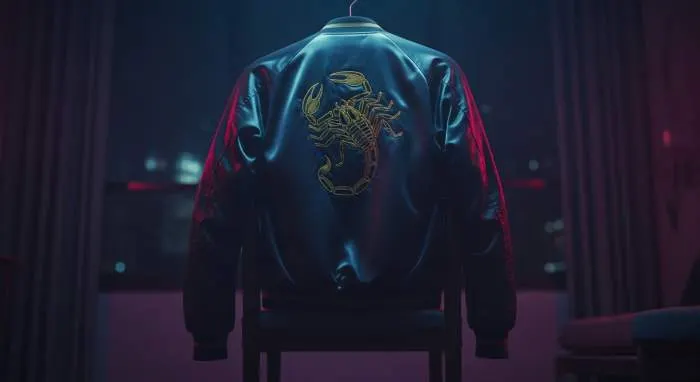
People still ask why the scorpion jacket is so popular, and it's not just the flashy back, it's the way Ryan Gosling wore it. That quiet menace, that surprising vulnerability, all fused into something unforgettable.
Comparing the original Drive jacket to replicas became a cottage industry almost overnight. Big and small fashion brands scrambled to produce their own versions, and independent designers were flooded with requests. To this day, passionate debates about the "most accurate" replica and lists of the best places to buy a scorpion jacket still pop up online.
It wasn't just about owning a piece of movie merch, it was about tapping into that effortless cool the Driver embodied. That one jacket, paired with Gosling's quiet intensity, moved beyond costume to become a shorthand for a specific kind of cool. An instant signal that you got the vibe, whether you were admiring its sharp lines or wearing a replica.
How to Spot an Authentic Scorpion Jacket Replica
If you're hunting for a scorpion jacket today, here's what to look for. The original satin has a specific sheen-not too glossy, not matte, but a subtle glow that catches light. The embroidery thread should be a warm gold, not bright yellow or orange. The scorpion itself should be roughly 8 to 10 inches tall, centered on the back, with clean, even stitching. The tail should curve naturally, not look stiff or cartoonish. The jacket's body should be a deep burgundy or wine color, not bright red. Seams should be clean, zippers should move smoothly, and the overall construction should feel substantial, not flimsy. Cheap replicas often skimp on lining quality, use thin satin that wrinkles easily, or have scorpions that look rushed or poorly proportioned.
Authentic reproductions from reputable sellers typically cost between $150 and $400, depending on the maker's attention to detail. Anything significantly cheaper is almost certainly a low-quality knockoff. Check seller reviews, ask for close-up photos of the embroidery, and don't hesitate to ask questions about materials and construction. Some independent designers have built solid reputations for producing accurate versions, and their work is worth the investment if you want something that actually captures the spirit of the original.
The Enduring Legacy of the Scorpion Jacket
More than a decade after Drive's release, the scorpion jacket remains a reference point for anyone interested in film costume design or retro fashion. It proved that a single piece of clothing, worn with the right attitude and placed in the right story, can transcend its origins and become genuinely iconic. The jacket didn't need a celebrity endorsement or a marketing campaign-it just needed to be perfect for its moment.
The scorpion jacket's impact is huge, it's moved beyond a simple movie prop to become a cultural touchstone. Its journey from film accessory to lasting symbol shows how deeply a piece of design can resonate when it captures something true about its era. It still looks great, and it keeps making a statement wherever it shows up. Whether you own an authentic replica or simply admire the design from afar, the scorpion jacket remains a reminder that sometimes the coolest things are the ones that don't try too hard to be cool.
What does the scorpion on the drive jacket mean
The scorpion on the Drive jacket is a nod to the ancient fable of the scorpion and the frog, where the scorpion stings the frog mid-river, dooming them both because it's in its nature. This mirrors the Driver's own self-destructive tendencies. In Japanese culture, the scorpion also symbolizes protection and rebirth, adding another layer to the character's quiet, dangerous aura.
Sources
- [1] Drive Costume Designer Erin Benach Answers All Your Questions About Ryan Gosling’s Satin Jacket
- [2] The Jacket That Made Ryan Gosling a Style Hero | GQ
- [3] Meet the men who still wear Ryan Gosling's Drive bomber jacket | British GQ
Bracketed numbers in the text (e.g. [1]) refer to the sources listed here.