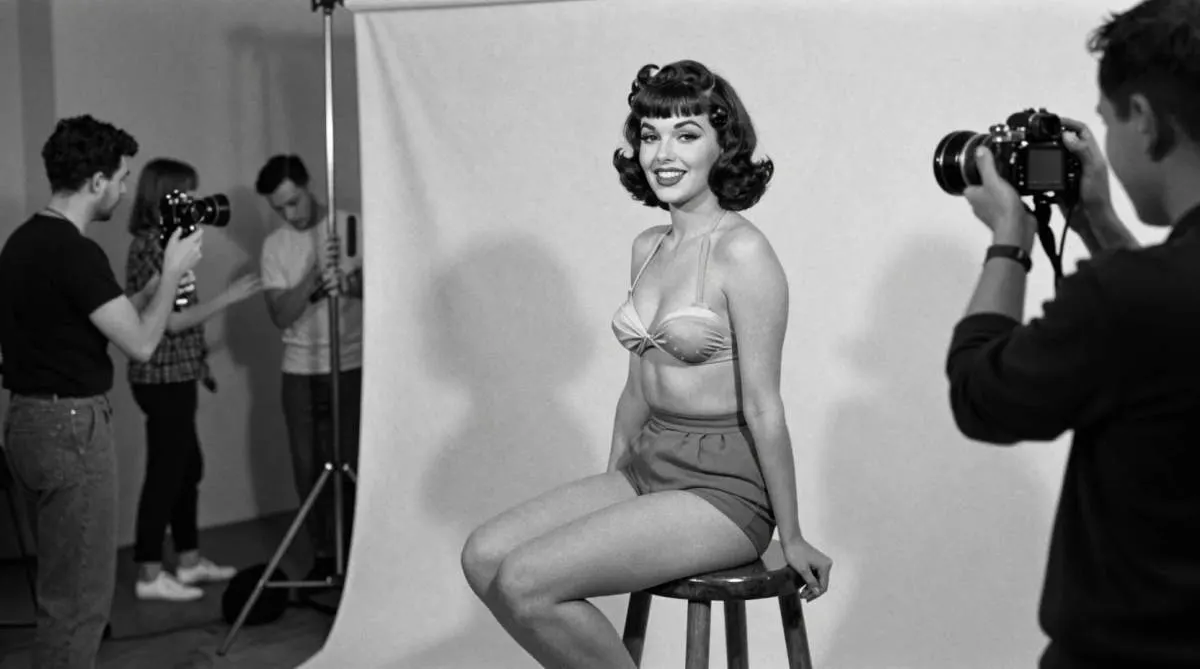
Bettie Page never starred in a single Hollywood blockbuster, but her face, that sly smirk, and those unforgettable bangs are probably more recognizable than plenty of actual movie stars from her time. Her fame didn't come from the big screen, it exploded through independent photographers and fan magazines, letting her become a star entirely on her own terms, powered by pure visual charisma. Her bangs were way more than just a hairstyle; they made a statement [1].
Sharp, playful, and just a little bit edgy, they framed a face that radiated unapologetic confidence. They came to stand for a certain daring kind of femininity, a look that basically said, 'I know what I want, and I'm not afraid to show it.' This wasn't some studio-manufactured image; it was Bettie, being exactly who she was [2].
That authenticity, combined with her stunning looks, is exactly why she's still considered the ultimate pin up queen. She basically invented the modern idea of the 'cult icon' long before the internet made it easy. Her influence on vintage hairstyles and fashion is impossible to ignore [3].
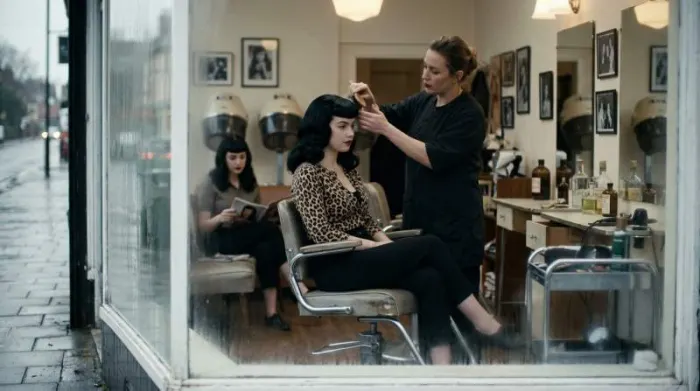
Even after she walked away from the spotlight in the late 1950s, her image only grew stronger. She became a symbol of playful rebellion and self-acceptance, inspiring generations of artists, designers, and fans. Bettie Page's legacy isn't just about iconic bangs or daring poses; it's about the power of owning your unique style and carving your own path. She proved you don't need mainstream approval to leave a lasting mark on culture. She's a true legend.
The Origin of Bettie Page's Signature Bangs
Bettie Page was born in 1923 in Nashville, Tennessee, and her early life didn't really hint at the icon she'd become. She grew up in modest circumstances and moved to New York City in the late 1940s, hoping to find work as a teacher or secretary. But a chance encounter on a Coney Island beach in 1950 changed everything.
Amateur photographer Jerry Tibbs spotted her on a Coney Island beach in 1950 and asked if he could take some test shots. He suggested she try a new hairstyle, something with a blunt fringe that would frame her face and highlight her eyes. Bettie went for it, and those bangs became her visual trademark from that moment on.
The Beach Discovery That Created a Hairstyle Icon
The style wasn't common in mainstream 1950s beauty culture, which favored soft waves, pin curls, and carefully sculpted rolls. Bettie's bangs were straight, severe, and cut just above her eyebrows, giving her a look that was both innocent and knowing. It was a deliberate break from the polished, studio-controlled images of actresses like Marilyn Monroe or Grace Kelly.
Those images appeared in men's magazines like Playboy, which launched in 1953 and featured Bettie as its Playmate of the Month for January 1955. But her reach went far beyond a single publication. Her photos circulated through mail order catalogs, fan clubs, and underground networks of collectors.
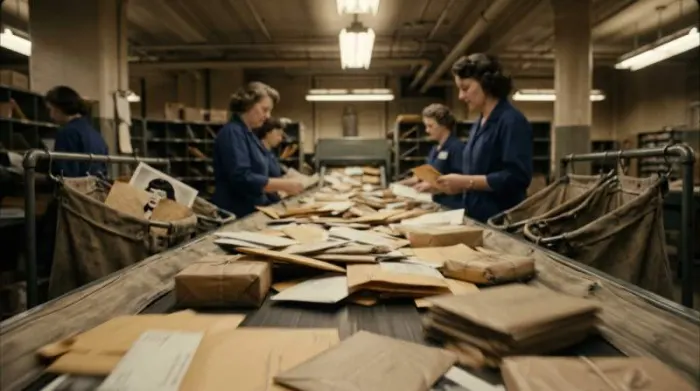
She never signed a Hollywood contract or worked with a major film studio. Her fame grew organically, driven by fans who bought her pictures by mail. This was a completely new model for celebrity, one built on direct connection rather than studio promotion.
Why Bettie Page's Bangs Became Iconic
The 1950s were a time of rigid beauty standards for women. The ideal was soft, feminine, and domestic, with hair curled and sprayed into place. Bettie's bangs rejected all of that.
They were blunt and unapologetic, cut straight across with no softening layers. This gave her a look that was both modern and retro, a nod to the flapper bobs of the 1920s but with a sharper, more confident edge. The bangs drew attention to her eyes and her smirk, creating a sense of playful mischief.
In her photos, she often wore corsets, garter belts, and high heels, but the bangs kept her from looking like a generic pin up. They gave her personality, a sense that she was in on the joke. She wasn't just a pretty face; she was a woman who knew exactly what she was doing.
A Practical Origin
- A lot of people think Bettie Page's iconic bangs were a deliberate, avant-garde fashion statement she created to rebel against 1950s beauty norms.
- Actually, the bangs started as a practical photography tip to cover her high forehead and prevent light glare, which she then kept as her signature look, according to multiple sources.
Source: en.wikipedia.org
How Bettie Page's Style Differed From Other Pin-Ups
Most pin up models of the era, like Betty Grable or Rita Hayworth, were Hollywood actresses first. Their images were carefully controlled by studio publicity departments. Bettie had no such handlers.
She chose her own clothes, her own poses, and her own photographers. She often wore simple, affordable pieces like a white bra and high waisted shorts, or a leopard print bikini that cost just a few dollars. This made her feel accessible to everyday women, not like some untouchable star.
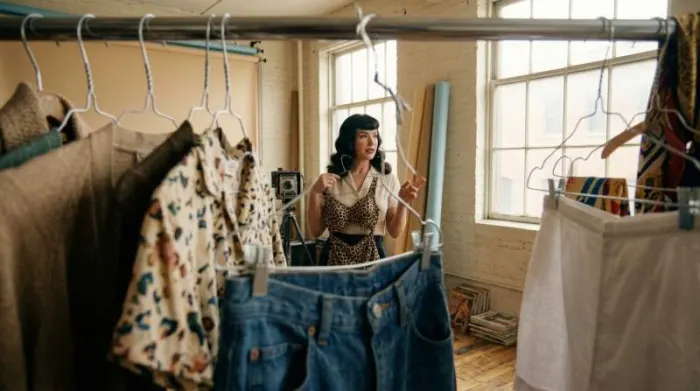
Her bangs became a DIY beauty statement. Women could cut their own fringe at home, copying Bettie's look without needing a professional stylist. That was part of her appeal: she was glamorous but reachable, a pin up queen who seemed like she could be your friend.
Why Bettie Page Left the Spotlight
By 1957, Bettie had grown tired of the modeling world. She'd faced legal troubles related to some of her more risqué images, and she wanted a different life. She moved to Florida, became a born-again Christian, and worked as a missionary.
She largely disappeared from public view for decades. Many fans assumed she had died or simply vanished. In reality, she was living a quiet, private life, far from the cameras and the magazines that had made her famous.
Her absence only added to her mystique. Without new photos or interviews, her existing images became frozen in time, representing a perfect, unchanging version of 1950s pin up culture. This made her even more legendary when she was rediscovered in the 1980s and 1990s.
The 1980s Revival of Bettie Page's Image
The 1980s saw a revival of interest in vintage style and rockabilly culture. Bands like the Stray Cats and the Brian Setzer Orchestra brought 1950s fashion back into the spotlight, and Bettie's look was a natural fit. Women began copying her bangs and cat eye makeup again.
In the 1990s, a new generation discovered her through books, documentaries, and the internet. The documentary "Bettie Page: The Girl in the Leopard Print Bikini" and the 2005 film "The Notorious Bettie Page" introduced her to audiences who had never seen her original photos. Her image became a symbol of retro cool, embraced by tattoo artists, pin up models, and vintage enthusiasts.
Today, her bangs are one of the most recognizable hairstyles in pop culture. They appear on runway models, in music videos, and on everyday women who want to channel a bit of that 1950s confidence. Bettie Page proved that you don't need a movie studio to become a legend.
How to Style Bettie Page Bangs Today
Getting the look starts with the cut. The bangs should be blunt, straight across, and hit just above the eyebrows. They shouldn't be wispy or feathered; the key is a clean, sharp line.
For the rest of the hair, classic victory rolls or a sleek ponytail work well. The bangs can be worn with long or short hair, but they look best when the rest of the style is polished and retro inspired. A red lip and black cat eye eyeliner complete the look.
You don't need expensive products. A fine tooth comb, a good pair of hair scissors, and a bit of practice are enough. Bettie's style was always about accessibility, and that spirit lives on in every woman who cuts her own bangs and steps out with confidence.
What did Bettie Page do after modeling
After leaving modeling in 1957, Bettie Page moved to Florida and worked as a missionary for the Billy Graham Evangelistic Association. She also married several times and lived a quiet life, even working as a secretary and a nurse's aide. Her later years were marked by mental health struggles, but she remained a beloved figure to fans who rediscovered her in the 1980s.