
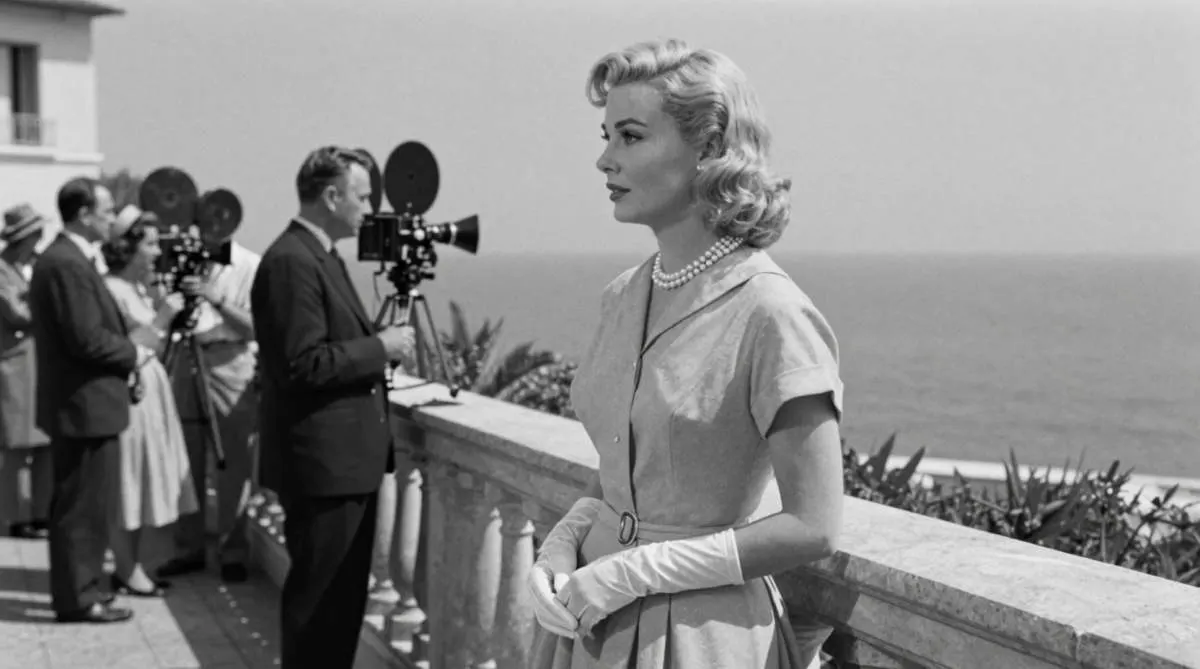
Grace Kelly's 1950s style defined an era of ladylike glamour, and her name still conjures a specific kind of unattainable elegance that feels both timeless and deeply personal. She was not just a movie star; she embodied a particular mid-century ideal, meticulously defining sophistication and making "ladylike" a powerful, desirable statement. Her real impact was on perception itself, proving that style could be a form of quiet, undeniable authority [1].
From Hollywood to Royalty
Grace Kelly grew up in a wealthy Philadelphia family, but her path to stardom began with modeling and television work in New York City. By the early 1950s, she had signed with MGM and quickly became one of Hollywood's most sought-after actresses. Her cool, composed on-screen presence in films like "High Noon" and "Dial M for Murder" caught the eye of director Alfred Hitchcock, who cast her as his ideal blonde. Hitchcock famously described her as a "snow-covered volcano," a phrase that captured her ability to combine icy restraint with hidden warmth [2].
In 1956, she married Prince Rainier III of Monaco, leaving Hollywood behind at the height of her fame. This transition from film star to real-life princess was unprecedented, and it shaped her style in profound ways. She traded movie costumes for custom-made gowns by designers like Helen Rose and Christian Dior, but she never abandoned the clean lines and understated elegance that had defined her earlier looks. Her wedding dress, designed by Helen Rose, became one of the most copied bridal gowns of the 20th century.
The Core of Her 1950s Style
Grace Kelly's 1950s style balanced polished tailoring with soft femininity. It was built on fitted day dresses, ladylike skirts, neat accessories, and a restrained color palette. This balance explains why her look remains a reference point for mid-century elegance.
Behind the Scene · Fictional Simulation
Pins and Pleats at Closing Time
Maggie, a junior seamstress at a Manhattan bridal atelier in 1956, kneels in the fitting room at six o'clock with a mouthful of pins.
The fitting-room light turned everything the colour of weak tea. I knelt on the carpet with my mouth full of pins and my knees aching, easing the hem of a copy of Grace Kelly's gown an eighth of an inch at a time. The bride-to-be stood on the pedestal and wept, certain the train was too short. Behind me the steam iron hissed and the head fitter's radio murmured something with strings in it. I had pricked my thumb twice and left two small red smudges on the muslin.
Then I saw it. Where the satin had been folded in the workroom, a faint crease ran the length of the train, and when I held the fabric against the light it caught like a seam of water. The bride stopped crying to look. I smoothed it flat with the flat of my hand, and the pleats fell into line, one after another, all the way down to the floor.
A fictional scene written for this article — not a real account.
The foundation of her look was the New Look silhouette, popularized by Christian Dior in 1947. This meant a nipped-in waist, a full skirt that fell below the knee, and soft, rounded shoulders. Kelly took this dramatic shape and made it feel approachable by pairing it with simple accessories like a silk scarf or a single strand of pearls. She rarely wore bold prints or heavy jewelry, preferring solid colors like pastel pink, navy, and cream.
The Power of Tailoring
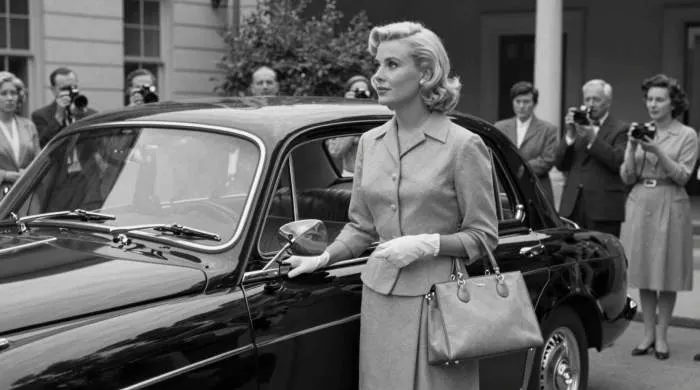
She understood that tailoring created a sense of control and confidence. Her blazers were always perfectly fitted, her skirts fell at the most flattering length, and her blouses were crisp without being stiff. This preference for structure over ornamentation set her apart from other stars of the era, who often wore heavily embellished gowns. She proved that a well-cut suit could be just as glamorous as a sequined dress.
Not So Instant
- Everyone assumes Grace Kelly was an overnight sensation who became a star the moment she hit Hollywood.
- Actually, she worked her way up through small roles and modeling before becoming a Hitchcock muse, proving her rise was a steady climb, not a magic trick.
Source: scrumpdillyicious.blogspot.com
Accessories as Deliberate Accents
Accessories were never an afterthought; they were deliberate choices that completed her outfits. She popularized the silk scarf tied under the chin, a look that became synonymous with her name. Her love of gloves, often white or cream, added a layer of polish that signaled old-money refinement. And, of course, there was the Hermès bag, which she carried so often that the brand renamed it the "Kelly bag" in 1956.
How the Hermès Bag Became the Kelly
The story of the Kelly bag is a perfect example of how her personal style created lasting cultural impact. In 1954, she was photographed using a large Hermès handbag to shield her growing baby bump from paparazzi. That single image turned the bag into an instant icon, and Hermès officially renamed it the "Kelly bag" two years later. The bag was originally designed in the 1930s as a saddle holder, but Kelly's association transformed it into a symbol of understated luxury.
What Made the Bag So Desirable
The Kelly bag was handmade from high-quality leather, with a structured shape and a single top handle. It was practical enough for everyday use but elegant enough for formal occasions. Her choice to carry it casually, without fanfare, made it feel accessible even though it was extremely expensive. This combination of craftsmanship and celebrity endorsement created a demand that has never faded.
Style Changes After Becoming Princess
After her marriage, her wardrobe evolved to reflect her new role as Princess Grace of Monaco. She began wearing more formal gowns for state dinners and galas, but she kept the same principles of restraint and quality. Designers like Givenchy and Balenciaga created pieces for her that were more ornate than her Hollywood wardrobe, yet they still featured clean lines and minimal embellishment. She also adopted traditional royal accessories like tiaras and diamond brooches, but she wore them with the same natural ease she had shown with a silk scarf.
Did She Ever Return to Hollywood Style?
Kelly never fully returned to acting, but she occasionally appeared at public events and charity functions. When she did, she often wore updated versions of her classic looks, such as a tailored coat with a fur collar or a simple sheath dress. She remained a fashion icon until her death in 1982, and her style continued to influence designers and everyday women alike.
Why Her Style Still Matters Today
Her style endures because it is based on principles that transcend trends. The idea of investing in quality pieces, choosing restraint over excess, and letting confidence speak louder than decoration is as relevant now as it was in the 1950s. Modern designers like Ralph Lauren and Carolina Herrera regularly cite her as an inspiration, and her looks are frequently recreated on red carpets. She proved that true elegance is not about following trends, but about cultivating a personal style that communicates confidence, restraint, and an unshakeable sense of self.
Decades later, her influence persists in every tailored blazer, every silk scarf tied just so, and every woman who understands that less is often infinitely more. Grace Kelly didn't just wear clothes; she wore an attitude, and that attitude remains the ultimate fashion accessory.
What was Grace Kelly's favorite color
While she often wore pastels, Grace Kelly's favorite color was actually a soft, dusty blue known as 'Bleu de Monaco.' She chose it for many of her official portraits and even had the color incorporated into the interior design of the royal palace, a detail that reflects her personal touch in every aspect of her life.