
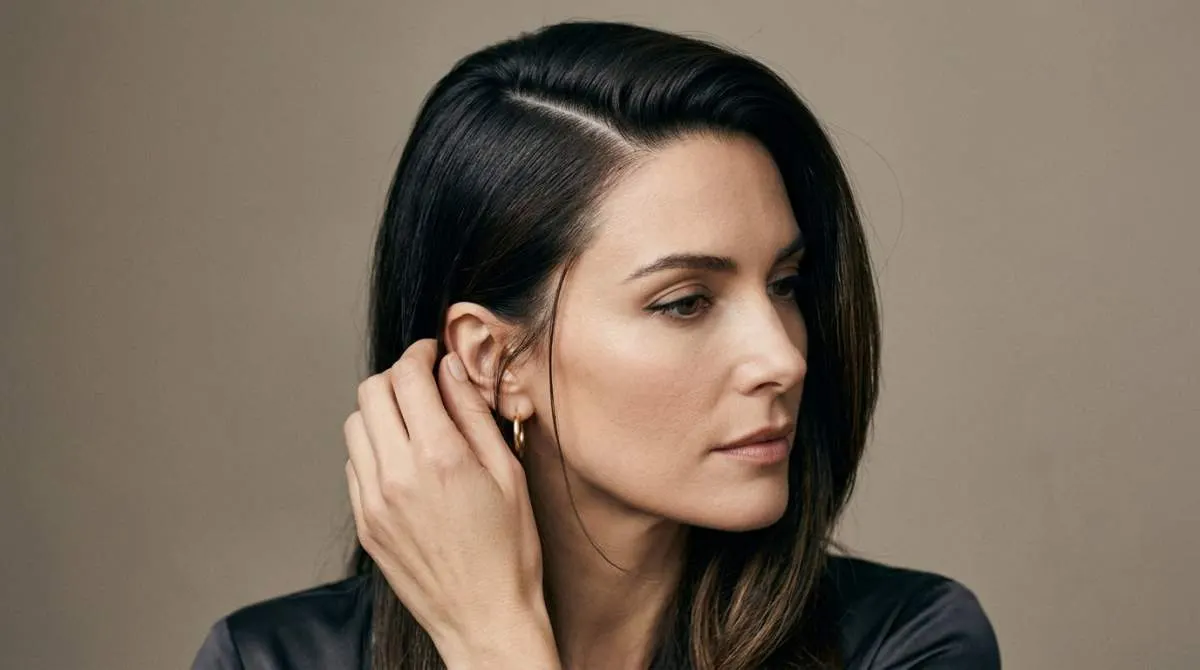
Lauren Bacall's deep side part was more than a hairstyle, it was a carefully crafted weapon of seduction. She let a heavy curtain of hair fall over one eye, forcing the camera and the audience to lean in closer. This deliberate choice, paired with her signature low chin tilt, created an air of mystery that defined 1940s film noir. Bacall didn't stumble into this look by accident, she rehearsed it endlessly in front of a mirror until every detail felt effortless [1].
The deep side part worked because it broke the rules of traditional Hollywood glamour. Most starlets of the era wore their hair swept back or pinned up to show off their faces completely. Bacall understood that hiding part of her face made people work harder to see her, and that effort translated into fascination. Her deep voice, a low, smoky contralto that seemed to emerge from somewhere deep in her chest, completed the package. When she said "You know how to whistle, don't you?" in To Have and Have Not the combination of the hair, the tilt, and the tone became instantly legendary [2].
The Lighting Lie
Many people assume that Bacall's look was purely a product of dramatic Hollywood lighting, but that's only half the story. Cinematographer Sid Hickox did use shadows and key lights to enhance her features, but Bacall herself controlled the performance. She insisted on being filmed from her left side, where the deep part fell, because she knew it created the most intrigue. The lighting technicians simply followed her lead, adjusting the shadows to match the mood she had already set [3].
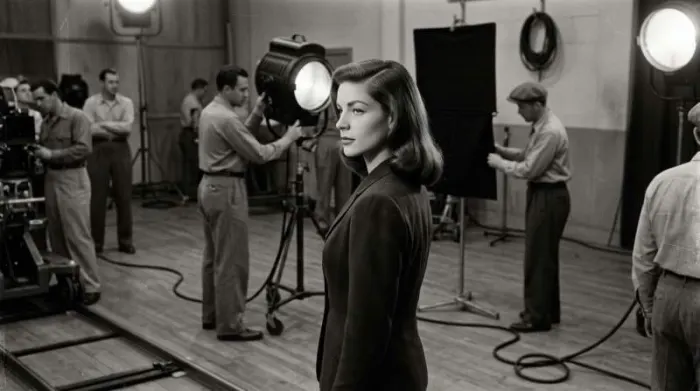
This collaboration between actress and crew was unusual for the time, when most stars simply followed the director's instructions. Bacall's insistence on the deep side part and her preferred camera angle showed a rare understanding of her own image. She knew that the hair falling over her eye wasn't just a style choice, it was a storytelling device. The audience had to lean in to see her expression, and that physical act of leaning mirrored the emotional pull she wanted to create.
A Legacy That Haunted Hollywood
Bacall's deep side part and sultry demeanor didn't disappear when the 1940s ended. They became a template that actresses, musicians, and even activists would borrow for decades to come. The look was so powerful that it transcended its original context, appearing in French New Wave cinema, 1990s pop music, and 1990s punk subcultures. Each generation found something new in Bacall's original formula, adapting it to their own needs while keeping the core elements intact.
- Anna Karina borrowed the fringe for French cinema in 1965.
- Madonna stole the walk for her 1990 Dick Tracy role.
- Riot grrrl bands used the deadpan stare as a punk uniform in 1991.
- Vogue featured Bacall's vintage hair in a 1988 retrospective spread.
- Gloria Steinem cited Bacall's confidence as a feminist blueprint.
Every generation finds her again, whether in a grainy film on late night TV or in a borrowed magazine from a thrift store. Her legacy is not just a hairstyle, it is a dare to be still, to be quiet, and to own every second of the silence. That kind of power never goes out of fashion, it just waits for the next woman brave enough to pick it up.
A Happy Accident
- Everyone thinks Bacall's sultry 'look' was a meticulously planned and rehearsed weapon of seduction she created in front of a mirror.
- The truth is, that famous chin-down, eyes-up pose was a nervous accident she used to stop her head from shaking on her first film set.
Source: thin.npr.org
What Made the Look So Enduring
The deep side part worked because it was simple enough to copy but difficult to master. Any woman could sweep her hair to one side, but the attitude behind it required practice and intention. Bacall's version of the look was tied to her specific physicality, the way she held her chin, the pace of her speech, and the stillness of her body. Later adopters had to find their own version of that stillness, which is why the look never felt like a costume when worn by someone new.
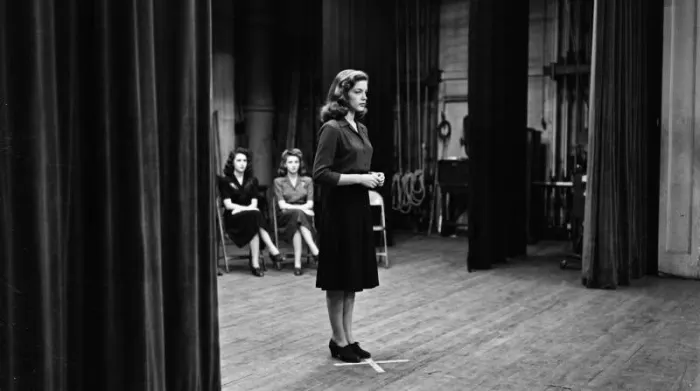
The look also endured because it was gender-fluid in its appeal. Men in film noir often wore their hair with a similar deep part, and the androgynous quality of Bacall's style made it accessible across gender lines. The confidence she projected was not about being feminine or masculine, it was about being fully present and unapologetic. That message resonated with women in the 1940s who were entering the workforce during World War II, and it continued to resonate with later generations seeking similar empowerment.
The Low, Slow Voice Is Back: Bacall's Modern Revival
We now live in a world of rapid fire takes and vocal fry, yet the echo of Bacall's controlled delivery keeps appearing in the wild. It shows up in women who don't raise their pitch to soften a hard opinion, and it lives in the silence they hold before answering a rude question. That's the sultry elegance made portable, a strategy that works whether you're in a boardroom or a coffee shop. The deep side part may have faded from everyday fashion, but the vocal confidence Bacall pioneered has only grown more relevant.
Modern actresses like Rooney Mara and journalists like Christiane Amanpour don't copy the eyeliner or the hemline, but they borrow the economy of motion. A slow blink, a slight turn of the chin, and the room adjusts, that was Bacall's real trick. She made stillness feel like power, and that lesson has outlasted the hairstyle that first carried it. The modern take drops the costume entirely, you don't need a trench coat or a platinum wave to channel Bacall's energy.
Mood Match
Four Moments Worth a Record
Find the moment you are in, then let the song do the rest.
Waiting by the phone for someone to call
I'll Be Seeing You by Bing Crosby
Bing sings it slowly enough to fill every ring you are willing into the receiver.
Leaning in close to hear a secret
You know how to whistle, don't you, Steve? You just put your lips together and ... blow. by Lauren Bacall
That low, amused voice is the sound of a secret being handed over with a raised eyebrow.
Dancing slow in a dim room
I'll Walk Alone by Dinah Shore
Dinah keeps the tempo just behind your feet, which is exactly where a slow dance lives.
Getting ready for a night out
Swinging on a Star by Bing Crosby
It is jaunty enough to carry you through lipstick, stockings and the search for your other earring.
One song per moment, no shuffling. That is how an evening is built.
Songs checked against en.wikipedia.org.
The blunt bob got messy, but the strategy stayed clean. Bacall never rushed a line and never shouted to be heard, and that measured control was the part younger performers could actually borrow. She proved that a slow, steady delivery lands harder than any raised voice. As Hollywood's sound era matured, that discipline aged better than any pinned wave ever could.
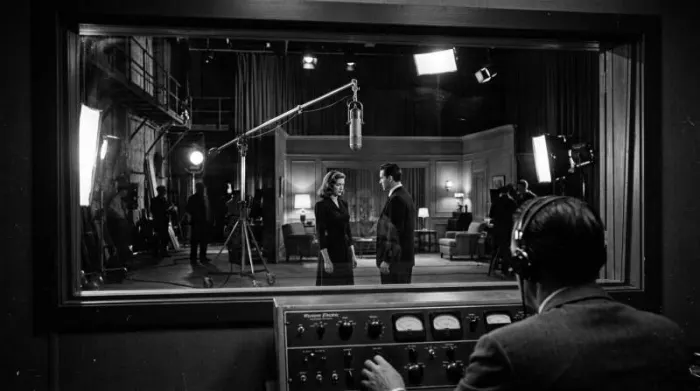
Then it got even simpler, the confidence to say less than you think is the whole trick. Bacall's era was loud with fabric and smoke, yet her core message was quiet. She taught women that a low voice gets heard first, so the revival isn't a revival at all, it's a rediscovery of an old weapon.
The hair can stay short or flow long, the eyeliner can be sharp or smudged, but the chin goes up, the sentence slows down, and the world just leans in. That's Bacall's ghost, and she's still very much alive. The deep side part may have been the original hook, but the confidence behind it is what keeps people coming back to her example.
Why the Deep Side Part Still Matters Today
Bacall's deep side part matters because it represents a moment when a woman took control of her own image in an industry that usually dictated every detail. She didn't just follow the trends of the 1940s, she created a look that was uniquely hers and then defended it against studio pressure. The deep side part became a symbol of that autonomy, a small rebellion that spoke volumes about her character. When women today adopt a similar style, they are tapping into that same spirit of self-determination.
The look also matters because it reminds us that style is not just about clothing or hair, it is about presence. Bacall's deep side part was the frame for a performance that included her voice, her posture, and her timing. She understood that the most memorable moments in film and in life come from the spaces between words, the pauses, the glances, and the silences. That lesson is timeless, and it is why Bacall's influence continues to appear in everything from fashion magazines to feminist essays.