
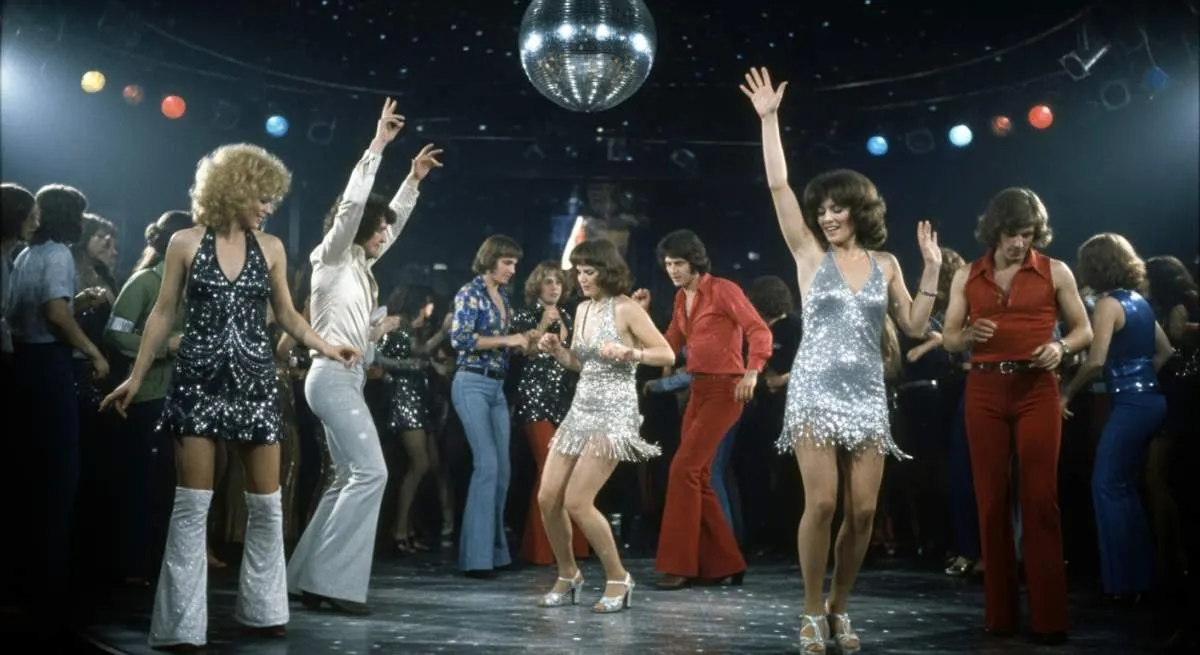
The Rhythm That Demanded a Look
To truly grasp disco fashion, you have to start with the beat. That relentless four-on-the-floor kick drum wasn't just music; it was a physical command. It demanded a body in fluid, continuous motion, a world away from the sharp, aggressive moves of rock and roll. Your clothes had to keep up with that hypnotic rhythm.
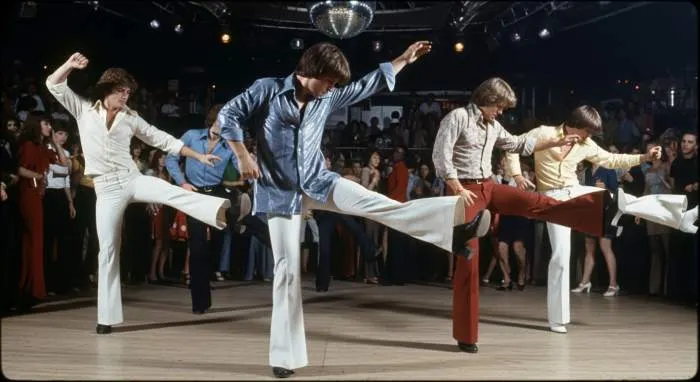
If you're dancing all night, you can't be fighting your outfit. The Hustle or the Bump in a stiff tweed skirt? Impossible. The music liberated movement, and fashion had no choice but to follow. This need for freedom became the single most important rule of disco style. The entire aesthetic was built on the idea of perpetual motion, where the dancer and their shimmering clothes became one kinetic sculpture under the strobe lights.
Studio 54: The Velvet Rope and the Ultimate Runway
If disco was the religion, then Studio 54 was its glittering cathedral. Opened in 1977 by Steve Rubell and Ian Schrager, this New York club wasn't just a place to dance, it was a stage for being seen and judged. Your outfit was your ticket past the infamous velvet rope.
What did you wear to Studio 54? It was less about specific labels and more about pure, unadulterated effort. Rubell famously curated a mix of the beautiful, the bizarre, the famous, and the fabulous wannabes. But everyone had to bring the drama. That meant sparkle, daring silhouettes, and a fearless embrace of nudity or near-nudity. This was the era of "aspirational play," where you dressed for your fantasy self, not your day job.
Inhibitions were checked at the door, and that freedom exploded in clothing that was experimental, theatrical, and gloriously over-the-top. The club became the ultimate runway for a new, liberated kind of glamour, where the only sin was being boring.
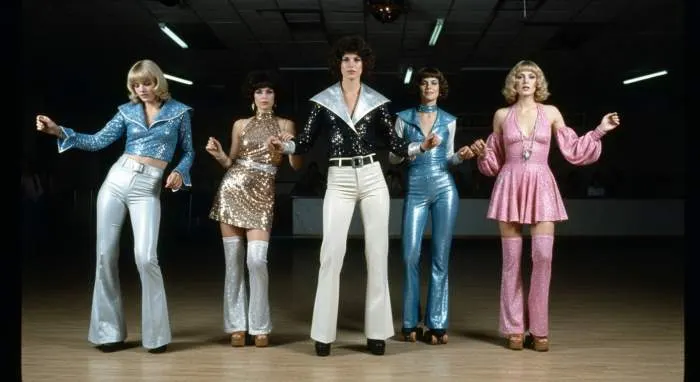
Pillars of Disco Style: Halston, Halter Necks, and Heels
While many designers left their mark, one name is synonymous with disco's peak glamour: Halston. Roy Halston Frowick understood the modern, liberated woman perfectly. His designs were masterclasses in elegant simplicity, meant to drape and flow with the body's every move.
The Halston jumpsuit, often in fluid jersey or silk, was the epitome of effortless chic. These monochromatic pieces needed little beyond a great pair of heels and sheer confidence. He also championed the Ultrasuede dress, sharp, synthetic, and movable, and the dramatic, flowing caftan. Beyond the designers, the silhouette itself transformed. Waistlines vanished, replaced by column dresses and A-line shifts that moved independently. The halter neck became a staple, perfectly framing shoulders and backs glistening under the lights.
Fabric is Everything: The Need for Movement and Shine
The true magic of disco fashion was spun in the textile mill. The rise of synthetic fabrics was absolutely essential. It's a fun bit of trivia that polyester was first marketed as a miracle fabric for astronauts before disco dancers claimed it for its shimmer and stretch.
Polyester was king. It held brilliant color, was affordable, and could be woven into double-knit fabrics that kept their shape through hours of dancing. Lurex, a metallic fiber, was woven into everything, turning dancers into human mirror balls. The invention of high-stretch fabrics like Spandex allowed for skin-tight pants that didn't sacrifice an ounce of flexibility. This reliance on synthetics also made the early disco scene wonderfully democratic. Unlike expensive silks, these shiny fabrics were accessible, fueling the diverse, electric energy of the dance floor.
The Essential Wardrobe Pieces
Let's break down the key elements of the perfect outfit, whether you were headed to Studio 54 or the local roller rink. The disco uniform was built on specific pieces with a clear purpose: to move, to shine, and to command every bit of attention in the room.
The Ladies' Disco Look: Achieving Glamour and Fluidity
The female disco uniform was a masterclass in suggestion, showing skin and embracing tight fits for maximum shine. It was sexy, relying on movement rather than overt exposure. The undisputed champion was the jumpsuit, creating a long, lean, uninterrupted line from neck to ankle.
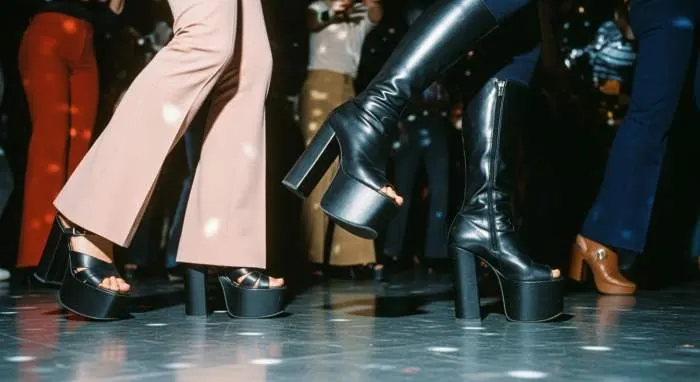
Thanks largely to Diane von Fürstenberg, the wrap dress became the perfect day-to-night staple, offering sophisticated fluidity. For the truly daring, hot pants paired with platform boots and a tiny tube top were pure, youthful energy. Footwear was non-negotiable. Platforms added crucial height for visibility on a packed floor and provided surprising stability for complex footwork. They literally elevated the wearer to a new plane of fabulousness.
The Men's Disco Look: Embracing Flamboyant Swagger
Disco was a rare moment where men were encouraged to be as flamboyant as women. Masculine fashion shed its drab colors for something vibrant and daring. The leisure suit, often ridiculed now, was the standard uniform. Made of soft, double-knit polyester with wide lapels, the jacket was unstructured and easy.
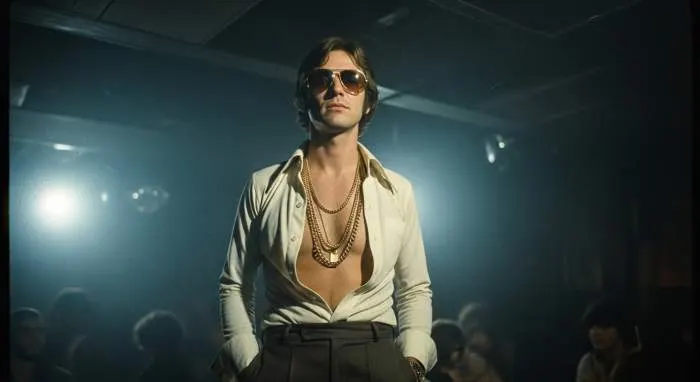
To show off a little chest hair, shirts were unbuttoned down to the sternum, often paired with a matching vest in plush velvet or slick satin. Wide-leg trousers flared dramatically, designed to obscure the massive platform shoes underneath. A man's look wasn't complete without the right accessories. A stack of gold chains, worn over or under the open shirt, was essential. Aviator sunglasses, even worn inside the dim club, added an air of mysterious celebrity. Every choice was about projecting success and undeniable swagger.
The Glitterati: Iconic Celebrities Who Defined the Style
Every movement needs its muses, and disco had a legendary lineup. Bianca Jagger's influence was immense, perfectly captured by her famous entrance at Studio 54 on a white horse, wearing a flawless, shimmering Halston dress. She set a standard of cool, collected glamour.
Cher was the undisputed queen of theatrical disco. She embraced Bob Mackie's outrageous creations, sheer, sequined gowns and feathered headdresses that proved disco fashion could be high art and wildly sexy all at once. Then there was Grace Jones, the epitome of androgynous chic. Her sharp, tailored suits and severe haircut were a powerful, architectural counterpoint to the fluid Halston look. And of course, John Travolta, as Tony Manero in Saturday Night Fever, cemented the white polyester suit as an aspirational uniform for a generation of men.
The Decline and the Lasting Legacy
All good parties must end. By the dawn of the 1980s, the four-on-the-floor beat began to fade. The excessive glamour and exclusivity of places like Studio 54 led to a cultural backlash, starkly symbolized by the infamous Disco Demolition Night in Chicago in 1979.
Why did the fashion fade? It was a perfect storm of over-saturation, a shifting cultural mood, and the natural evolution of music. The 80s ushered in power dressing and minimalism, leaving the sequins behind. But here's the groovy truth: disco fashion never truly died. It simply went into hibernation, waiting for the next generation to rediscover its unapologetic joy and optimism.
How to Dress for a Disco Party Today
The disco revival is a perennial favorite, and the key today is blending authentic 70s vibes with modern wearability. Thankfully, head-to-toe polyester is no longer a requirement! Instead of a full sequin jumpsuit, try a sequin crop top or a shimmering blazer paired with contemporary, wide-leg denim.
Swap out scratchy polyester bells for high-quality velvet or corduroy flares. A pair of knee-high metallic boots works instant disco magic. Embrace sheer fabrics like chiffon in dramatic sleeves or capes; the movement catches the light beautifully but feels lighter. The beauty of the disco aesthetic is its inherent optimism. Putting on something that shimmers just makes you feel happier. It's a direct link to a time that prioritized pleasure and self-expression. So next time you hear that irresistible beat, find something shiny, step into your highest platforms, and remember the lesson from that velvet rope: life is a party, and you absolutely must dress the part.