
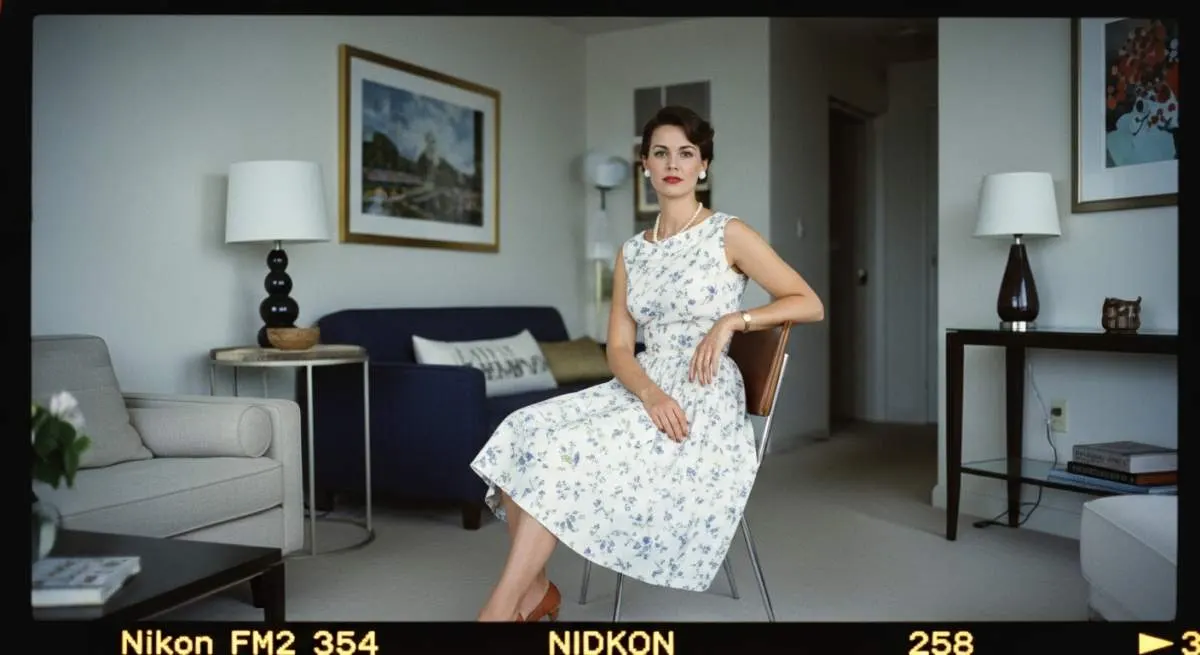
Pairing a 1950s dress with sneakers is one of the smartest style moves you can make today. You get the flattering silhouette and timeless appeal of vintage, grounded in everyday comfort. The trick is knowing which dress shapes work best, which sneakers create the right balance, and how to bridge the two eras with a few smart styling choices.
This look has roots in the late 1950s, when teenage girls started wearing their full circle skirts with canvas sneakers as a quiet act of rebellion. Their mothers wanted them in heels and gloves, but the girls wanted to dance, ride bikes, and hang out at the soda fountain. The sneaker-and-dress combo was casual, youthful, and practical, and it drove the etiquette columnists wild.
What Makes a 1950s Dress Work with Sneakers?
The decade gave us two dominant dress shapes: the full-skirted fit-and-flare and the sheath. The fit-and-flare, with its fitted bodice and voluminous skirt, is the most forgiving and fun. The skirt provides enough visual weight to balance the bulk of a sneaker, and the cinched waist keeps the whole outfit from looking shapeless. Sheath dresses can work too, but they require a more deliberate styling approach to avoid looking too formal.
Fabric matters just as much as shape. Cotton day dresses in gingham, polka dots, or small florals are the easiest starting point. Heavier fabrics like cotton sateen, taffeta, or wool can also work, especially in fall and winter, but they need a chunkier sneaker to match their visual weight. Delicate fabrics like silk or chiffon are trickier, and the contrast has to be intentional.
Classic Canvas: The Sweet Spot
Think Converse, Keds, or similar minimalist canvas shoes. These are the workhorses of the modern wardrobe. Canvas sneakers have been around since the early 1900s, originally marketed for sports and beachwear, but by the 1950s they were standard issue for American teenagers. Keds, founded in 1916, became synonymous with the clean-cut, all-American girl, while Converse Chuck Taylors, introduced in 1917, carried a slightly more rebellious edge by the time rock and roll arrived.
- Best Paired With: Cotton day dresses, gingham, simple shirtwaists.
- The Vibe: Sweet, approachable, slightly collegiate.
Chunky Trainers: Bold Contrast
Chunky trainers and sneakers with exaggerated soles are highly effective because they provide a powerful visual counterpoint to the delicacy of vintage fabric. This pairing became a runway favorite in the 2010s, when designers like Balenciaga and Gucci started showing delicate dresses with oversized sneakers. The look was intentionally ironic, mixing high and low, precious and practical.
- Best Paired With: Structured cotton sateen dresses, dresses with bold geometric prints, or heavier wool/tweed winter dresses.
- The Vibe: Edgy, fashion-forward, and intentionally ironic.
Leather Sneakers: Polished Edge
A clean, white leather sneaker (think Stan Smiths or common leather court shoes) is the LBD of the footwear world. The Stan Smith, originally a tennis shoe introduced by Adidas in the 1960s and renamed in 1971, became a street style staple in the 2010s precisely because it was simple, versatile, and just polished enough to work with dressier pieces.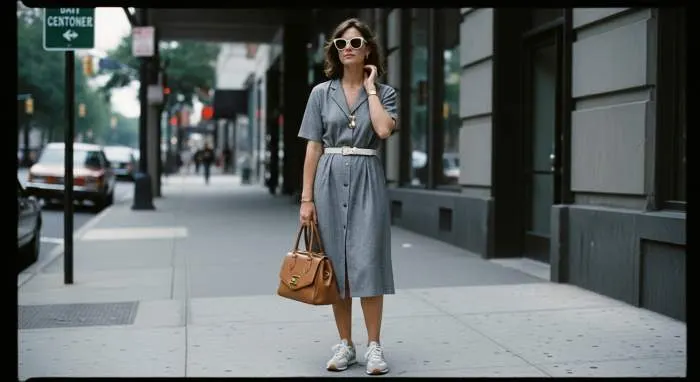
- Best Paired With: Anything, but they shine when paired with darker, jewel-toned vintage dresses (navy, emerald, burgundy) where a canvas shoe might look too flimsy.
- The Vibe: Polished, clean, and effortlessly chic.
The Belt is Your Best Friend
The 1950s were all about the tiny waist. Even if your vintage dress doesn't come with a belt, adding one is non-negotiable. A belt cinches the waist, defining the silhouette and preventing the dress from looking shapeless when paired with casual shoes. Today, instead of a tiny, matching patent leather belt, try a wider, modern belt in a neutral leather, or even a fun, brightly colored elastic belt to pull a color from your sneakers or print.
Layering for Today
Layering is where you can really signal that this is a modern outfit, not a costume. A classic denim jacket thrown over the shoulders or tied around the waist is the ultimate vintage-to-modern style hack. Denim jackets became widely available in the 1950s thanks to brands like Levi's and Lee, but they were workwear, not fashion. By the 1970s and 80s, they had become a unisex wardrobe staple, and today they are one of the easiest ways to make any outfit feel relaxed. Instead of the tiny, fitted cardigan of the 50s, swap it for an oversized, chunky knit cardigan or a modern bomber jacket.
Going bare-ankle with low-cut sneakers creates a clean, modern line. Wearing a fun, patterned ankle sock or a sporty crew sock adds personality and a playful touch. The key is to make it look intentional, not accidental.
Are 1950s Dresses Still Fashionable? Absolutely!
Designers have been revisiting the 1950s silhouette for decades. Christian Dior's New Look, introduced in 1947, set the template for the fitted bodice and full skirt that dominated the next decade. That silhouette has been revived in the 1980s, the early 2000s, and again in the 2010s, each time with a fresh twist.
The 1950s dress works today because it flatters a wide range of body types, it is made from quality materials that have lasted, and it offers a level of craftsmanship that is hard to find in fast fashion. Pairing it with sneakers is simply the smartest way to make it feel current and wearable.
Hair and Makeup: Keep it Fresh
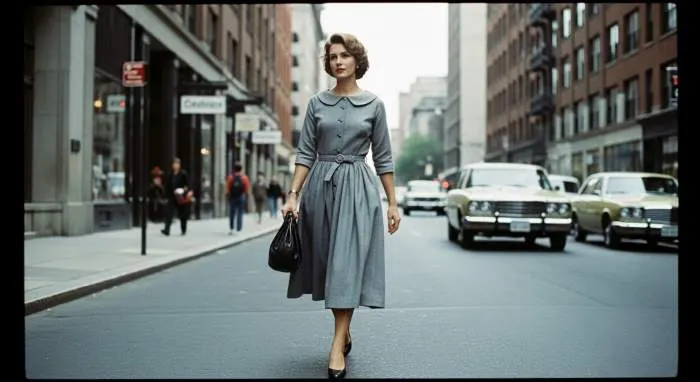
The heavily styled hair and makeup of the 1950s can look costume-like when paired with sneakers. Instead, aim for a fresh, natural look. Keep hair loose with soft waves, a messy bun, or a high ponytail.
For makeup, go for a fresh face, maybe a swipe of mascara, a light blush, and a tinted lip balm. The goal is to look effortless, not painted.
Bags and Accessories Should Feel Current
A structured vintage handbag can work beautifully, but so can a modern crossbody bag, a canvas tote, or even a small backpack. Avoid anything too matchy-matchy or too precious. A pair of simple hoop earrings, a delicate necklace, or a stack of bracelets can add personality without overwhelming the outfit.
Why This Look Works So Well Today
The dress-and-sneaker pairing endures because it solves a real problem. Women want to look put-together, but they also want to be comfortable and mobile. The 1950s dress offers structure, femininity, and a flattering silhouette.
The sneaker offers comfort, practicality, and a touch of rebellion. Together, they create a look that is both polished and approachable, vintage and modern, intentional and effortless. This combination also reflects a broader shift in how we think about fashion.
The rigid rules of the past have loosened. Today, you can wear a ball gown with a leather jacket, a suit with sneakers, or a vintage dress with athletic shoes, and it feels fresh, not confused. Ultimately, this is the essence of how to dress mix and match: it's about creating your own style logic.
So, darling, take that lovely full-skirted dress, lace up those cool new sneakers, and hit the street. You're not just wearing clothes; you're making a statement about comfort, history, and radical self-expression.
A quick word history for the curious
The word dates to a 1917 Keds campaign: rubber soles were so quiet that wearers could sneak up on people.
Converse had launched its All Star basketball shoe that same year, 1917.