
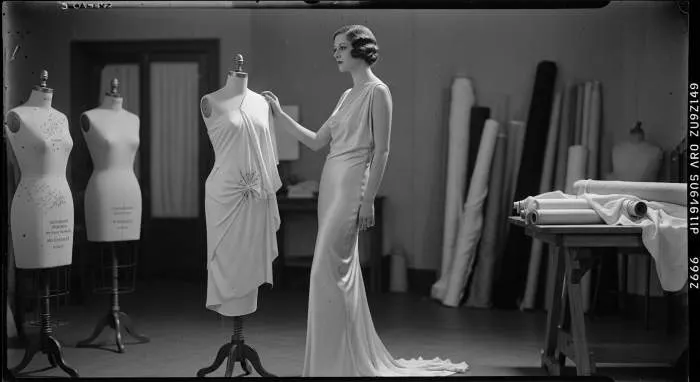
The Magic of the Diagonal
What made the bias cut so special? It was the way fabric was cut at a 45-degree angle to the weave, allowing it to drape and cling to the body like liquid. This technique, though simple in theory, created a revolutionary silhouette that moved with the wearer, capturing light and motion in a way that traditional straight cuts never could.
Hollywood's High Priests of Glamour
The studio designers who made it happen were true artists, blending technical skill with an understanding of the stars they dressed. Their work defined the look of an era and set standards that still influence fashion today.
- Adrian (Gilbert Adrian) at MGM: He was probably the most influential of them all. As the head designer at Metro-Goldwyn-Mayer, Adrian created bias-cut gowns that turned stars like Jean Harlow,Greta Garbo, and Joan Crawford into living legends. His gowns were often made of shimmering silk satin.
- They hugged the body tightly at the waist and then flared out dramatically, creating a showstopping silhouette. For Harlow, he designed those iconic white satin gowns that became inseparable from her "Platinum Blonde" persona-think Dinner at Eight(1933) and Saratoga(1937).
- Those dresses seemed to be made of liquid light, making Harlow glow on screen. For Garbo, Adrian chose more muted tones and flowing lines that matched her melancholic elegance, especially in Camille(1936). And for Crawford, he blended fluidity with a powerful, assertive femininity-particularly in those gowns with strong shoulders.
- Travis Banton at Paramount: Banton was all about sophisticated, understated elegance. He dressed stars like Marlene Dietrich and Carole Lombard, and his bias-cut creations for Dietrich emphasized her long, lean figure and her unique mix of strength and allure.
- The gown she wore in Shanghai Express(1932)-a sleek, bias-cut satin number trimmed with feathers-is still one of the most iconic examples. Banton's designs focused on flawless tailoring and luxurious fabrics rather than flashy details, letting the bias cut speak for itself with quiet authority. For Lombard, he made gowns that balanced her playful personality with undeniable sophistication, often in rich crepes and charmeuse.
- Orry-Kelly at Warner Bros.: Orry-Kelly brought a different touch to the bias cut, often grounding it in realism for stars like Bette Davis and Olivia de Havilland. His bias-cut gowns weren't as overtly glamorous as Adrian's, but they served the story and the actress's performance perfectly.
- He knew how the bias cut could show vulnerability, strength, or seduction without being too flashy. His work on films like Jezebel(1938) showed how well the bias cut could adapt to period settings, keeping its fluid elegance even within a historical context.
- Edith Head: Even though her peak influence lasted much longer, Edith Head had a sharp eye for detail and understood how clothes shape a character. She often used the bias cut to perfection.
- During her later years at Paramount and Universal, she refined the art of dressing stars, making sure every bias-cut gown helped create an illusion of effortless perfection.
The Fabric of Dreams
Materials and embellishments were chosen with care to enhance the bias cut's magic. Colors ranged from pristine whites and creams (especially for Harlow) to deep jewel tones like emerald green, sapphire blue, and ruby red. These vibrant hues became more popular as Technicolor advanced. And black, of course, stayed classic, always exuding timeless sophistication.
- Silk Satin: This was the undisputed star-its glossy surface caught light like water, creating that mesmerizing liquid effect on screen. The way silk satin clung and shimmered over the body was central to the goddess look.
- Charmeuse: A lighter, more delicate silk with a soft luster, charmeuse gave an even more ethereal drape. It felt a little less structured than satin.
- Crepe: Silk crepe had a subtle texture and excellent drape, offering a sophisticated matte alternative to satin. It was often used for more understated but equally elegant bias-cut designs.
- Velvet: Even though it's heavier, velvet cut on the bias achieved a magnificent, plush drape. It absorbed light in rich, deep tones-perfect for dramatic evening wear.
- Art Deco Jewelry: Diamonds, emeralds, and sapphires, often set in platinum, added dazzling accents. Statement necklaces and delicate bracelets from Cartier and Van Cleef & Arpels were the unspoken suppliers of on-screen sparkle.
- Furs: Lavish stoles and wraps of fox, mink, or ermine draped over bias-cut gowns added another layer of luxury and drama.
- Feathers: From delicate marabou trim to dramatic ostrich boas, feathers enhanced the ethereal quality of the gowns. They were often used around necklines and sleeves.
- Sequins and Beads: Used sparingly, often to create subtle patterns or highlights on necklines or straps. These delicate details caught the light as the stars moved.
The Goddess Archetype
Escapism and the Hays Code shaped the on-screen goddess, and the bias-cut gown was its ultimate expression. 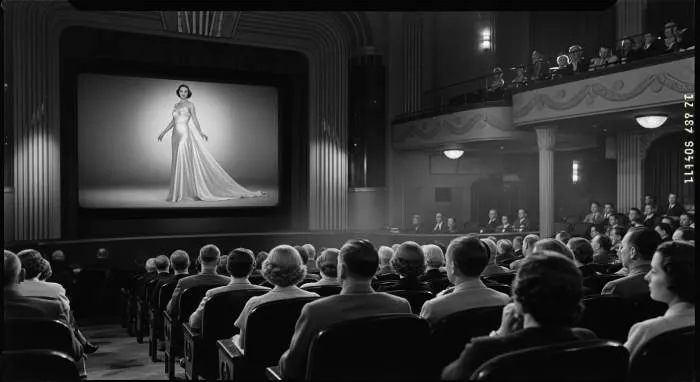 Stars and their second skins defined the era. Wartime austerity and enduring glamour defined the next decade.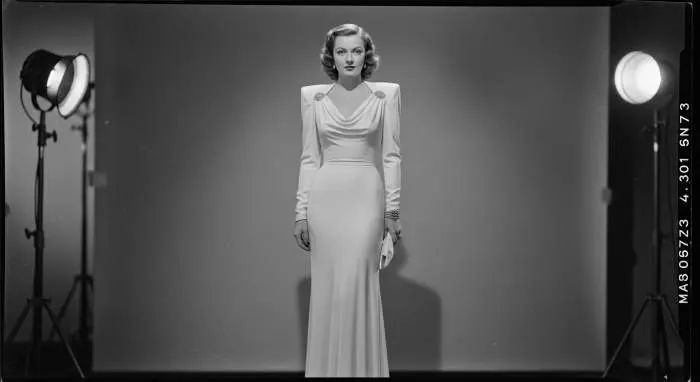
- Jean Harlow: Her white satin bias-cut gowns were so iconic they practically deserved their own billing. They defined her "Platinum Blonde" image and made her look like a living, breathing sculpture.
- Greta Garbo: Her legendary mystique was amplified by Adrian's bias-cut designs. Whether in the flowing gowns of Grand Hotel(1932) or the tailored yet fluid looks of Ninotchka(1939), Garbo moved with a grace that only the bias cut could capture.
- Marlene Dietrich: Travis Banton's bias-cut creations for Dietrich captured her unique blend of androgyny and sensuality. Gowns in Morocco(1930),Shanghai Express(1932), and Desire(1936) showed off her long limbs and her powerful, yet utterly feminine, presence.
- Carole Lombard: Known for her comedic timing and sophisticated style, Lombard often wore bias-cut gowns. They highlighted her natural elegance, usually in luxurious crepes and charmeuse.
- Joan Crawford: While she's often associated with strong shoulders, Crawford also embraced the bias cut in her earlier, more glamorous roles. Adrian designed gowns that emphasized her dramatic flair and powerful screen presence.
- Katharine Hepburn: Though known for her trousers, Hepburn also wore bias-cut gowns with remarkable confidence. She often chose simpler, less embellished versions that still let her athletic figure and unique grace shine through.
- Rita Hayworth: Her most famous bias-cut moment-the black satin dress in Gilda(1946)-falls just outside the strict 1930s window, but it perfectly captures the enduring power and seductive nature of the style. That look pushed the bias cut into the post-war era.
The Enduring Legacy of Liquid Light
But the bias cut's legacy hasn't faded. It changed the way designers thought about fabric and the female form. It taught the world that true elegance comes from a simple cut and the beauty of the material itself.
What is a bias cut dress
The bias cut was actually a French invention, pioneered by Madeleine Vionnet in the 1920s. She called it the 'cut on the cross' and used it to liberate women from corsets, letting fabric flow naturally over the body. Hollywood adopted it a decade later, turning Vionnet's radical idea into the ultimate symbol of screen glamour.