
Corsets Uncaged: A Revolution in Fabric and Firepower
Remember that moment? A seismic shift in culture, almost physical. The stadium lights, the roar of the crowd, the anticipation thick in the air [1].
The Jean Paul Gaultier and Madonna partnership changed fashion forever. Gaultier's provocative, pointed corset, with its now iconic conical bra, transformed the stage into a battlefield of style and a clear declaration. It was the moment the corset stopped being a secret and became a weapon, a symbol of agency and defiance [2].
They dragged what was intimate, restrictive, and hidden into the blinding spotlight, stripping it of its Victorian baggage and reimagining it as armor, celebration, and a challenge to preconceived notions of femininity and power. Suddenly, 'underwear as outerwear' exploded into mainstream consciousness, altering the landscape of fashion and perception forever. This was no fleeting trend [3].
What did it mean for women to claim a piece of their past, notorious for its discomfort, and turn it into a beacon of confidence? We're diving deep into the electrifying story of how Madonna, with Gaultier as her audacious co-conspirator, unleashed a revolution with the corset.
From Whispers to War Cries: The Corset's Long March
History has a way of speaking through the clothes worn closest to the skin. Before it became a symbol of defiance, wielded by pop queens on stadium stages, the corset was a secret. It was the hidden architecture of femininity, shaping bodies for aesthetics and an entire societal structure.
Behind the Scene · Fictional Simulation
The Pink Corset and the Broken Clasp
Marta is a seamstress in a Paris costume atelier in the 1980s.
The atelier smelled of steam and beeswax. I bent over the pink conical corset, third fitting, under a bare bulb. The spiral-stitched cups pulled the satin off-grain, puckering like a sour mouth. My fingers ached from unpicking seams. The courier was due at six. Outside, rain tapped the skylight. Inside, the whole atelier waited, silent except for the tick of the wall clock. I held a seam ripper, its blade cold against my thumb.
Then the garter clasp snapped. A tiny ping against the parquet. I froze. Madame Berthe, who never spoke before noon, looked up from her ledger and said nothing, but her eyes softened. She reached into her apron and produced a tin of violet pastilles. She placed one on my cutting table without a word. I picked it up, the sugar rough on my tongue, and reached for a fresh clasp. The clock ticked on. I threaded my needle.
A fictional scene written for this article — not a real account.
Victorian Corsets: The Hidden Architecture of Control
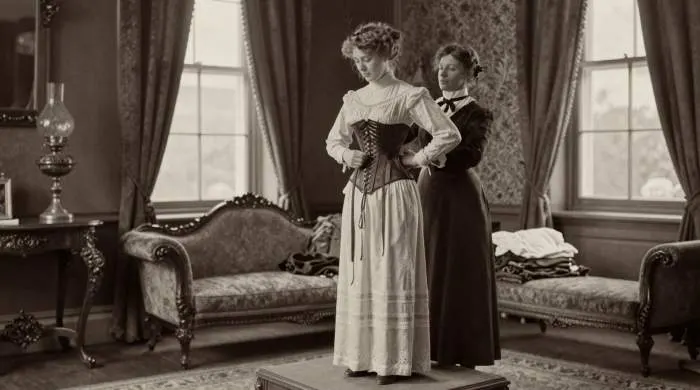
By the Victorian era, the corset truly came into its own, or perhaps, its tyranny. This was the age of tight lacing, where waists were painstakingly reduced, and a woman's posture became a metaphor for her moral uprightness. These intricate garments, often laced by a maid, were designed to be utterly invisible, a private penance for public presentation. They dictated movement, restricted breathing, and were an undeniable symbol of the era's rigid control over women's bodies and lives.
Gaultier's Early Corset Experiments and the Blonde Ambition Megaphone
Gaultier had already been toying with corsets in his 1980s collections, but Madonna's Blonde Ambition tour gave his subversive vision a global megaphone, turning a Parisian runway experiment into a stadium-sized revolution. It was a cultural moment that redefined the very meaning of "underwear," and it started long before any cone bras hit the runway.
The Armor of Ambition: How a Stitched Revolution Reshaped Our View
The world collectively gasped. It wasn't just a pop concert; it was a cultural earthquake. When Madonna, the ultimate provocateur, stepped onto the 1990 Blonde Ambition tour stage clad in Jean Paul Gaultier's creations, the delicate line between private and public shattered. This wasn't just fashion; it was a manifesto.
Who Wore It First?
- Everyone thinks Madonna and Gaultier invented the whole 'corset as outerwear' thing in 1990.
- Actually, Gaultier debuted his iconic cone bra corset on the runway in 1984, and other designers like Vivienne Westwood were playing with the idea even earlier!
Source: fashionhistory.fitnyc.edu
For centuries, the corset had symbolized restriction, cinching women into "proper" shapes, often at the cost of comfort and health. It was underwear, meant to be hidden, a tool of societal control cloaked in silk and whalebone. But Gaultier and Madonna flipped that script. They didn't just bring the corset out; they weaponized it, turning an instrument of submission into a symbol of defiant female strength.
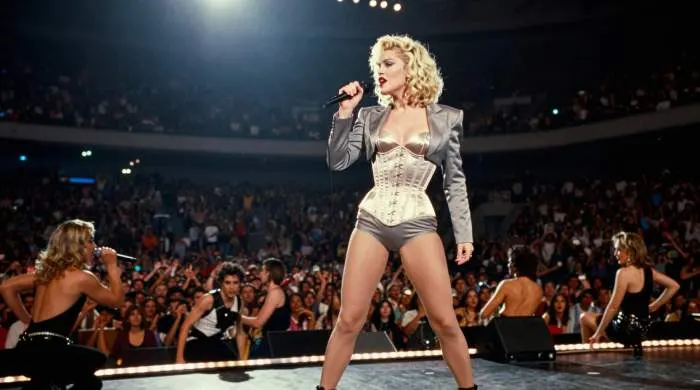
The instantly iconic cone bra wasn't just a visual gimmick; it was a bold, almost aggressive reinterpretation of femininity, declaring: "Look at me. I'm powerful, I'm sexual, and I dictate the terms." The impact of Madonna's Blonde Ambition tour fashion was immediate and seismic. What had been taboo was suddenly on full display, a global statement seen by millions.
The Gaultier cone bra meaning went deeper than mere shock value, tapping into the era's fascination with body positivity and the rise of lingerie as a fashion statement. It stripped away the coy, hidden nature of underwear and presented it as armor. It was about owning one's sexuality, not shying away from it. This wasn't about male gaze; it was about female agency.
The Madonna Gaultier corset influence echoed through the fashion world and popular culture for decades. Designers started experimenting more freely with lingerie-inspired looks. Slip dresses became commonplace, visible bra straps were no longer a faux pas, and corsets, both structured and soft, found their way into ready-to-wear collections. This moment cracked open a door for a more adventurous, self-possessed way of dressing.
It made it okay, even cool, for women to dress for themselves, to use clothes to make a statement, whether that statement was subtle or as loud as a cone bra piercing the night. It set the stage for later fashion movements that blurred gender lines and openly celebrated diverse forms of expression, like the resurgence of 80s power dressing.
Unlaced & Unleashed: Reclaiming the Corset for Today's Arena
The Blonde Ambition Tour wasn't just a concert series; it was a runway for revolution, solidifying the idea that corsets could be outer garments, not just undergarments. This shift fundamentally changed how we view these garments. When did corsets become outer garments? Largely because of that tour and Gaultier's daring vision.
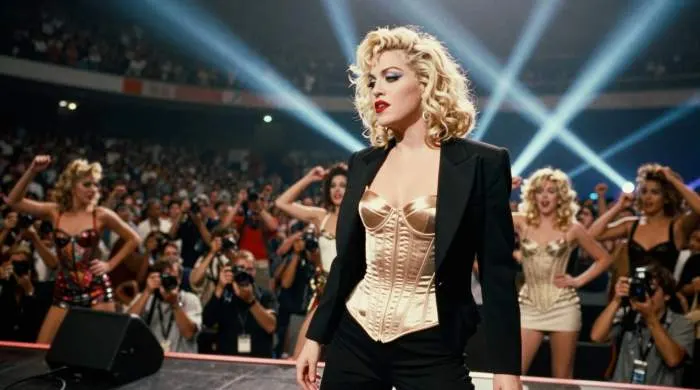
The magic of styling a corset today lies in embracing its heritage while making it entirely your own. It's not about replicating Madonna's iconic cone bra exactly, but understanding the audacious spirit behind it. Whether you opt for a subtle boned top that hints at the shape or a full-on structured piece, the intent remains the same: to project confidence.
This isn't just a nod to a fashion moment; it's a testament to how clothing can empower, transforming historical constraints into modern statements of strength. By choosing how and when to wear it, you reclaim its power, turning what was once a tool of confinement into a dynamic element of contemporary style. It's about owning your look, your body, and your narrative, just as Gaultier and Madonna challenged the world to do decades ago.
- Layering It Up: Wear a corset over a crisp white button down shirt or a fitted long sleeve tee. This softens its edge, turning it into a structured vest rather than a standalone piece. Think about playing with textures silk over cotton, leather over knit.
- High Waisted Harmony: Pair your corset with high waisted trousers, jeans, or a skirt. This creates a clean line, elongating the silhouette and offering a balanced, sophisticated look. It minimizes skin exposure while still highlighting the corset's unique shape.
- The Oversized Counterpart: Contrast the corset's tight structure with an oversized blazer, a chunky knit cardigan, or a flowy trench coat. This adds an element of nonchalant cool and keeps the look from feeling too costume-y. It's about playing with proportions.
- Casual Grounding: Integrate a corset with truly casual pieces. Think cargo pants, distressed denim, or even a simple maxi skirt. This unexpected pairing creates a modern, street style vibe that's effortlessly chic.
- Accessories as Anchors: Use accessories to ground your look. A simple gold chain, a pair of minimalist earrings, or sturdy boots can make the corset feel more integrated and less like a solo performance. Let the corset be the focal point, but let the rest of your outfit tell the story.
That collective gasp when Madonna stepped onto the stage, Gaultier's cone bra corset gleaming under the lights, remains vivid. It wasn't just a costume; it was a manifesto. The 1990 Blonde Ambition tour redefined the fabric of pop culture and fashion, cementing the idea of underwear as outerwear as never before.
The Enduring Legacy of the Corset as a Symbol of Power
Before this, the corset was largely a relic, a hidden shapeshifter. Madonna and Gaultier didn't just bring it out; they weaponized it. The Gaultier cone bra wasn't about vulnerability; it was about unapologetic power. It screamed, "This is my body, my choice, and I'm taking control of the narrative." It wasn't just fashion; it was a statement on female agency, challenging centuries of societal expectations about women's bodies and their place. The look drew inspiration from historical undergarments, recontextualizing their form for a new era of empowerment. This moment paved the way for other lingerie-as-outerwear trends, such as the silk slip dress revival in 1990s grunge and inspired a modern re-evaluation of garments like the 1950s bullet bra.
What did Madonna wear on the Blonde Ambition tour
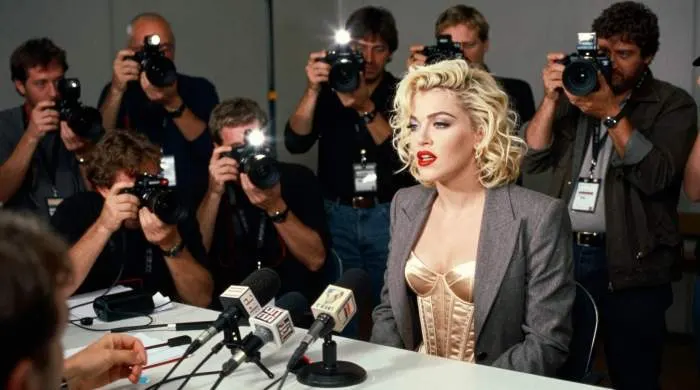
Beyond the famous cone bra, Madonna also wore a series of corsets inspired by vintage lingerie and 1950s bullet bras. Gaultier sourced antique lace and used unexpected materials like rubber and plastic to create a futuristic yet nostalgic look. The tour's wardrobe included over 150 custom pieces, each designed to challenge norms and spark conversation.